
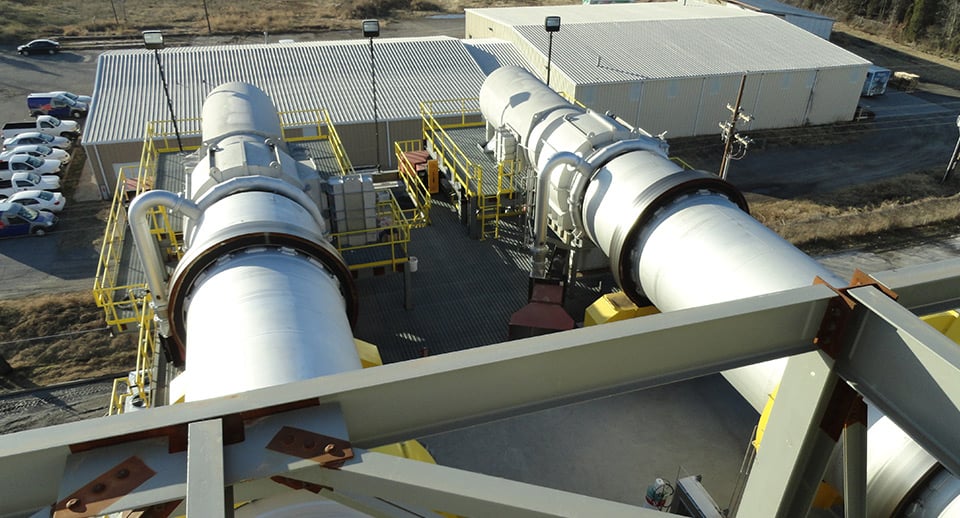
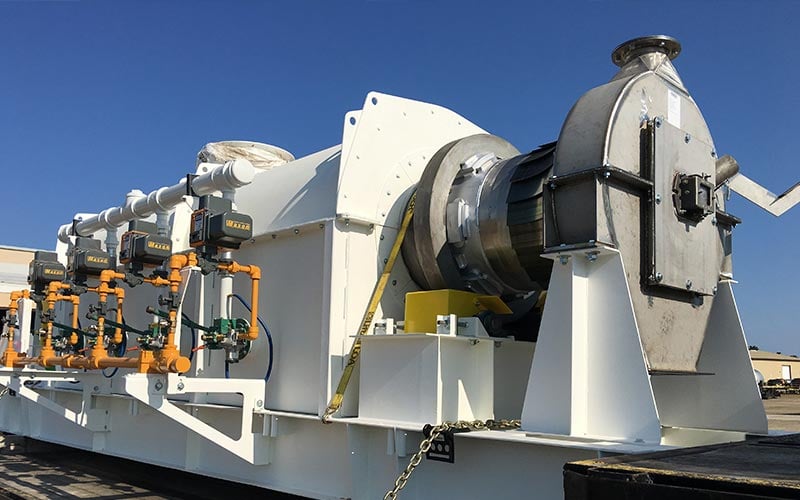
FEECO is a leading manufacturer of highly engineered, custom rotary kilns for processing solids. Our high-temperature kilns have earned a reputation for their durability, efficiency, and longevity.
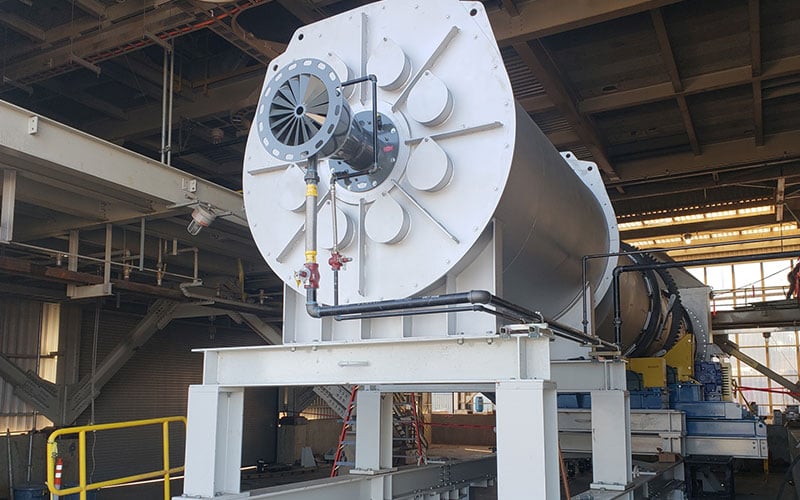
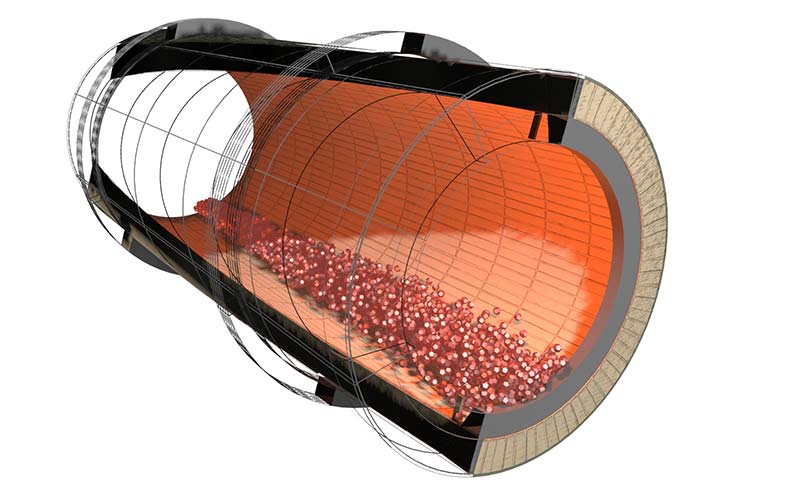
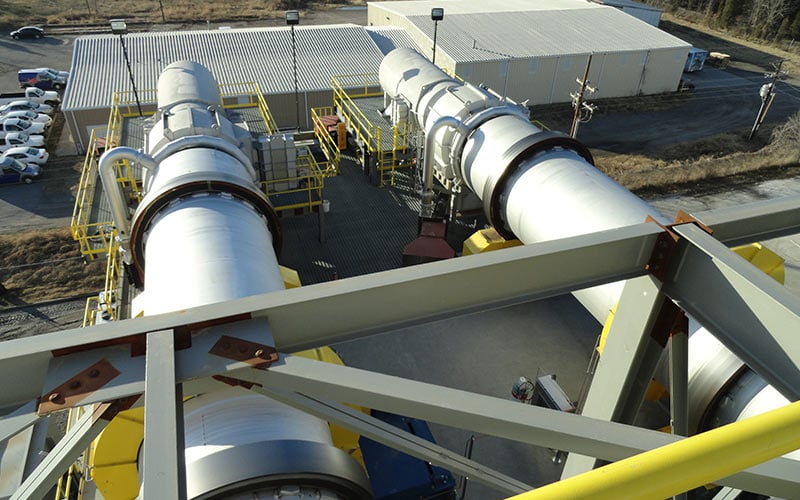
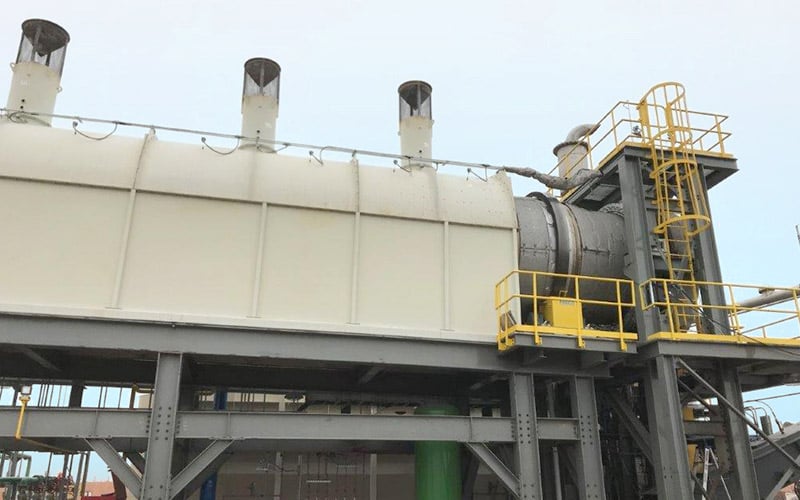
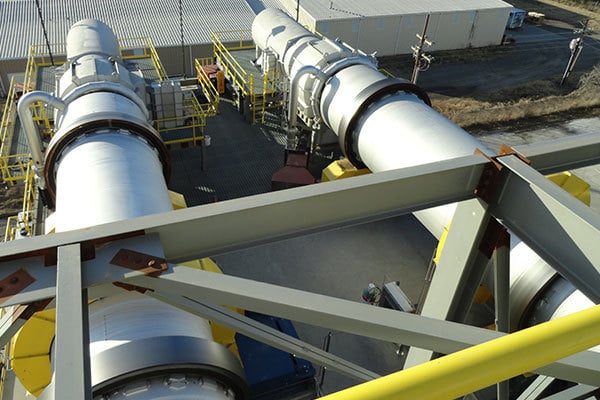
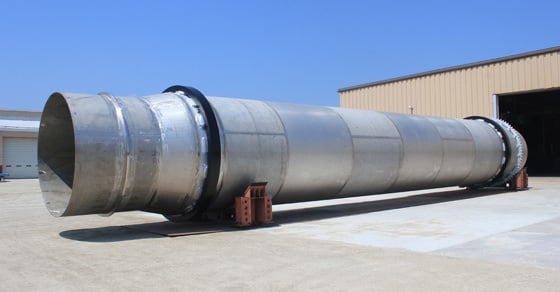
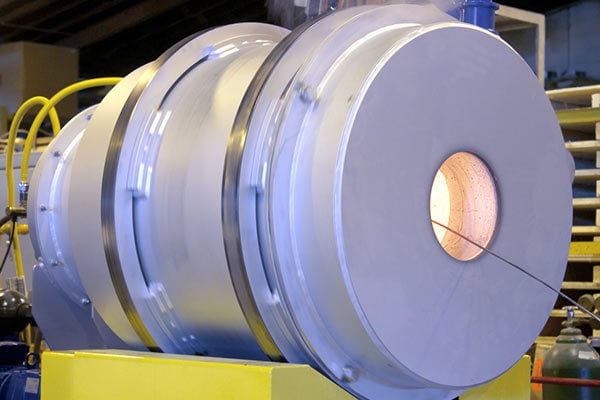
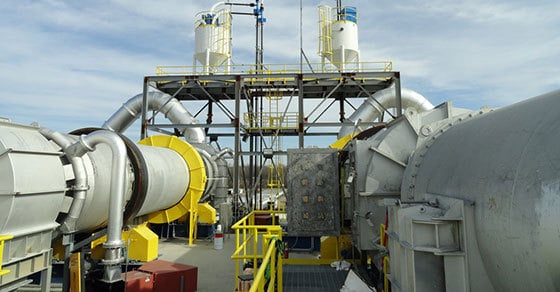
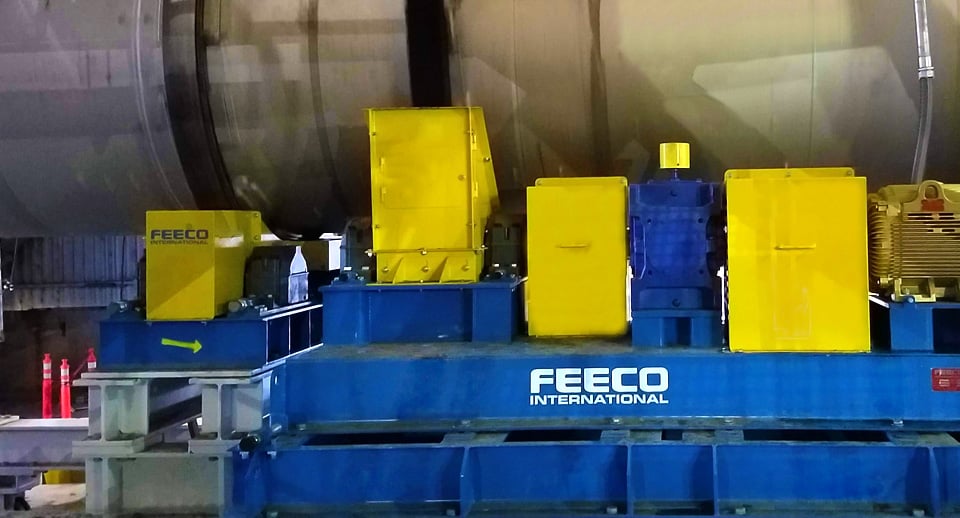
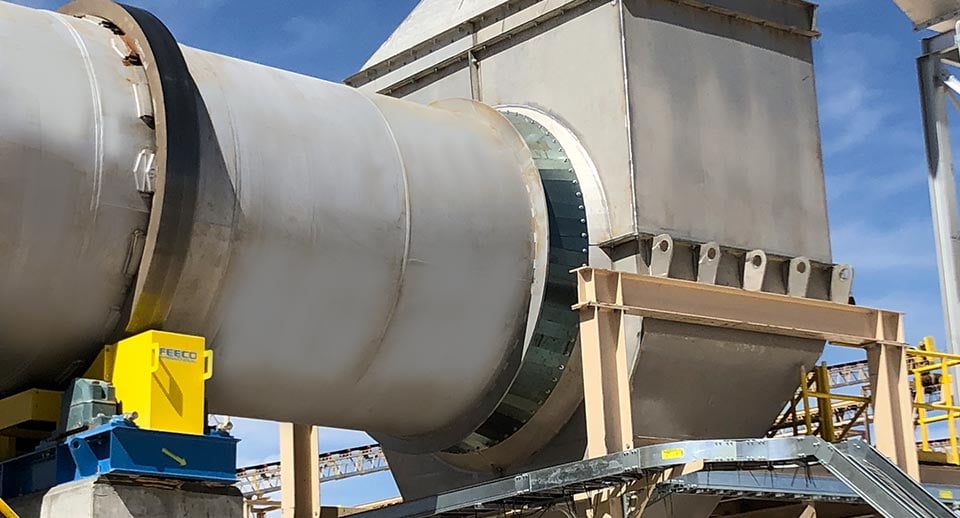
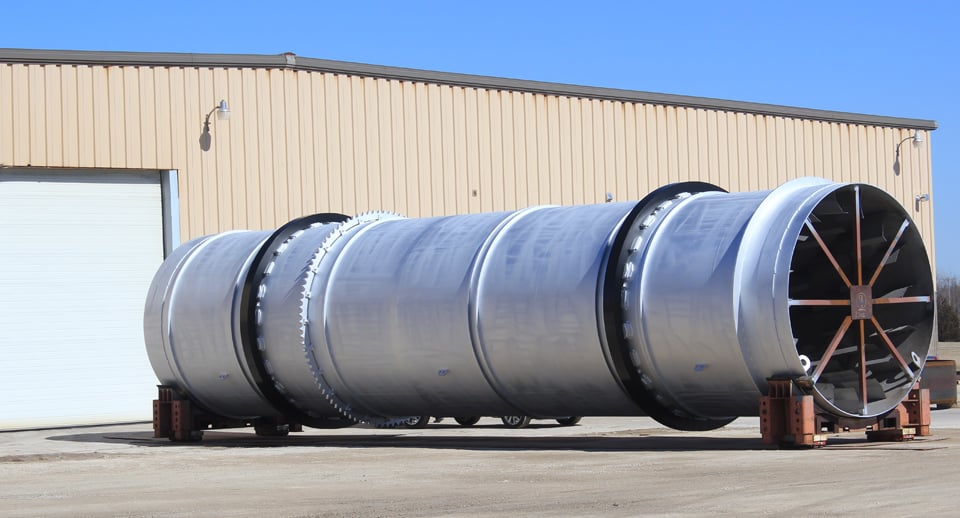
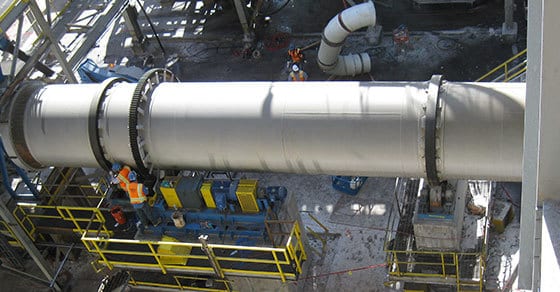
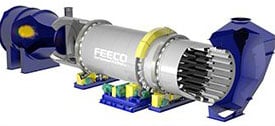
Based on rotary drum technology, a rotary kiln consists of a large rotating cylinder (the drum) fitted with tires resting on trunnion wheels that help to facilitate rotation via a drive assembly. The horizontal drum is positioned on a slight slope to allow gravity to assist in moving material through the unit. Material is processed according to predetermined temperature profiles and retention times in order to cause a physical change or chemical reaction.
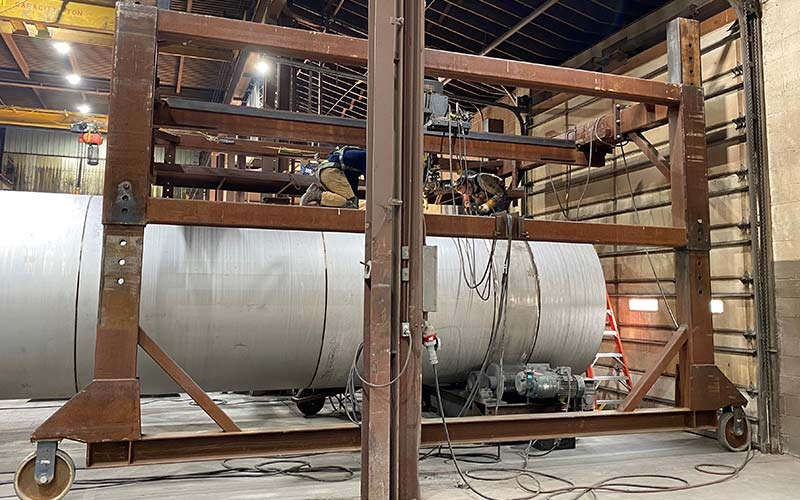
The high temperatures required in rotary kiln processing, combined with heavy loads, mean rotary kilns must be designed to withstand significant thermal stressors, requiring expertise in both engineering and fabrication.
Rotary kilns are available in direct- and indirect-fired configurations, the choice between which depends on the material properties, as well as the intended reaction.
DIRECT-FIRED ROTARY KILNS
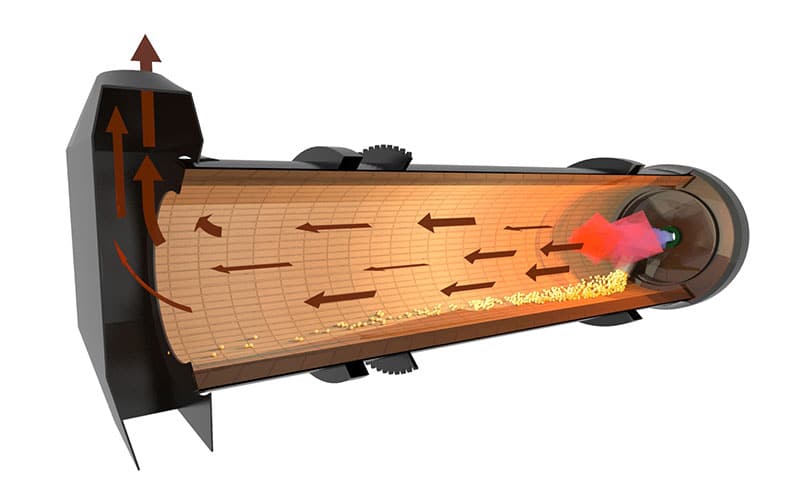
Direct-fired kilns utilize direct contact between the material and process gas to efficiently process the material. Combustion can occur in a combustion chamber to avoid direct flame radiation, or the flame can be directed down the length of the kiln. Material is heated via contact with the gas stream.
Direct-fired kilns can be of the co-current (parallel) or counter-current configuration, referring to the direction the combustion gasses flow in relation to the material.
FEATURES
- Size: Up to 15′ diameter x 100’+ long (Up to 4.6m dia. x 30.5m+ long)
- Capacity: 1 TPH – 50 TPH (1 MTPH – 45 MTPH); maximum capacity is dependent on process variables unique to each application
- Parallel or counter-current flow
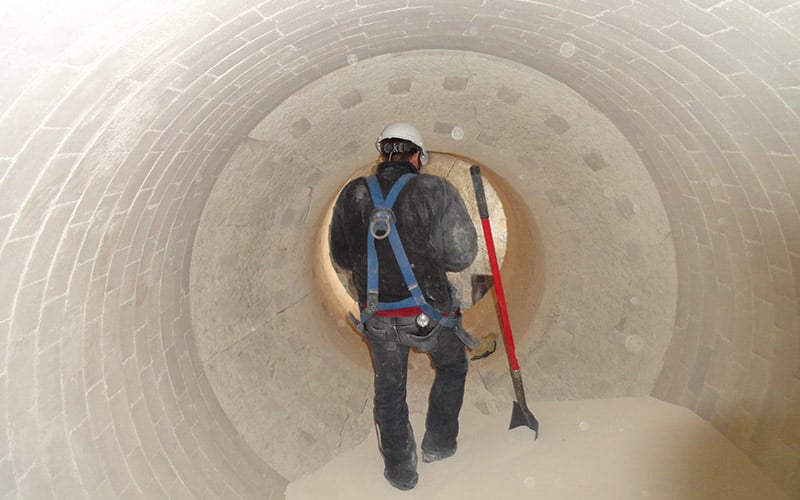
- Optimized Refractory Lining Solutions (multiple layers, castable, brick)
- Engineered shell to eliminate distortion and misalignment due to high operating temperatures
- Various Drive Assemblies Available
Optional Components
- Various Seal Options
- Machined Bases
- Screw Conveyor Feeder
- Automatic Gear Lubrication System
- Exhaust Gas Handling Equipment
- Ductwork
- Various Burner Configurations
- Components for increasing efficiency (flights, dams, bed disturbers, etc.)
Accommodates Various Fuel Types
- Fuel Oil
- Natural Gas/Propane
- Waste Heat
- Biogas
Material Options
- Carbon Steel

FEECO is capable of meeting the requirements necessary for CE marking equipment.

All FEECO equipment and process systems can be outfitted with the latest in automation controls from Rockwell Automation. The unique combination of proprietary Rockwell Automation controls and software, combined with our extensive experience in process design and enhancements with hundreds of materials provides an unparalleled experience for customers seeking innovative process solutions and equipment. Learn more >>
In addition to the rotary kiln itself, FEECO can supply a complete system with services, including:
- Material Handling
- Agglomeration
- Drying
- Afterburner / SCC
- Quench Tower
- Baghouse / Scrubber
- Acid Gas Removal
- Product Cooling
- Field Assistance / Installation
- Field Assistance / Start-up
DIRECT-FIRED ROTARY KILN COMPONENTS AND PARTS
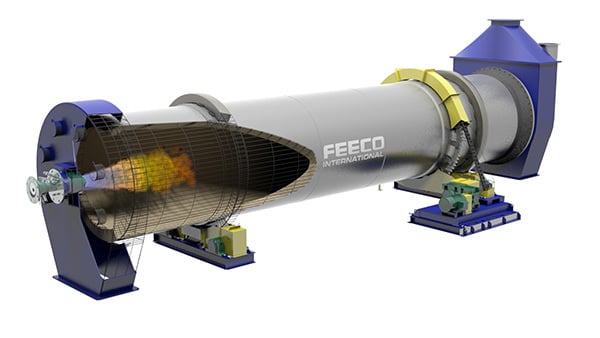
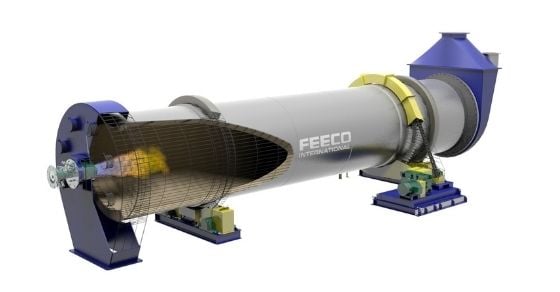
The image below shows the standard components of a direct-fired rotary kiln. Click image to view larger.
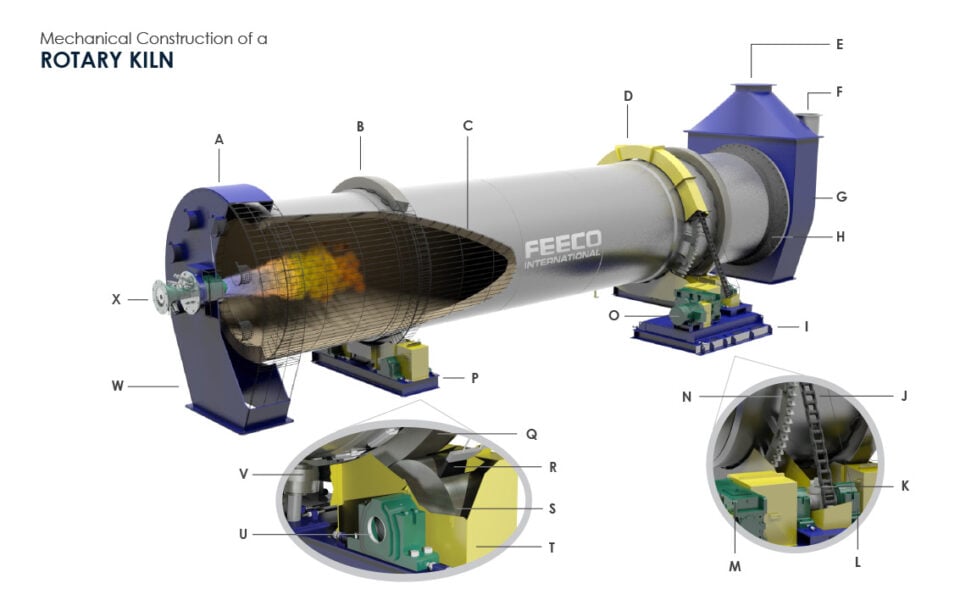
Mechanical Construction of a Rotary Kiln (3D Rotary Kiln by FEECO International)
A – Discharge Breeching
B – Riding Ring/Tire
C – Refractory Lining
D – Gear/Sprocket Guard
E – Counter Current Exhaust System
F – Inlet Chute
G – Inlet Breeching
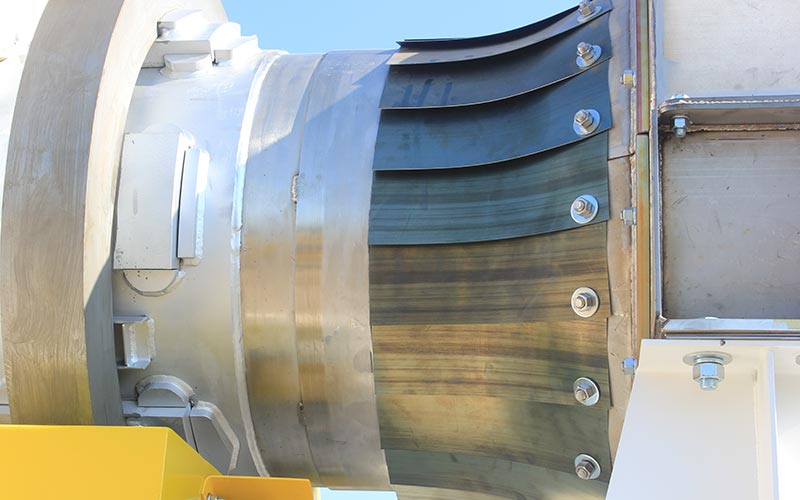
H – Leaf Seal
I – Drive Base
J – Drive Chain
K – Pinion/Drive Sprocket
L – Pillow Block Bearing
M – Gear Reducer
N – Girth Sprocket
O – Drive Motor
P – Trunnion Base
Q – Drum Shell Riding Ring
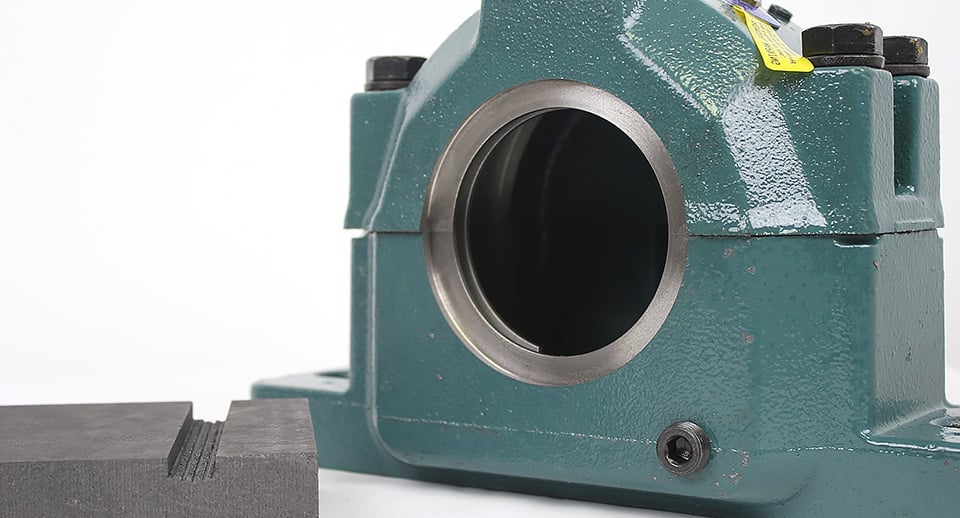
R – Graphite Block Lubrication Assembly
S – Trunnion Wheel
T – Trunnion Guard
U – Pillow Block Bearing
V – Thrust Roller Assembly
W – Discharge Chute
X – Burner
INDIRECT-FIRED ROTARY KILNS
Indirect-fired kilns are used for various processing applications, such as when processing must occur in an inert environment, when working with finely divided solids, or when the processing environment must be tightly controlled.
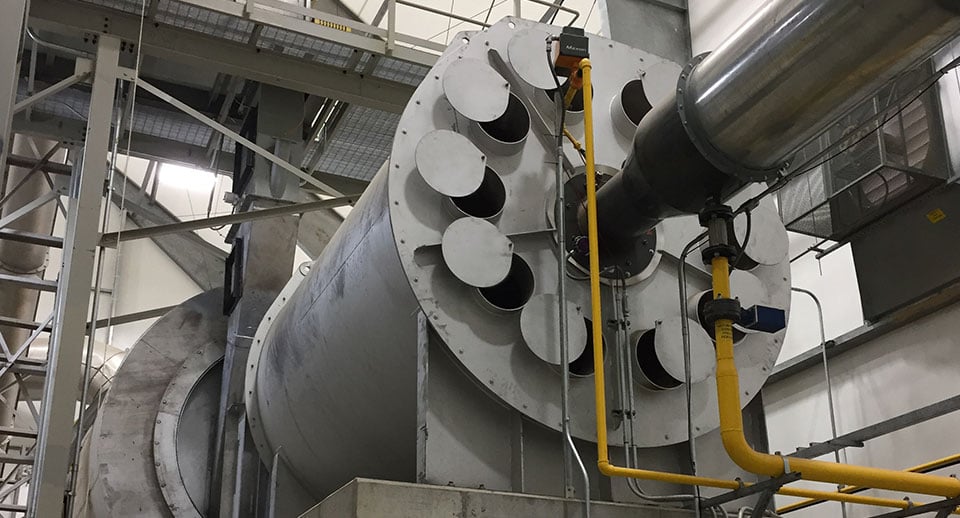
An indirect-fired kiln is enclosed in a furnace, which is then externally heated. The material is heated via contact with the kiln shell.
FEATURES
- Size: Up to 15′ diameter x 75’+ heated length (up to 4.6m dia. x 23m+ heated length) maximum capacity is dependent on process variables unique to each application
- Capacity: 1 TPH – 20 TPH (1 MTPH – 18 MTPH)
- Heat resistant alloy shell
- Engineered shell to eliminate distortion and misalignment due to high operating temperatures
- Separate zones for temperature control
- Integrated cooling zone can be added
- Various Drive Assemblies Available
Optional Components
- Various Seal Options
- Machined Bases
- Screw Conveyor Feeder
- Automatic Gear Lubrication System
- Ductwork
- Components for increasing efficiency
- (flights, dams, bed disturbers, etc.)
- Internal Bed Temperature Measurement
Accommodates Various Fuel Types
- Fuel Oil
- Natural Gas/Propane
- Electricity
- Waste Heat
- Biogas
Material Options
- Carbon Steel
- Stainless Steel
- Specialty Alloys
- Cladded Steel
- AR Steel
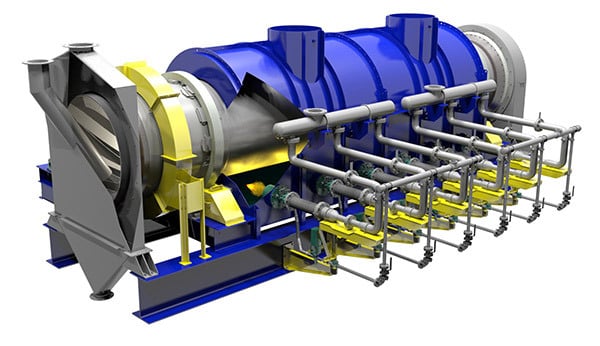
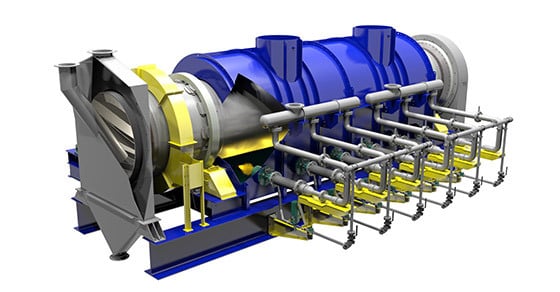
INDIRECT-FIRED ROTARY KILN COMPONENTS AND PARTS
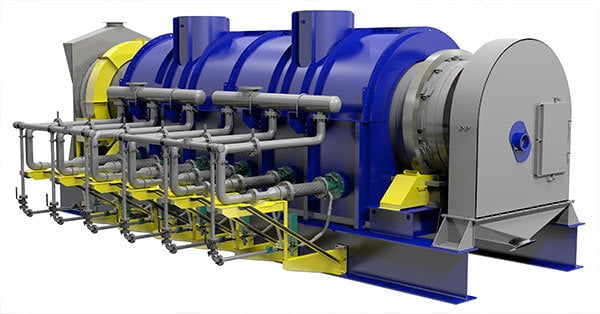
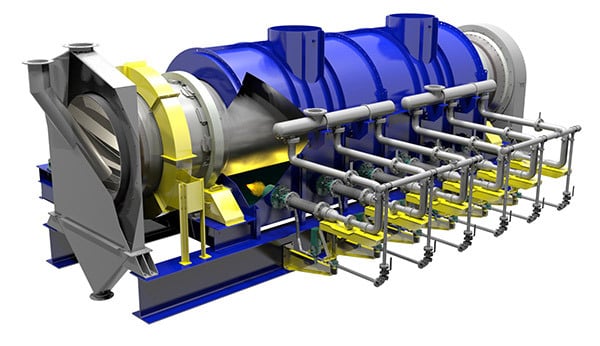
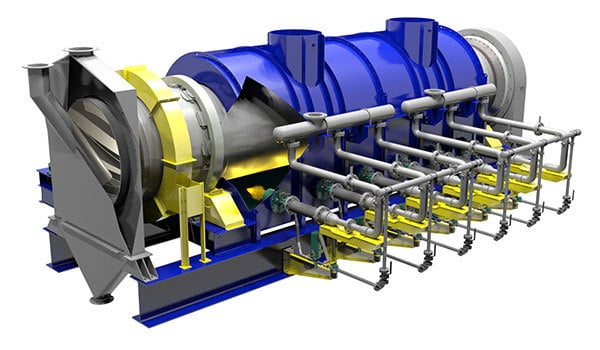
The image below shows the standard components of an indirect-fired rotary kiln. Click image to view larger.
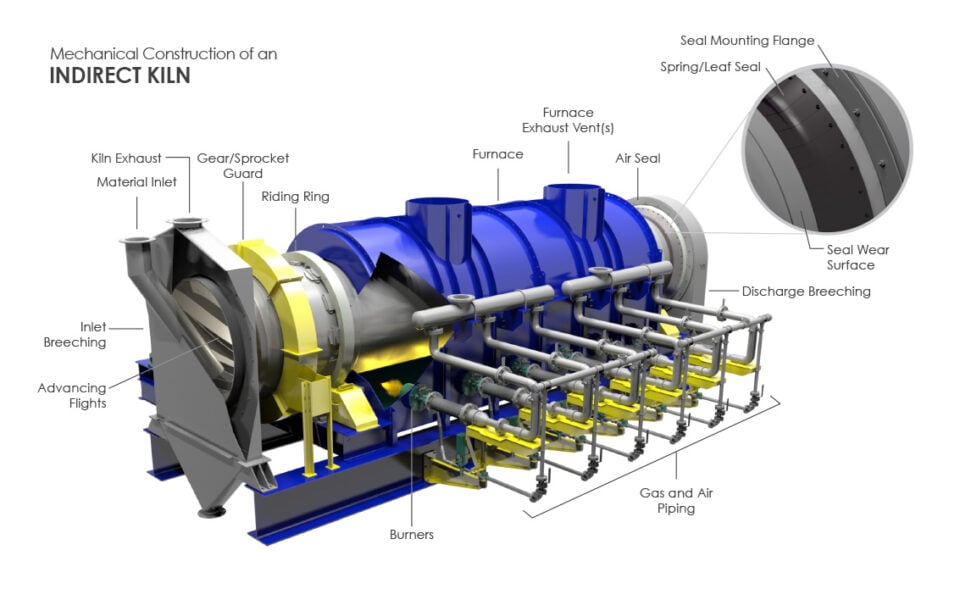
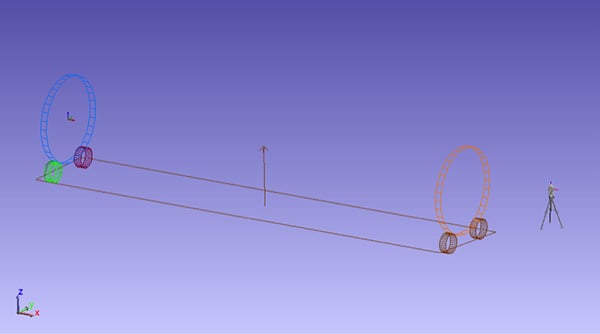
Mechanical Construction of an Indirect Rotary Kiln (3D Indirect Rotary Kiln by FEECO International)
A – Material Inlet
B – Kiln Exhaust
D – Gear/Sprocket Guard
D – Riding Ring
E – Furnace
F – Furnace Exhaust Vent(s)
G – Air Seal
H – Spring/Leaf Seal
I – Seal Mounting Flange
J – Seal Wear Surface
K – Discharge Breeching
L – Gas and Air Piping
M – Burners
N – Advancing Flights
O – Inlet Breeching
APPLICATIONS & MATERIALS
Rotary kilns are versatile thermal processing machines capable of processing a wide variety of materials. Common applications for rotary kilns are listed below.
CALCINATION
Calcination refers to the process of heating a material to a temperature that will cause chemical dissociation (chemical separation). This process is used frequently in the creation of inorganic materials.
PYROLYSIS
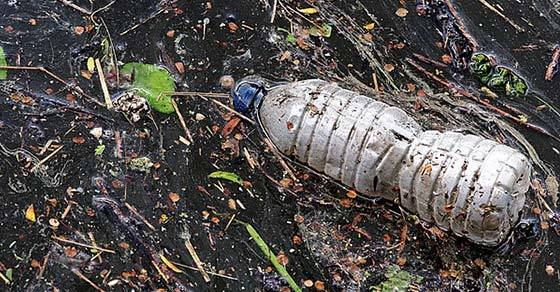
Pyrolysis is the thermal decomposition of a material in the absence of oxygen. For this reason, pyrolysis is typically carried out in an indirect rotary kiln, where the processing environment inside the kiln can be tightly controlled. Pyrolysis is widely used in the recycling industry to facilitate the conversion of plastics to fuel (PTF).
THERMAL DESORPTION
Thermal desorption is also a separation process. This process uses heat to drive off a volatile component, such as a pesticide, from an inorganic mineral, such as sand. It is also widely used in the regeneration of spent catalysts. The target component(s) are vaporized at the increased temperature, causing a separation without combustion. In some cases, an indirect rotary kiln would be best for this application, because the volatile chemicals may be combustible. The indirect kiln will supply the heat for desorption, without the material coming into direct contact with the flame.
ORGANIC COMBUSTION
Organic combustion refers to the treatment of organic wastes with the intent of reducing mass and volume. Organic waste is treated in the kiln, leaving behind an ash with considerably less mass and volume.
REDUCTION ROASTING
Reduction roasting is the removal of oxygen from a component of an ore usually by using carbon monoxide (CO). The CO is typically supplied by mixing a carbonaceous material such as coal or coke with the ore or by feeding it separately. Examples are the reduction roasting of a hematite-containing material to produce magnetite that can be magnetically separated.
Some of the most common materials for which rotary kilns are employed include:
- Activated Carbon
- Alumina
- Lithium Battery Chemicals & Recycling
- Catalysts
- Electronic Waste
- Phosphate Ore
- Plastic Waste
- Pigments
- Precious Metals
- Proppants
- Roofing Granules
- Specialty Ceramics
- Specialty Chemicals
- Waste Lime Sludge
- Waste Materials
ROTARY KILN PROCESS DEVELOPMENT
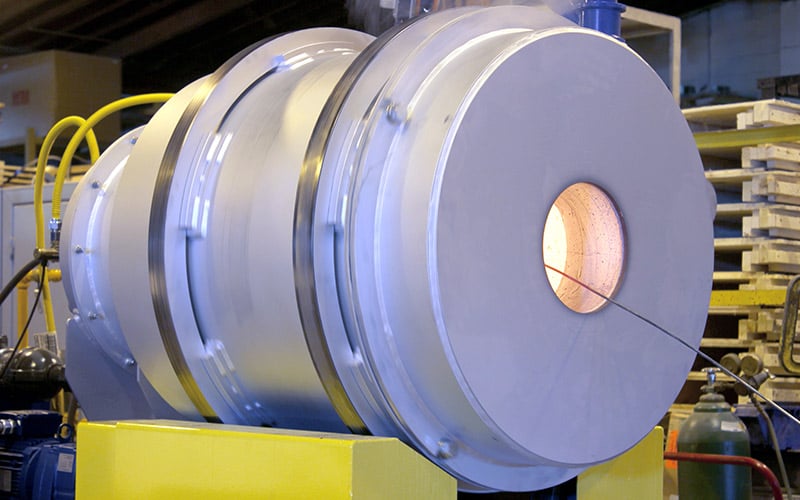
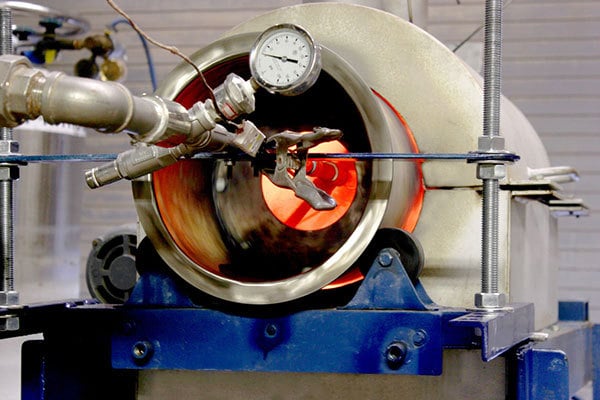
As the industry’s leading custom rotary kiln manufacturer, FEECO offers a unique pilot plant and testing facility where we use batch- and pilot-scale kilns to establish process and equipment criteria for reaching your production goals.
PARTS & SERVICE sUPPORT
Our Customer Service Team has an extensive offering of parts and services to keep your rotary kiln running its best for years to come.
RESOURCES
ROTARY Kiln ARTICLES
U.S. to Tap “Unconventional” Sources for Rare Earth Elements (REEs)
The growing need for a secure domestic supply chain of rare earth elements (REEs) has the U.S. exploring non-traditional sources of …
U.S. Pushing Lithium Battery Recycling
Obtaining lithium for use in advanced batteries has never been more critical. As resource scarcity, mineral distribution, and growing geopolitical tensions …
BROCHURES
Rotary Kilns Brochure
Medical Waste Incineration Brochure




Rotary Kiln Frequently Asked Questions (FAQs)
The diverse nature of rotary kilns makes them a vessel for accomplishing just about any objective associated with thermal processing. Most commonly, rotary kilns are used to carry out the following reactions:
- Calcination
- Thermal Desorption
- Incineration
- Organic Combustion
- Heat Setting
- Reduction Roasting
- Sintering/Induration
It’s important to note that each process listed above is a broad thermal processing technique, covering an array of applications. These specific applications often have their own name within the industry, or may facilitate a subset of reactions. For example, in the extraction of lithium ore from spodumene, calcination is used to cause decrepitation, or the shattering of the crystal structure, in order to convert alpha spodumene to beta spodumene.
Similarly, in the thermal treatment of kaolin clay, calcination is employed to remove free moisture, cause dehydroxylation, or the removal of chemically bound moisture, and other reactions.
Rotary kilns employ high temperatures and a controlled atmosphere to facilitate chemical reactions or phase changes in a wide array of materials.
More specifically, rotary kilns process material at a predetermined temperature for a predetermined amount of time (referred to as residence or retention time) based on the unique temperature profile of the material to be processed. By controlling temperature and retention time, rotary kilns can initiate and carry out chemical reactions or phase changes in a controlled setting.
Rotary kilns are a large, rotating drum that can be either of the direct or indirect configuration. In the direct configuration, the kiln can be designed for either co-current (parallel) or counter-current air flow. As solids pass through the drum, the heating medium increases their temperature. The constant rotation of the drum creates a tumbling action that redistributes the bed of material for even heat transfer throughout the bed. Tumbling flights and other internals can be added to further optimize processing.
The primary difference between a direct kiln and an indirect kiln is the mode of heating.
In a direct-fired kiln, the material is in direct contact with the products of combustion, with the heat passing through the kiln’s interior. Conversely, in an indirect-fired rotary kiln, the processing environment is sealed off, and the rotating drum is externally heated in order to prevent contact between the material and any products of combustion. Instead, the material is heated through contact with the drum shell.
As a result, there are some differences in design between these two types of rotary kilns, such as the use of a heating shroud/furnace (for indirect), refractory (in the direct kiln), and the materials of construction, among other things. Indirect kilns are also commonly referred to as calciners, though the term is not always technically correct.
Direct and indirect rotary kilns are equally important in the thermal processing world, with each suited to different applications.
Rotary kilns can operate on a variety of different fuel types depending on whether they are of the direct or indirect configuration.
Indirect-fired kilns typically employ one of the following:
- Fuel oil
- Natural gas/Propane
- Waste heat
- Syn-Gas (gas produced from a pyrolysis process)
- Electricity
Direct-fired kilns can operate on the same fuel types, with the exception of electricity.
Rotary kiln design is a complex undertaking, as advanced thermal processing techniques and chemical engineering principles come into play. This is especially true considering that many kiln applications are new, and must be developed from scratch.
The design process may differ depending on how much is known about the material and its physical and chemical behavior under heat. Most often, the design process begins with a thermal and chemical analysis of the material, followed by batch rotary kiln testing.
Material is tested in either a batch indirect or direct kiln to gather initial process data points. Testing continues, advancing to a pilot-scale test kiln to scale up the process and refine process and material variables to produce a product with the desired characteristics.
This data is then used to scale up the process and design a commercial-scale kiln tailored to the needs of the specific application.
Rotary kilns can be designed for handling a broad range of capacities, from small, batch-scale units processing anywhere from 50 to 200 lb/hr, to commercial-scale units processing material in the range of 200 lb/hr to 20 TPH.
Large commodity kilns such as those used in the cement industry can process up to 50 TPH, but these size kilns are less common for many of the lower-capacity processes in use today.
A rotary kiln manufacturer will typically require the following data in designing a commercial-scale unit:
- Material
- Moisture content (feed and product)
- Desired feed rate and/or throughput
- Temperature (feed and product)
- Particle size distribution (feed and product)
- Bulk density (feed and product)
- Foreign matter content (feed)
- Heat capacity (feed)
- Required retention time
- Mode of heating
- Process description
- Exhaust gas treatment
In some cases, not all data is known, in which case testing would be used to assess the material and the intended process.
While there is some overlap between rotary drum dryers and kilns, the key difference lies in the intent: is the processing intended to simply dry the material, or is some sort of chemical reaction or phase change required?
In most cases, drying will be conducted at much lower temperatures than those necessary for carrying out a reaction, so rotary dryers are often generally considered lower-temperature devices.
Rotary kilns can be constructed from a variety of different materials:
- Carbon steel
- Stainless steel
- Specialty alloys
- Cladded steel
- Abrasion-resistant (AR) steel
Selection of the proper material is based on the material characteristics (i.e., abrasiveness and corrosiveness), as well as the temperatures employed and whether the unit will be of the direct or indirect design. Since direct kilns employ refractory, they are typically constructed of carbon steel. Indirect kilns, however, which cannot use refractory as it would add another layer for heat to pass through, do not use refractory and therefore must be able to withstand greater temperatures and hence, are constructed from a more heat-resistant alloy.
Rotary kilns are not a stand-alone device; a complete kiln system made up of many supporting systems and components. This typically consists of:
- Exhaust gas handling such as a thermal oxidizer and secondary combustion chamber, a quench tower, baghouse, or other combination of air pollution control equipment
- NOx reduction system (where applicable)
- A burner and/or combustion chamber
- Product cooling system (where applicable)
- Bulk material handling equipment
In some cases, pretreatment equipment for pre-heating, drying, or even agglomerating the feedstock may also be necessary.
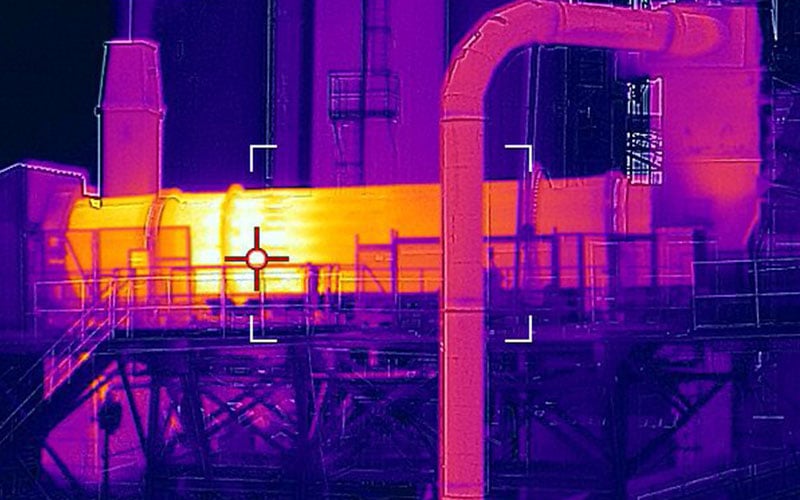
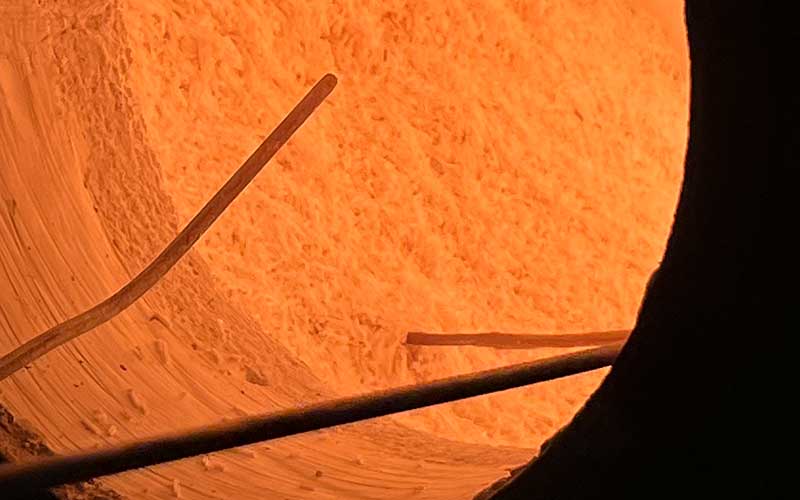
The temperature(s) at which a rotary kiln operates is specific to the reaction requirements of the material being processed and therefore differs in every setting. In general, however, rotary kilns can process material at temperatures ranging from 800 to 3000°F (430 to 1650°C).
The industrial internet of things (IIOT) is continuously advancing deeper into industrial processes, and rotary kilns are no exception.
Programmable logic controllers (PLCs), motor control centers (MCCs), and data collection systems can all be integrated into the rotary kiln system for improved data collection, process control, and advanced reporting.
Residence time, also known as retention time, is the amount of time in which the material is processed in the kiln. As with temperature, the residence time is determined solely on the requirements of the intended reaction.