
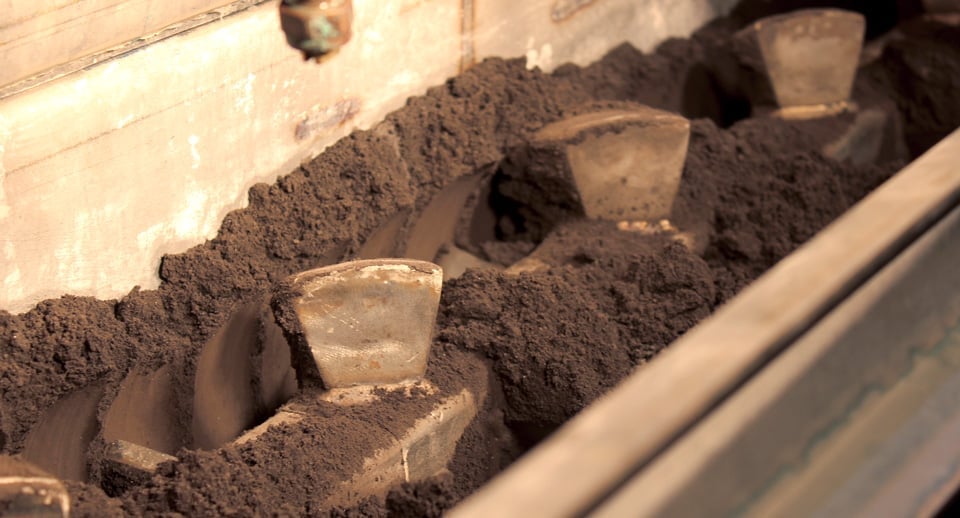
ORGANICS GRANULATION SYSTEMS
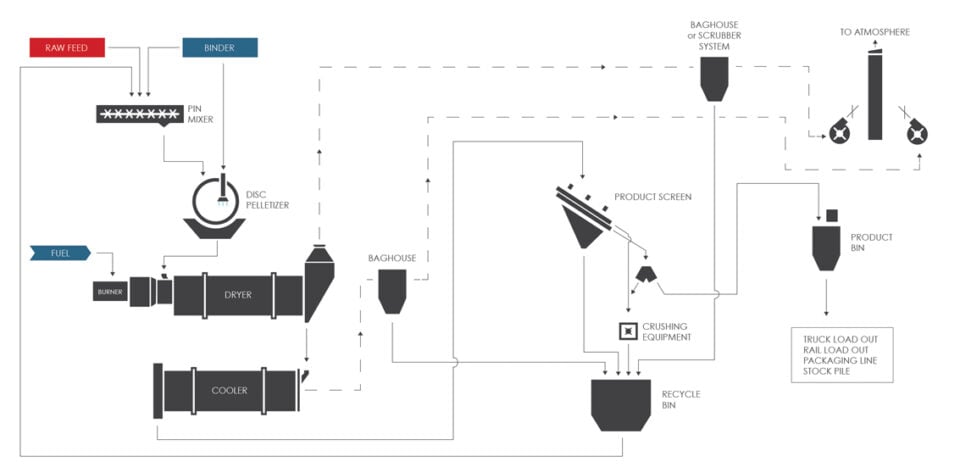
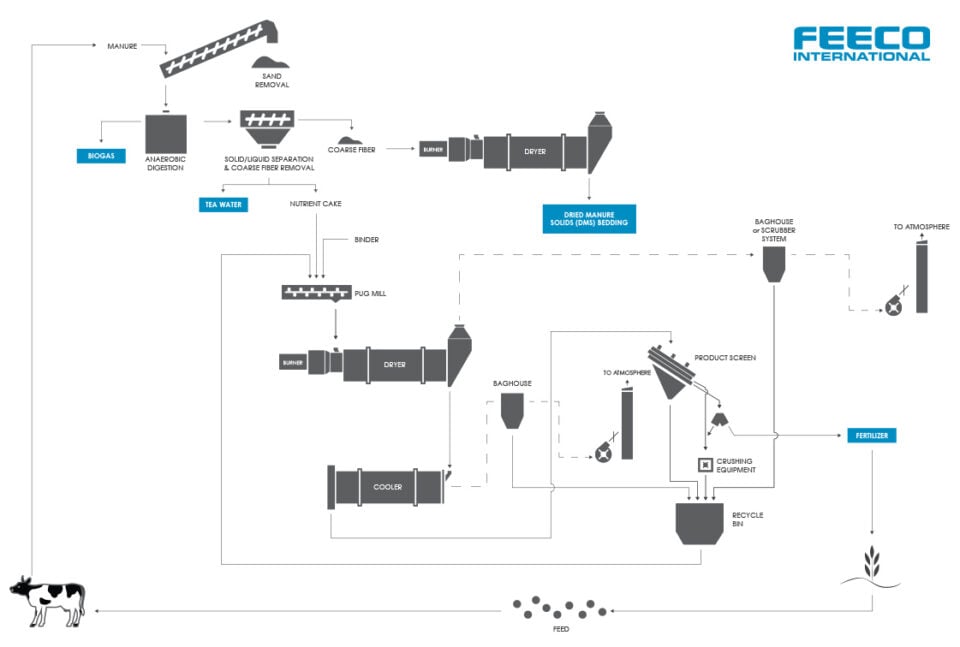
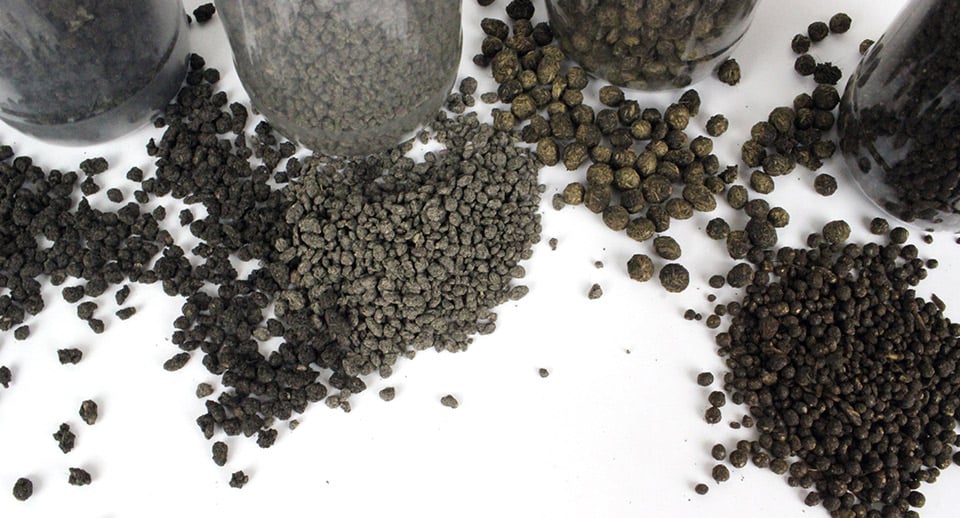
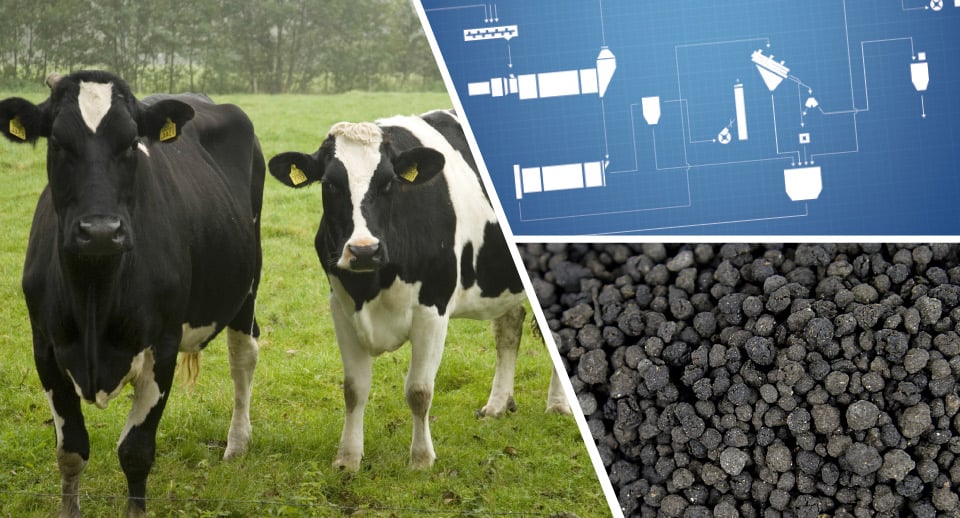
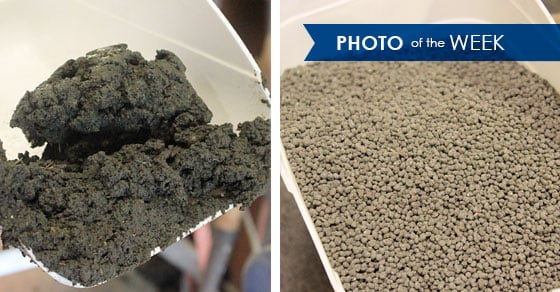
Addressing the disposal of agricultural, industrial, and municipal wastes is becoming a growing problem. As experts in fertilizer granulation, FEECO can offer solutions for taking organic wastes and turning them into reusable products in the form of fertilizers.
In addition, the fertilizers produced in our organics granulation systems are clean and safe: entirely free of the micro-organisms and pathogens found in industrial and municipal sludges. End product quality far exceeds federal requirements for Class “A” disposal standards as they apply to municipal wastewater treatment plants.
EQUIPMENT
Agglomeration
Thermal Processing
Bulk Material Handling
FEECO is capable of meeting the requirements necessary for CE marking equipment.

All FEECO equipment and process systems can be outfitted with the latest in automation controls from Rockwell Automation. The unique combination of proprietary Rockwell Automation controls and software, combined with our extensive experience in process design and enhancements with hundreds of materials provides an unparalleled experience for customers seeking innovative process solutions and equipment. Learn more >>
APPLICATIONS
The opportunity to turn organic wastes into marketable fertilizer products is applicable to a wide variety of materials, from municipal wastes to manures and other agricultural by-products. Some of the most common material that are processed into organic-based fertilizers include:
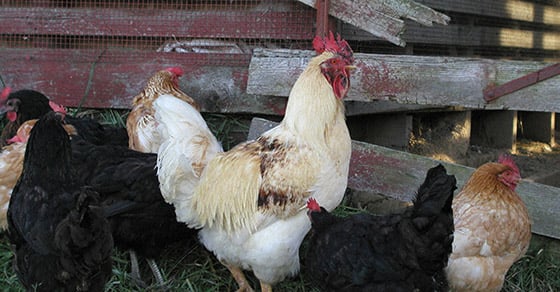
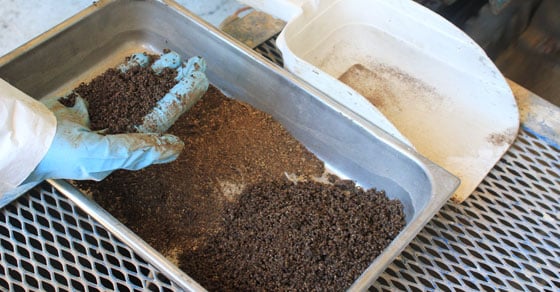
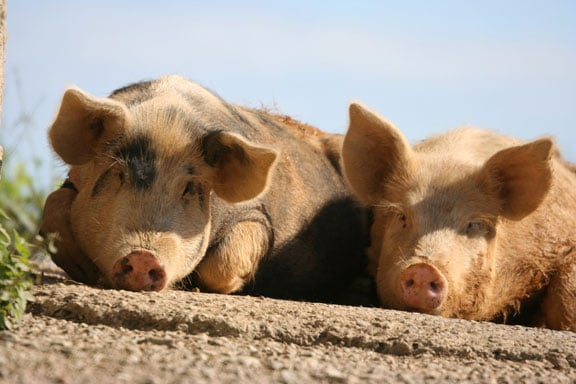
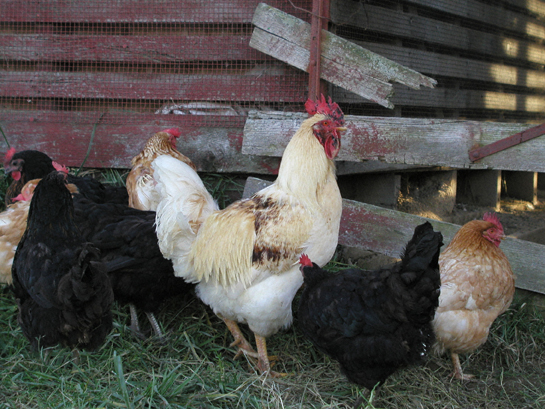
- Manure (Cattle Manure, Chicken Litter, Chicken Manure, Hog Slurry)
- Biosolids (Municipal Sewage Sludge)
- Compost
A Note on Capacity: While FEECO can accommodate nearly any capacity, typical capacity ranges from 5 to 10 TPH of product, or 20 to 40 TPH of raw cake feedstock.
RESOURCES
ORGANICS GRANULATION ARTICLES
Opportunities in Recycling Phosphorus
Phosphates play a key role in maintaining food security and overall life on Earth; the phosphorus available in phosphates is a …
Options in Pre-Conditioning Organics for Granulation
The practice of granulating organic wastes such as manure has seen an influx of attention in recent years, due to the …
BROCHURES
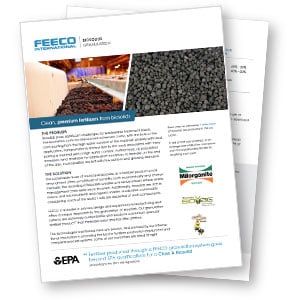
Biosolids Granulation Brochure
Granular Fertilizer Systems Brochure
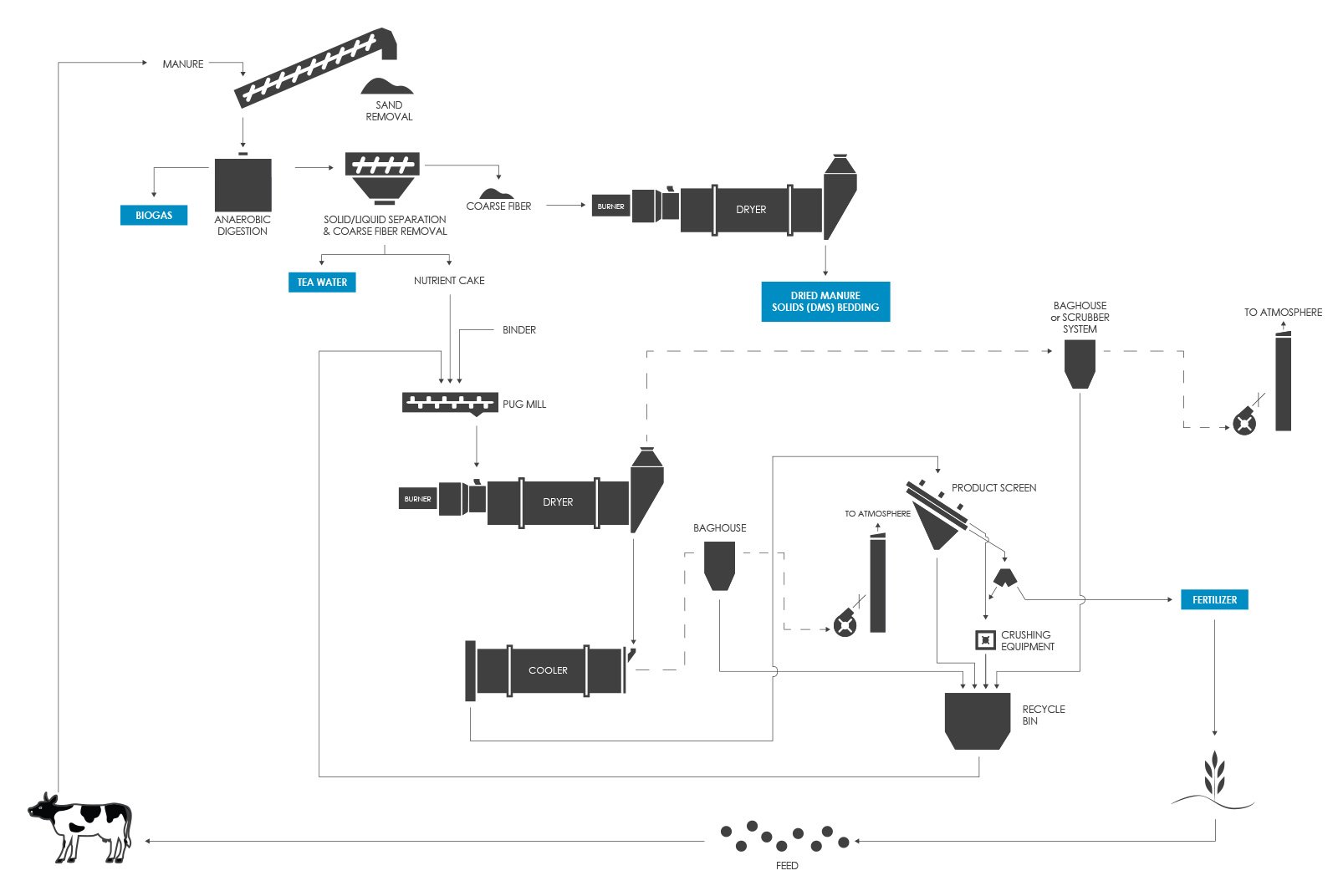





Organics Granulation frequently Asked Questions (FAQs)
The return on investment (ROI) for an organics granulation system is highly dependent on site-specific factors, including energy cost, product selling price, and avoided costs, with larger systems generally having a shorter payback period.
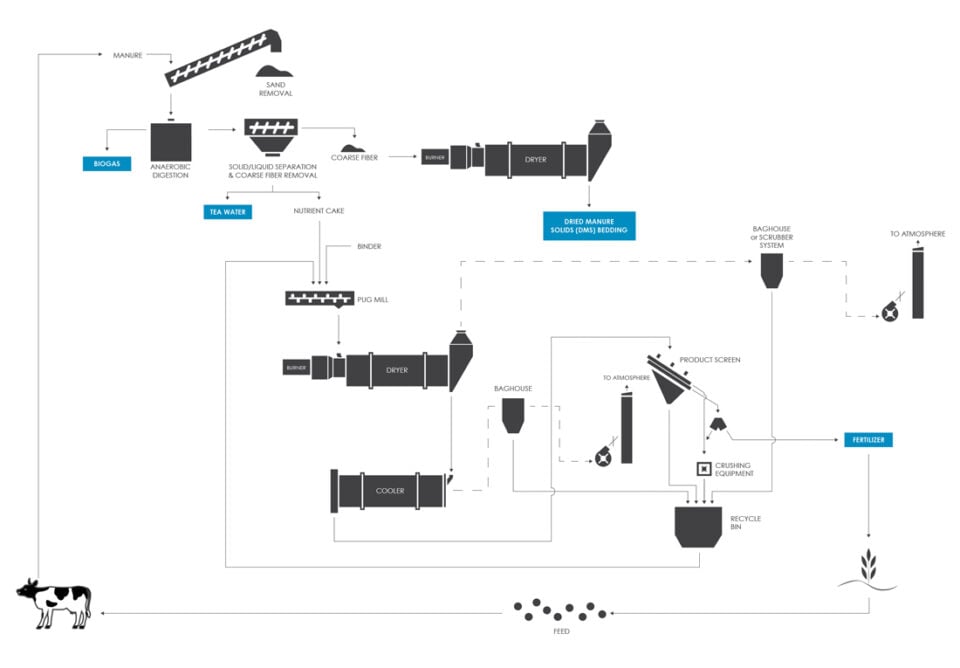
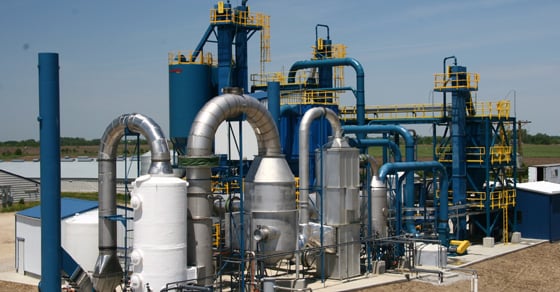
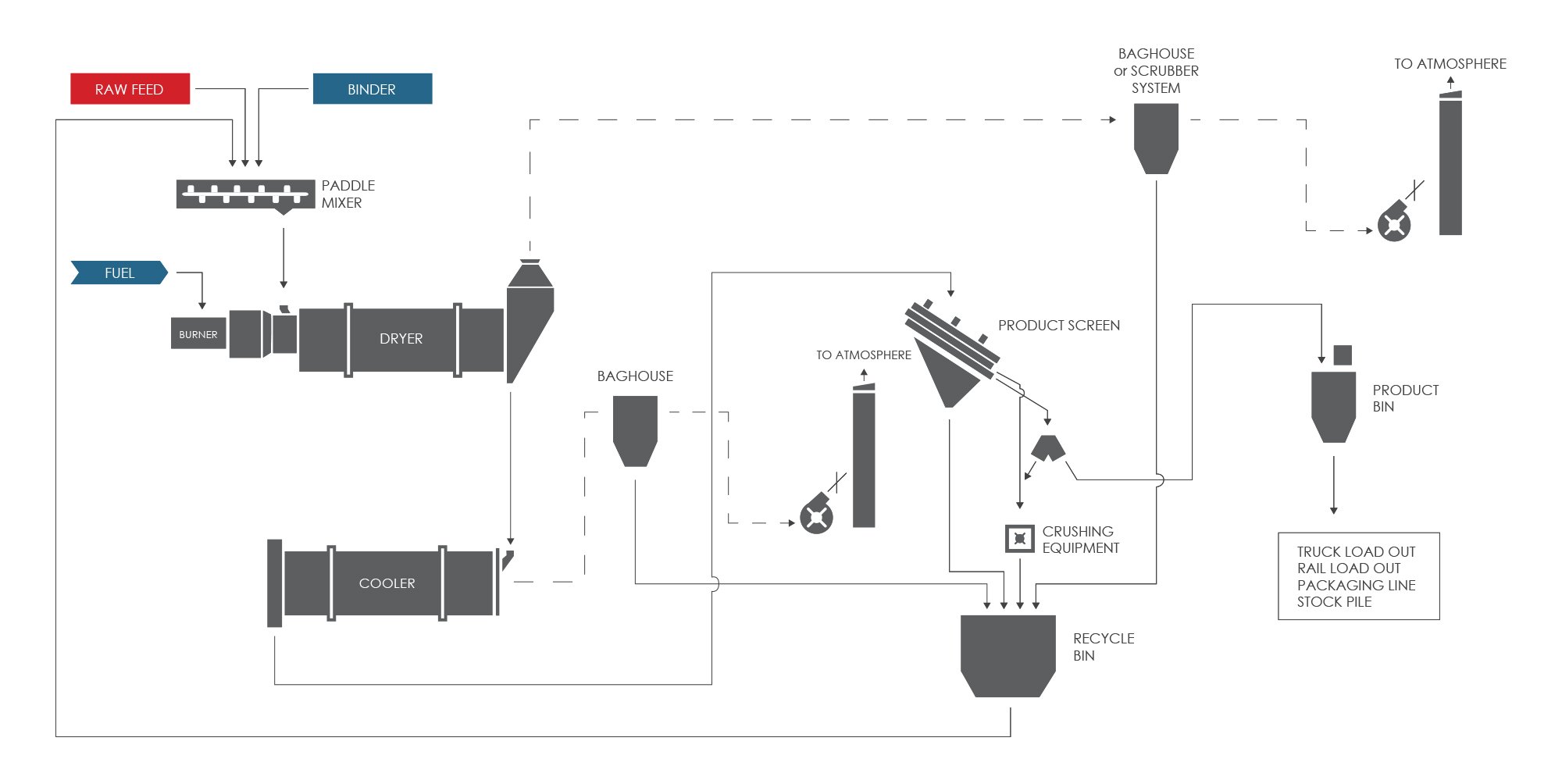
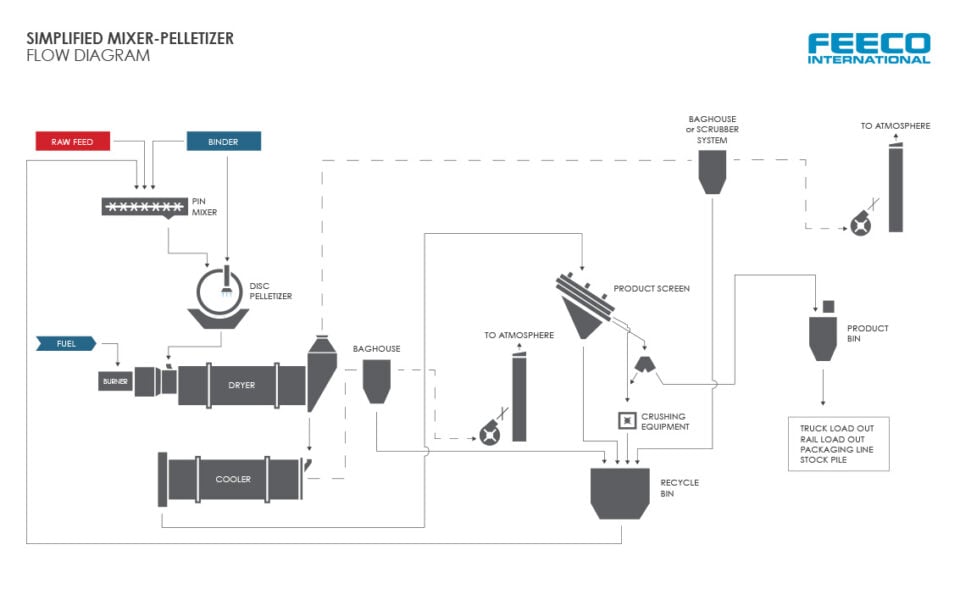
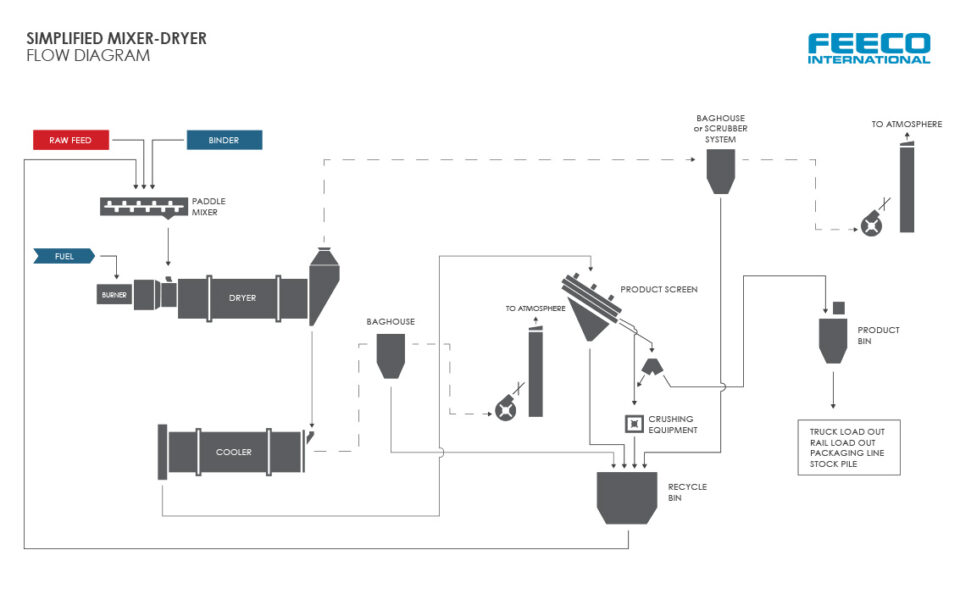
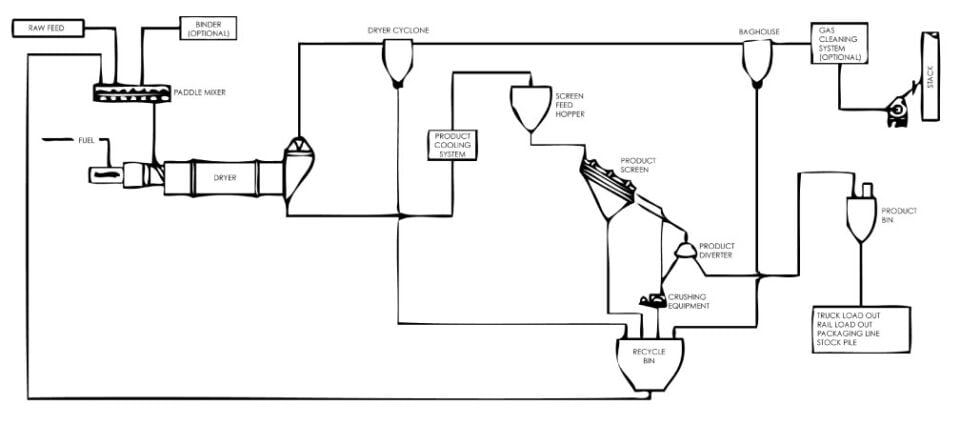
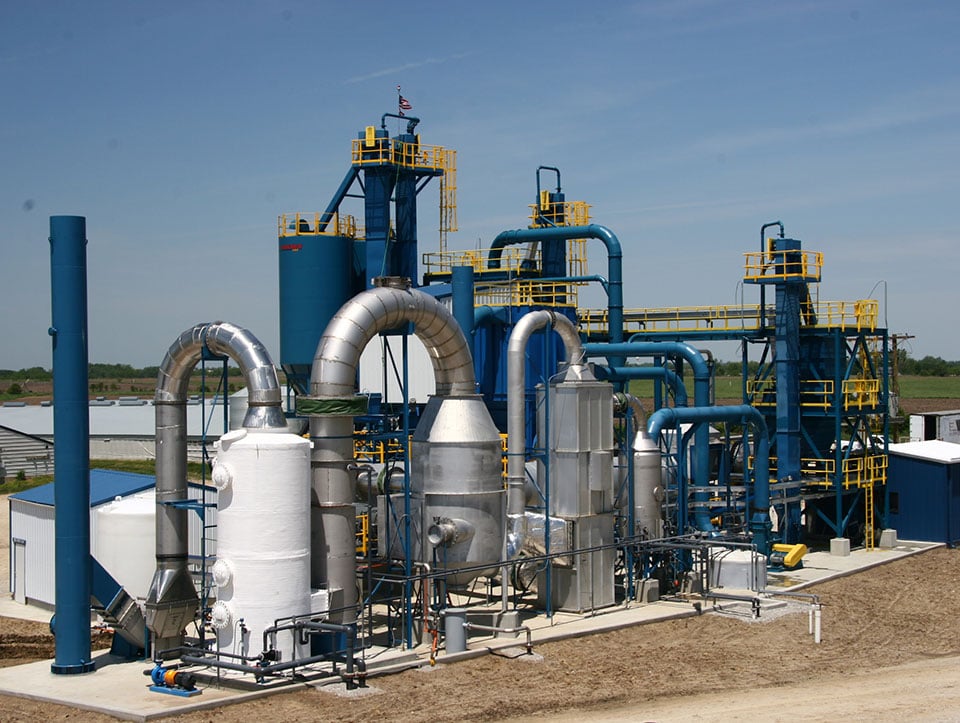
The exhaust gas treatment for an organics granulation system requires, at a minimum, a baghouse or cyclone for particulate capture. Odor mitigation in the form of a scrubber, thermal oxidizer, or biofilter may also be required.
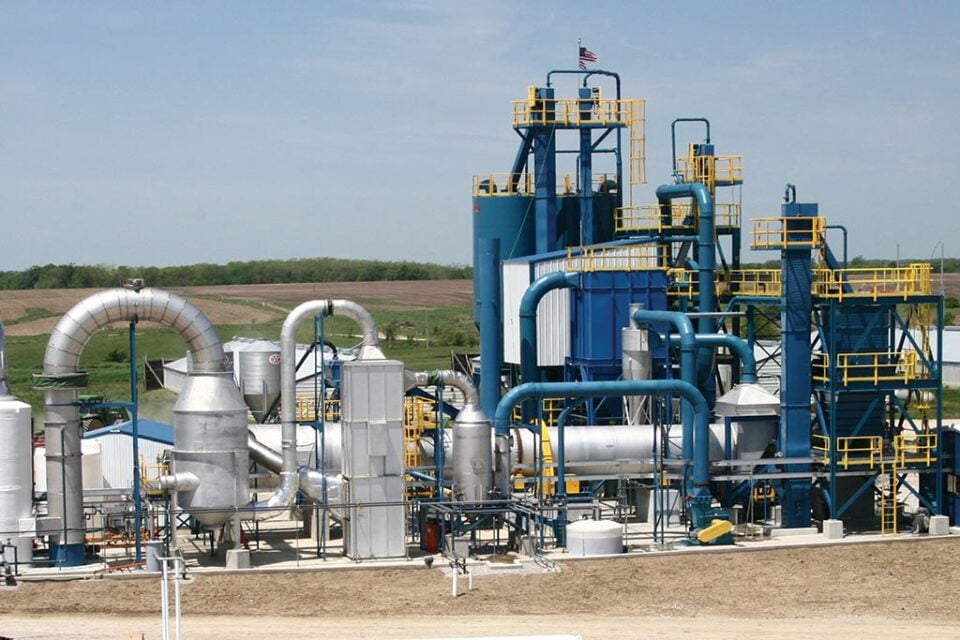
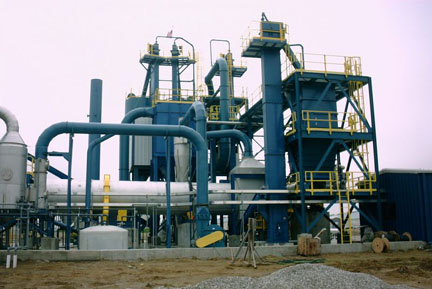
A system’s spatial and storage needs are based on the required throughput and subsequent equipment sizing. A small system may require a 50’ x 50’ x 30’ indoor footprint, while a large system may require 100’ x 150’ x 60 for the production line alone. Outdoor space to accommodate gas treatment, fans, and stacks will also be required.
On-site product storage space requirements can vary significantly depending on load-out conditions (truck/rail load out, silo storage, etc.). Since fertilizer is produced on a seasonal basis, some long-term storage is typically necessary.
The fuel options available depend largely on cost and site location, but typically include natural gas, propane, biogas, fuel oil, and waste heat.
Material handling equipment such as belt conveyors, bucket elevators, and screw conveyors are most commonly needed, along with volumetric and/or gravimetric feeding devices.
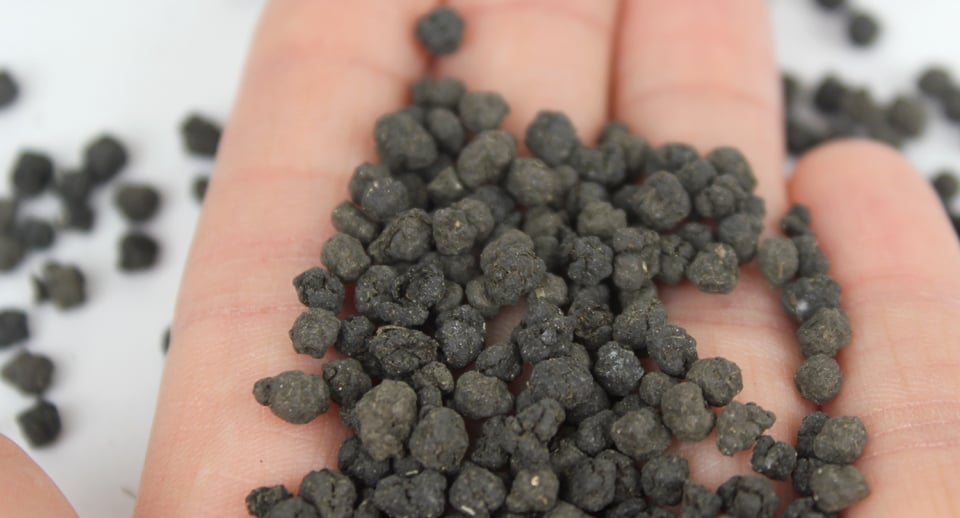
An organics granulation system can process a wide range of materials, including biosolids, manure sludges, compost, poultry litter, and food waste, among others.
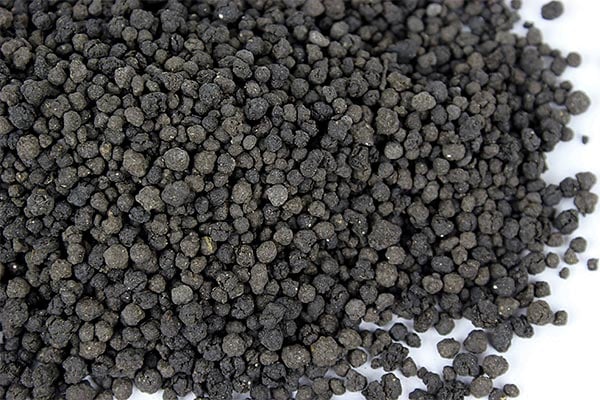
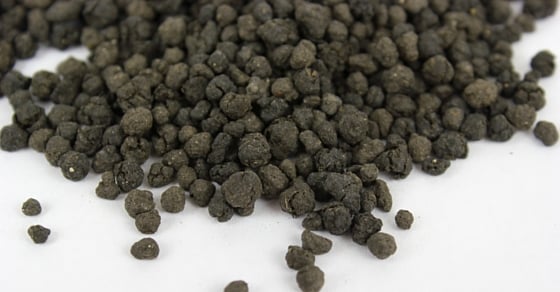
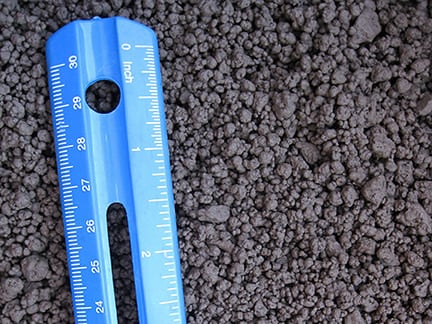
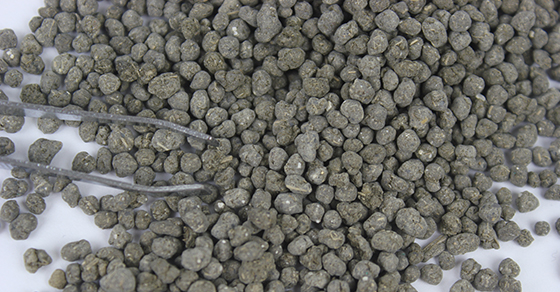
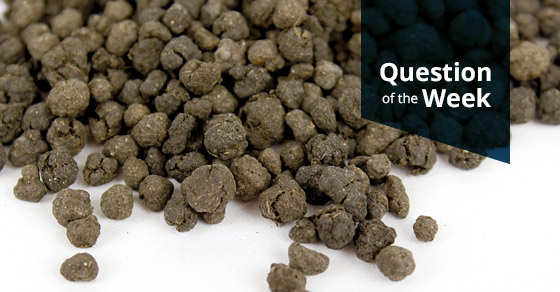
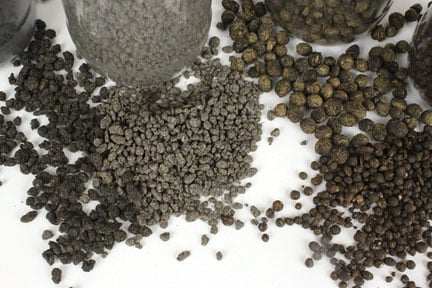
The wet granulation process tumbles fine particles, along with a liquid binder (where necessary) to produce spherical granules, while an extrusion process forces material through a die to produce cylindrical pellets. Granules produced via wet granulation exhibit higher porosity and lower density, allowing them to break down more quickly in the field compared to those produced via extrusion.