
LASER ALIGNMENT
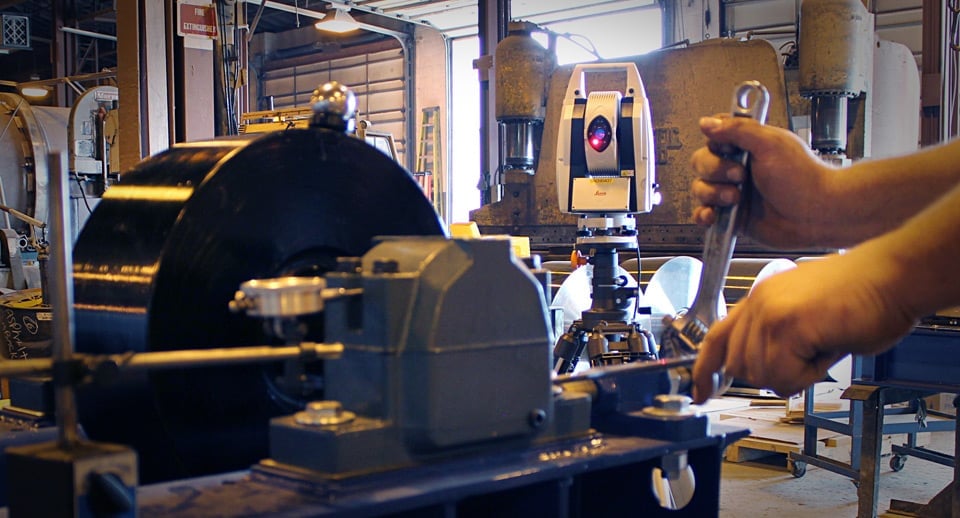
FEECO offers a state-of-the-art laser alignment service for drum shaft alignment, as well as other alignment needs.
WHY PROPER SHAFT ALIGNMENT IS IMPORTANT
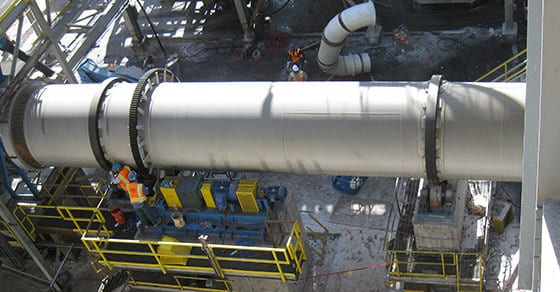
Whether you are running a rotary dryer, cooler, agglomerator, kiln, or other rotary equipment, proper alignment is key to extending equipment life and maintaining operational efficiency. A misalignment issue can quickly spiral into major equipment damage and downtime, if left untreated. A rotary drum will naturally fall out of alignment over time, making routine realignments an integral part of any preventative maintenance program.
WHEN ALIGNMENT IS NEEDED
A rotary drum is likely to require alignment more than once throughout its lifetime. Most notably, alignment should be performed:
- At time of commissioning (cold and hot alignment necessary)
- After any major repairs or replacement of structural components
- After grinding of tires and/or trunnion wheels
- If process conditions have changed (where applicable)
SIGNS YOUR ROTARY DRUM IS IN NEED OF ALIGNMENT
Regularly inspecting your rotary drum is critical to catching problems before they have the opportunity to spread. The following symptoms are all good indicators that realignment is needed:
- Excessive tire/wheel wear
- Damage to the tire/wheel
- Excessive wear on the thrust roller
- Damage to the thrust roller
- Pinion/girth gear wear
- Pinion/girth gear damage
- Drive components are chattering/vibrating
SERVICES
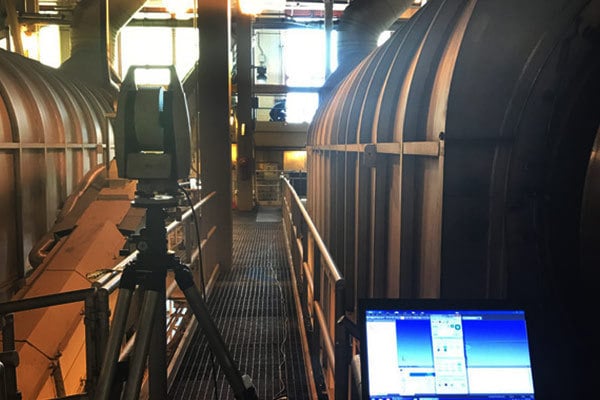
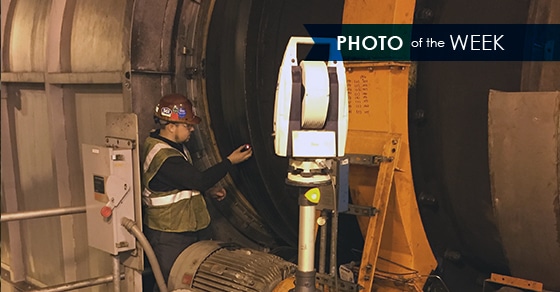
FEECO utilizes a highly advanced laser tracking system to perform alignment services. This means our service technicians can perform alignments faster than ever, and with precision accuracy. Benefits of utilizing this system include:
- Achievement of extremely tight tolerances
- No need for moving equipment
- The ability to benchmark and track historical data
- Elimination of human error (when compared to traditional methods)
Additional Laser Alignment Services:
- Elevation Checks
- Alignment of Offset Mounted Machines
- Conveyor Pulley and Frame Alignment
- Power Transmission Alignment
- Vertical and Horizontal Shaft Alignment
- Drum Thickness Checks
- Drum Shell, Tire, Trunnion Wheel, Pinion, and Ring Gear Alignment
- Coupling and Shaft Alignment
- 3D Measuring
- Spatial Mapping for Equipment Layout
- Pattern Layouts (both flat and circular/tubular)
- Plant Layouts – New Construction or Existing Plants
- Horizontal and Vertical Checks of Equipment (conveyor and elevator alignment, paddle mixer shaft straightness, shuttle conveyor rail alignment, and more)
Contact us today to learn how our alignment services can help you!
RESOURCES
LASER ALIGNMENT ARTICLES
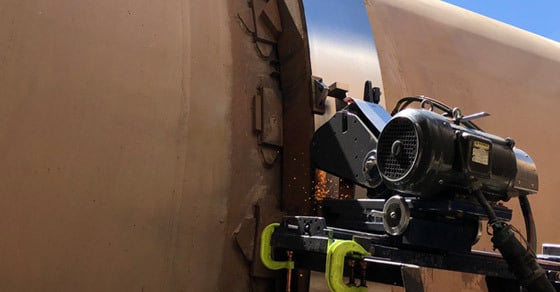
Tire and Trunnion Grinding: Critical Rotary Drum Maintenance
One of the most essential rotary drum maintenance procedures in prolonging service life is tire and trunnion grinding – the practice …
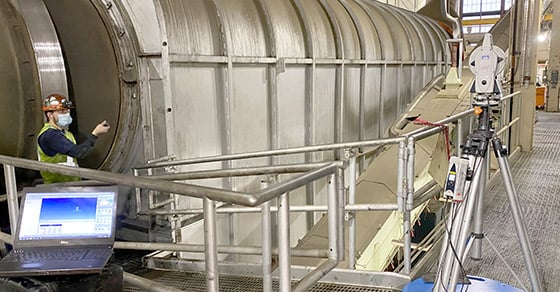
A Look at Modern Rotary Kiln Alignment Methods
Recent advancements have made rotary kiln alignment methods faster and more effective than ever. Misalignment is one of the most common …
BROCHURES

Tire Mounting Service Milestones

Remote Services







Alignment Frequently Asked Questions (FAQs)
Three methods of alignment are available:
- String alignment: The traditional method of measuring alignment, in which a high-tension string or wire is used as a physical reference to measure against at various points along the drum to establish where misalignment may be present. This method is the most time-intensive and prone to error.
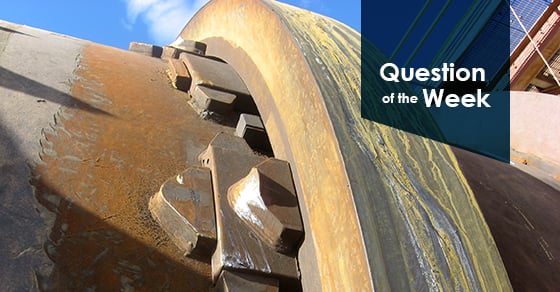
- Contact (face-to-face) alignment: Contact alignment also relies on manual measurements, but uses physical contact tools such as dial indicators, feeler gauges, or precision calipers to assess the squareness of components and establish “run-out”—the deviation from a perfect circle in new installations. Contact alignment comes with some risk; if tires or trunnions are worn or tapered, it’s possible to get false readings.
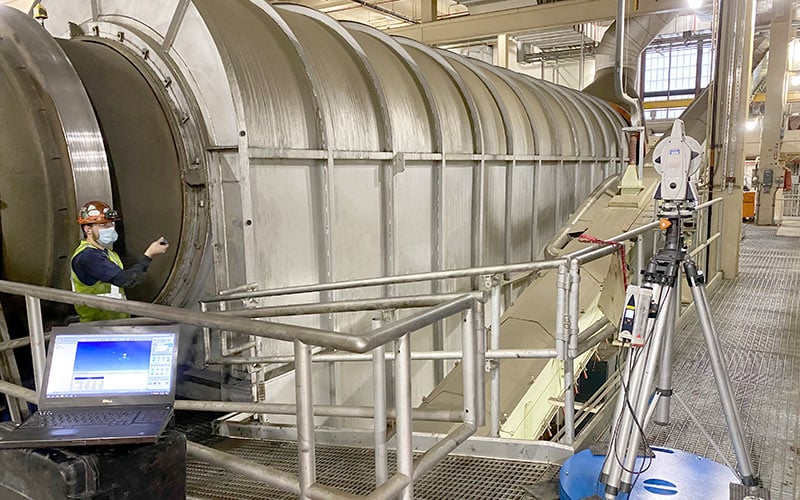
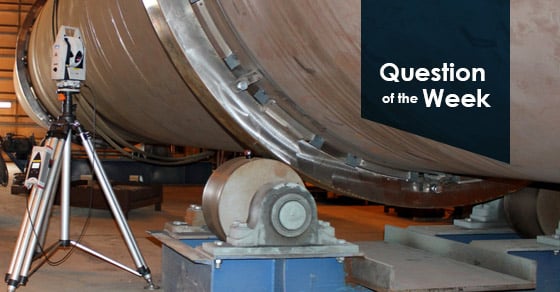
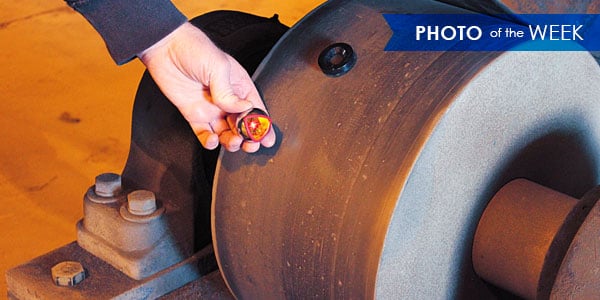
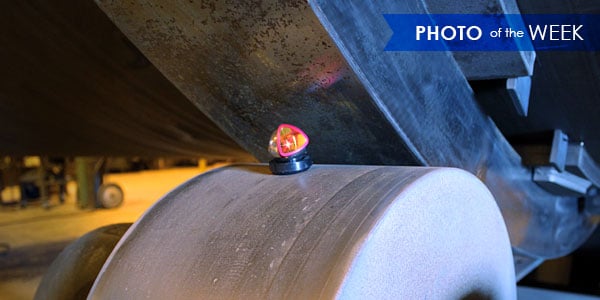
- Laser alignment: Laser alignment employs a laser beam and reflectors to capture measurements based on the axis of the wheels and drum. The data is imported into spatial analyzing software, providing a framework to display the relationship of wheels to the drum digitally. FEECO customer service engineers evaluate the data to see where and how much misalignment is present, and then provide recommendations on where to shim each bearing, and how much to skew each wheel.
Laser alignment provides a tangible documented historical data set of the wheel & tire relationship. In existing installations, it is also faster and more accurate.
Laser alignment provides a tangible documented historical data set of the wheel & tire relationship. In existing installations, it is also faster and more accurate.
Rotary drum alignment is critical to the unit’s mechanical stability, preventing unnecessary wear on all components. A misaligned drum puts undue stress on tires, trunnions, bearings, thrust rollers, and drive assembly components. Left untreated, these components experience excess wear, which reduces their service life and ultimately increases maintenance costs and downtime.
Rotary drum misalignment can be caused by several factors:
- Overalignment (excessive skewing)
- Mismanaged tire or trunnion wear
- Under alignment and subsequent thrust roller wear
- Poor lubrication
- Shifting or sinking bases
- Variation in drum loading
- Environmental factors such as poor housekeeping, fugitive material, swings in temperature and/or humidity
- Excessive grinding (where tires or trunnions have been ground beyond 10% of their original diameter)
- Changes to base conditions due to major repairs (gear replacement, tire reshimming, etc.)
- Changes to operational loading of feedstock, such as running empty vs 100% loaded.
- Changes in shell temperature (applicable to high-temp applications such rotary kilns and calciners.
How long the alignment process takes depends on the method of alignment and provider. With easy access and a line of sight to all four wheels, FEECO typically requires one day for taking measurements and making skewing adjustments, and an additional one-to-two days to monitor skewing results when using the laser alignment method.
Without a line of sight, laser alignment can still be accomplished in a couple days with an additional technician to support multi-station moves.
If process and operating conditions remain consistent, a proper alignment can last for years. If conditions vary or change, the drum may require routine realignment, or realignment as needed following repairs.
Alignment should be checked on an annual basis by the OEM or other qualified service provider to catch early onset.
A “cold” alignment refers to alignment of the drum without heat (in the case of dryers or kilns) and without material in the drum. In other words, cold alignment is conducted when the drum is empty and where applicable, unheated. As such, cold alignments are typically conducted in new installations after the drive base has been installed and power run to the drum for rotation.
A “hot” alignment is conducted during normal operating conditions—with a material load present and, where applicable, the drum heated to typical operating temperature.