
CONTINUOUS PIN MIXERS
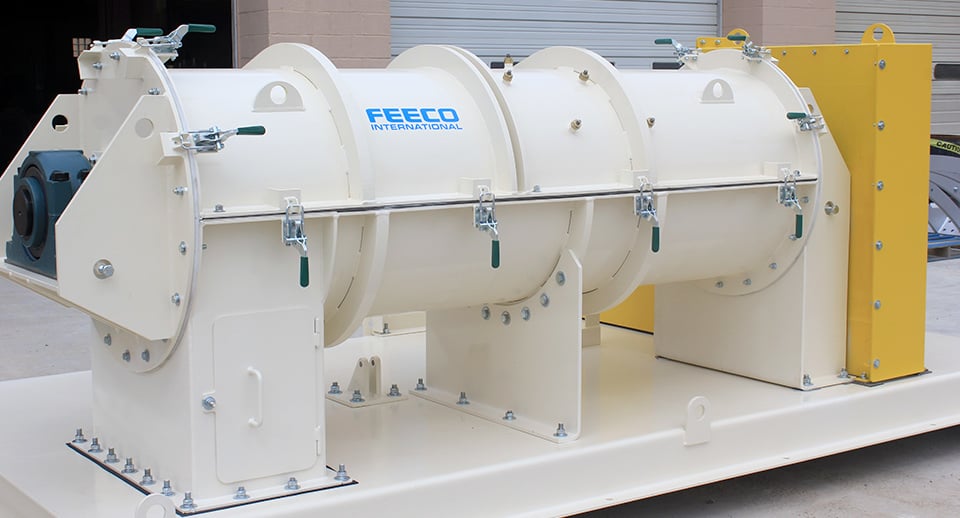
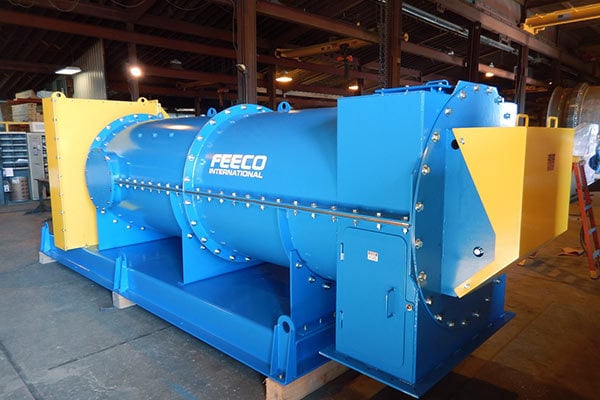
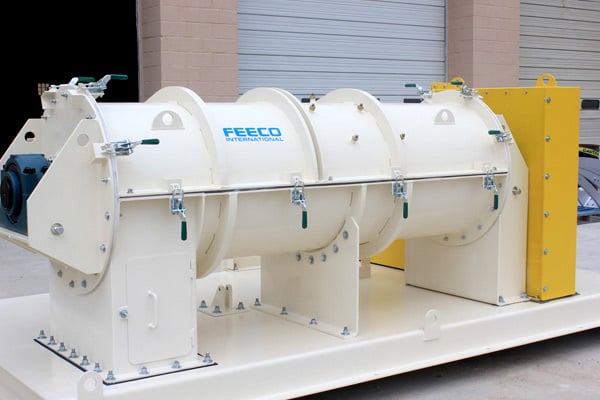
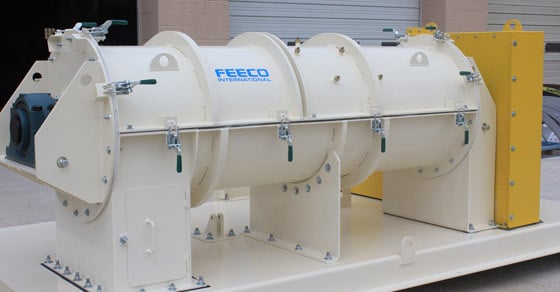
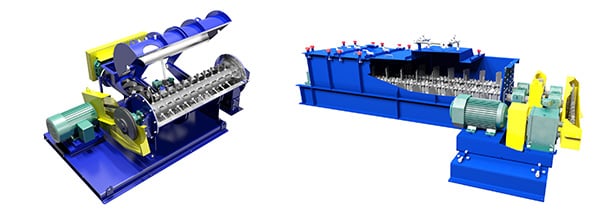
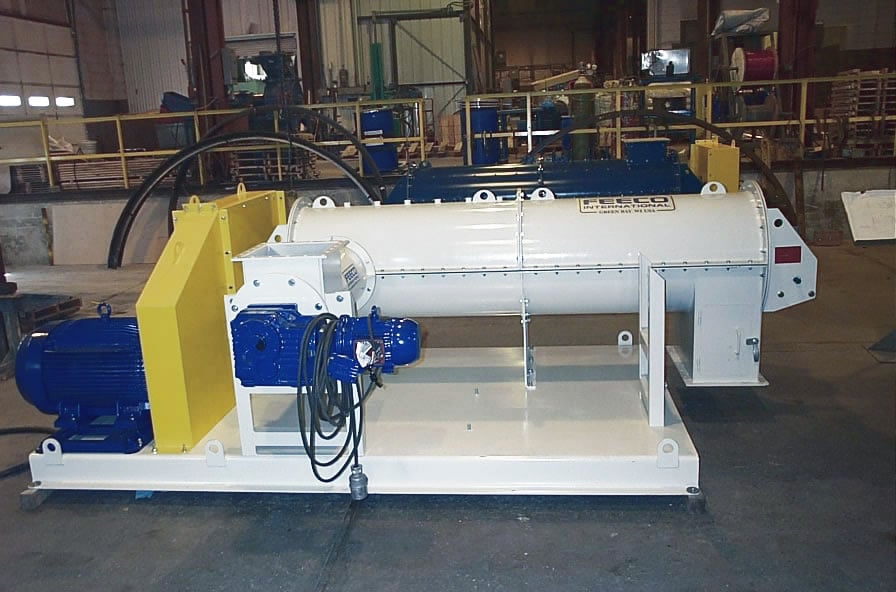
The pin mixer is a horizontal continuous mixer. Also known as a pin agglomerator, the pin mixer offers greater material densification than a disc pelletizer, and typically requires less binder. Whether you are conditioning a material, de-dusting, or micro-pelletizing it, our custom pin mixers are a preferred choice.
Pin mixers are an ideal continuous processing solution for ultra-fine materials, and mixing both solid and liquid feedstock components to create a homogenous mixture.
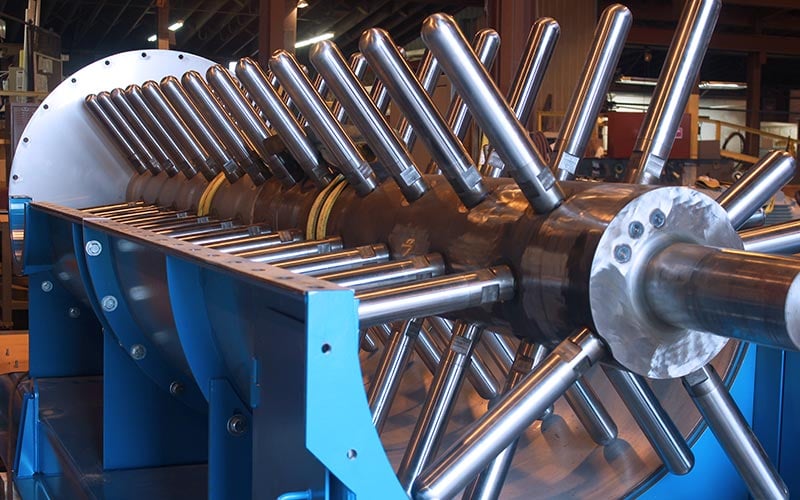
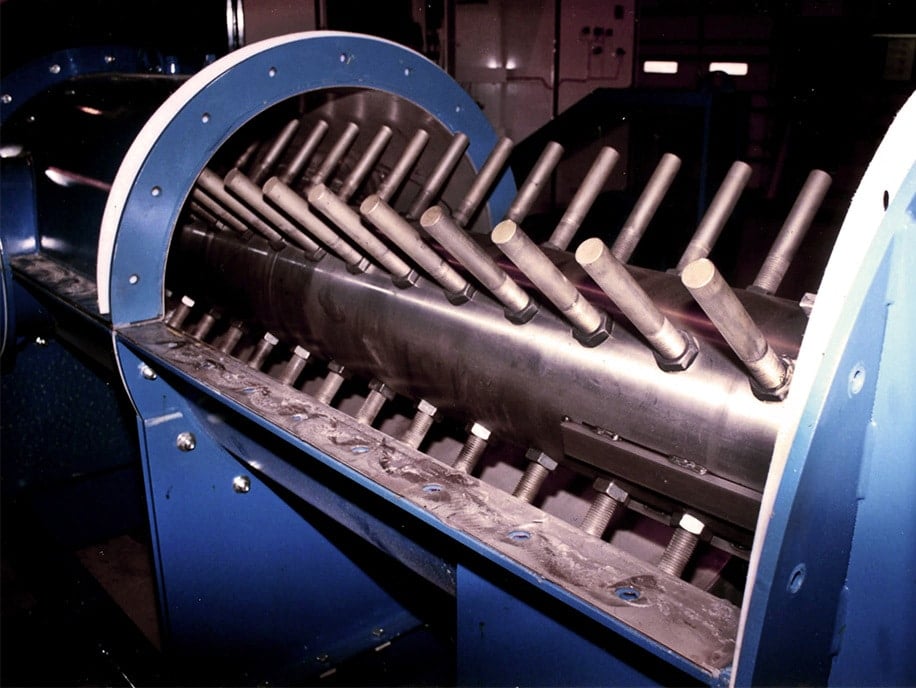
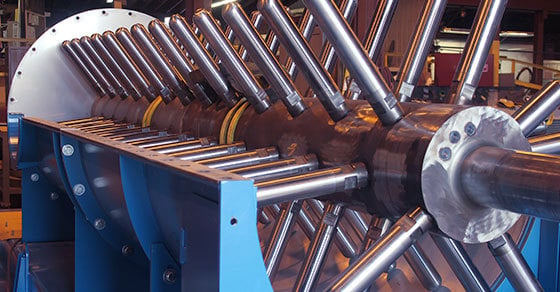
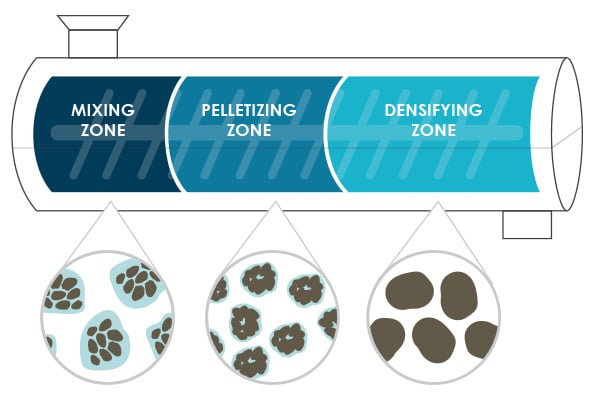
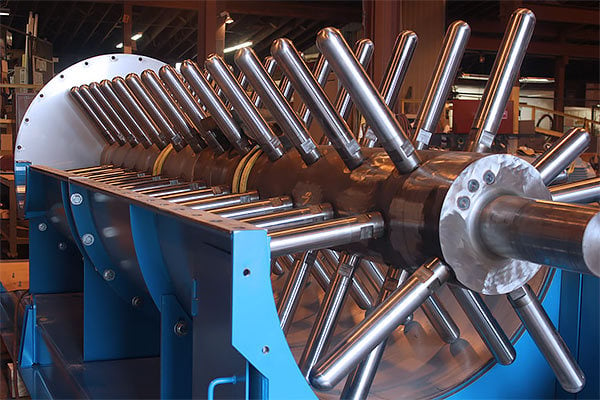
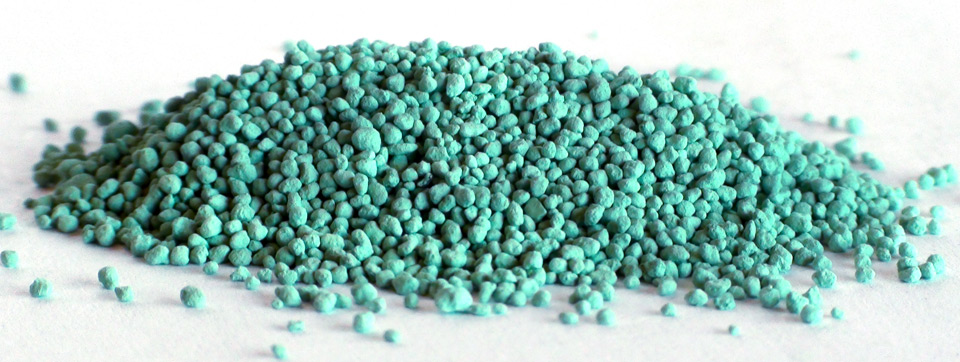
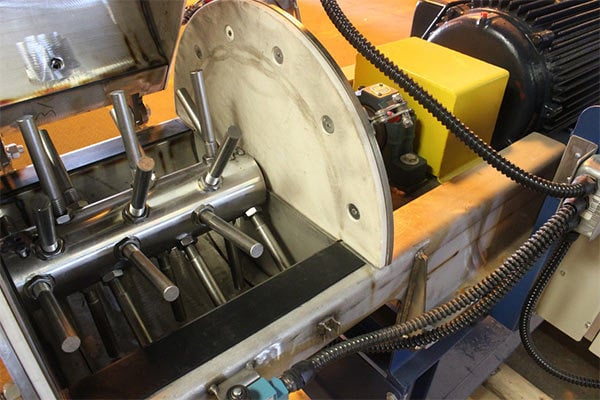
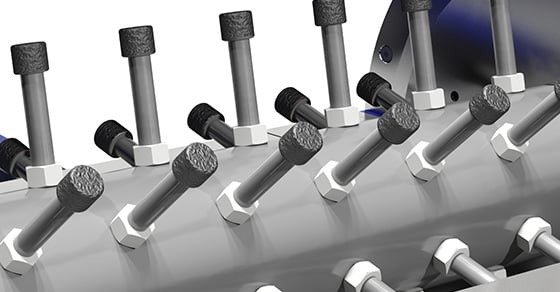
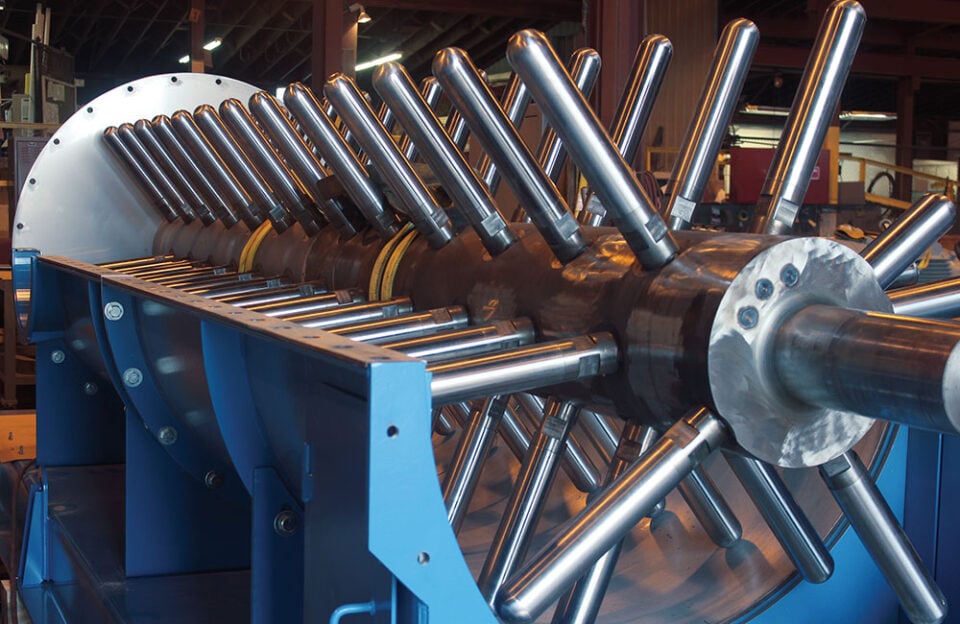
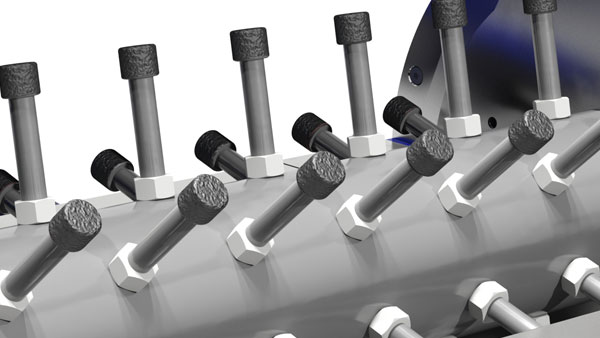
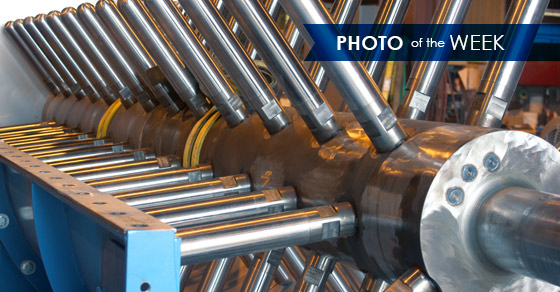
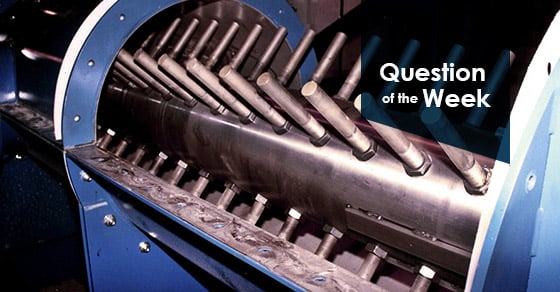
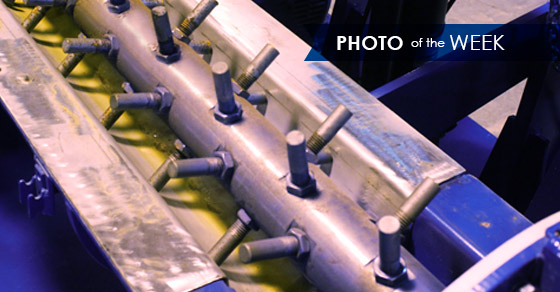
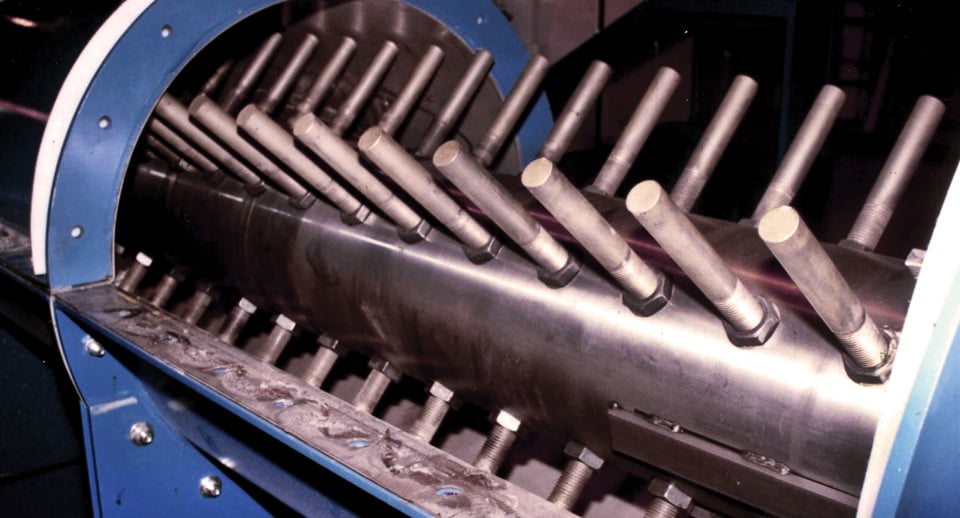
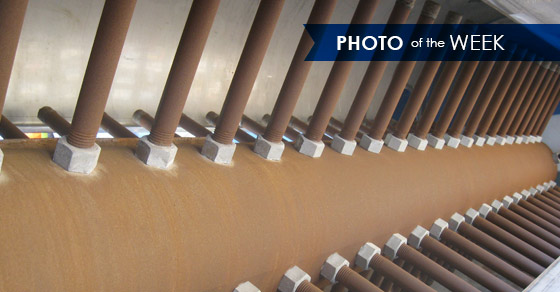
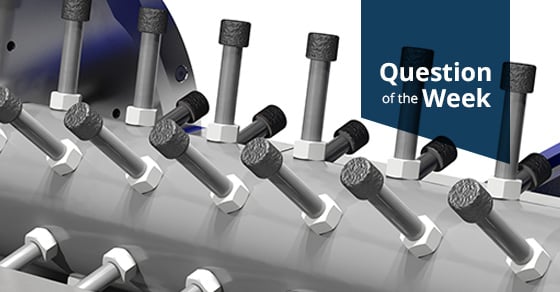
Material is fed into the pin mixer, while binder is continuously added at a specified rate. The high-speed spinning action created by the single rotor shaft affixed with rods (pins) thoroughly mixes the components and begins to form agglomerates as the material moves through the length of the mixer.
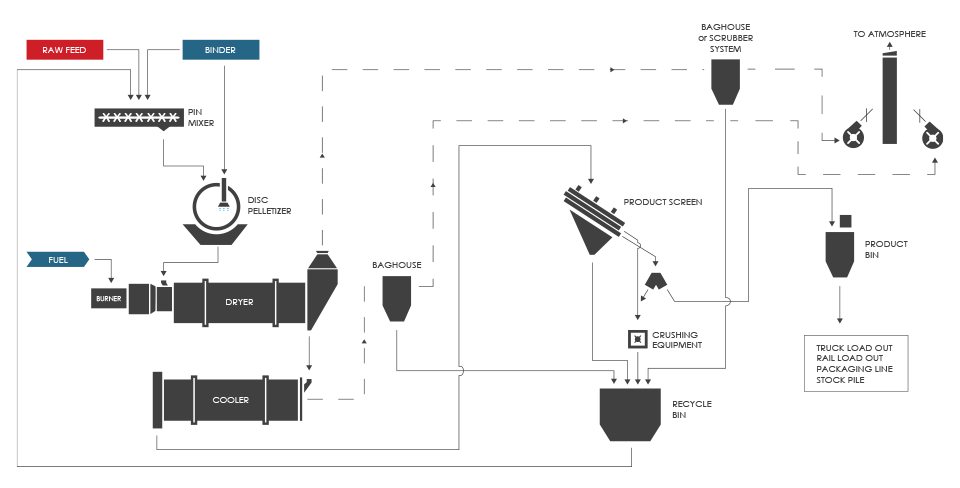
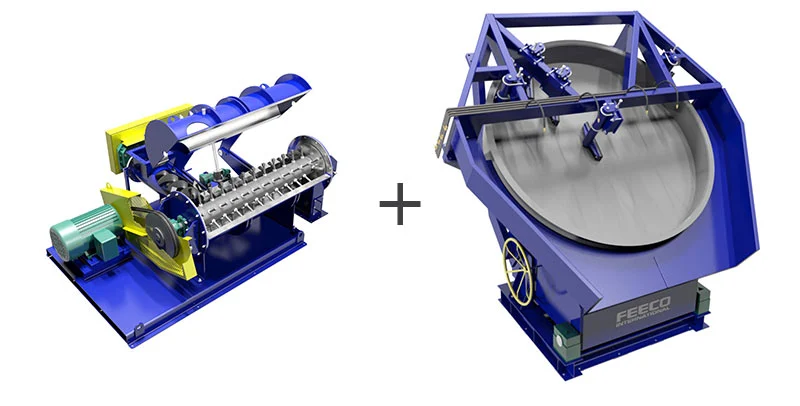
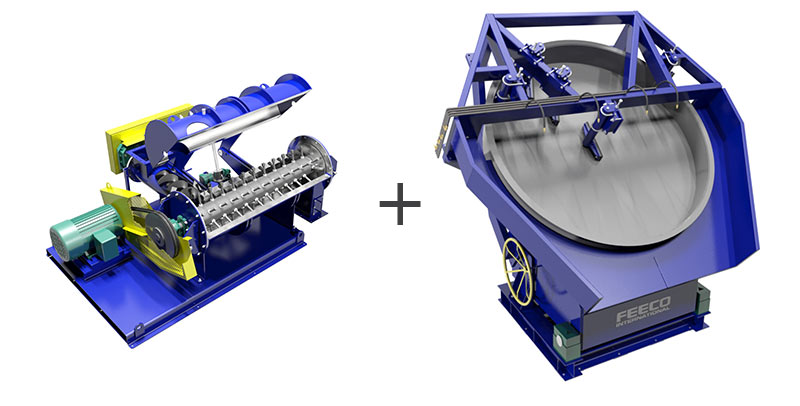
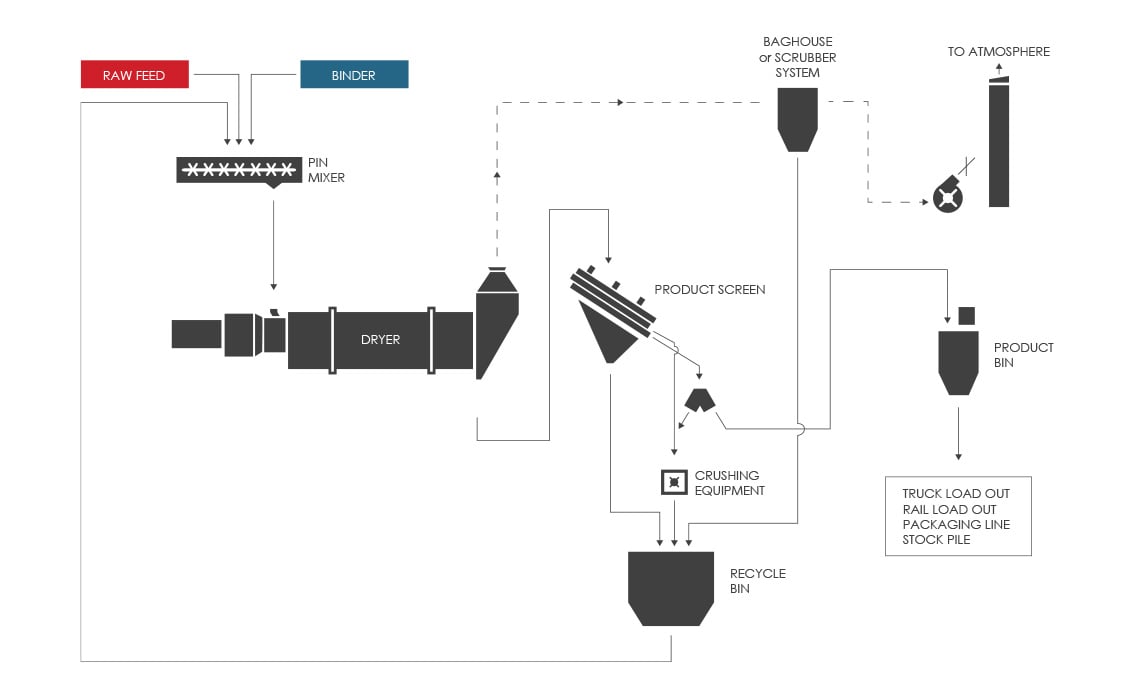
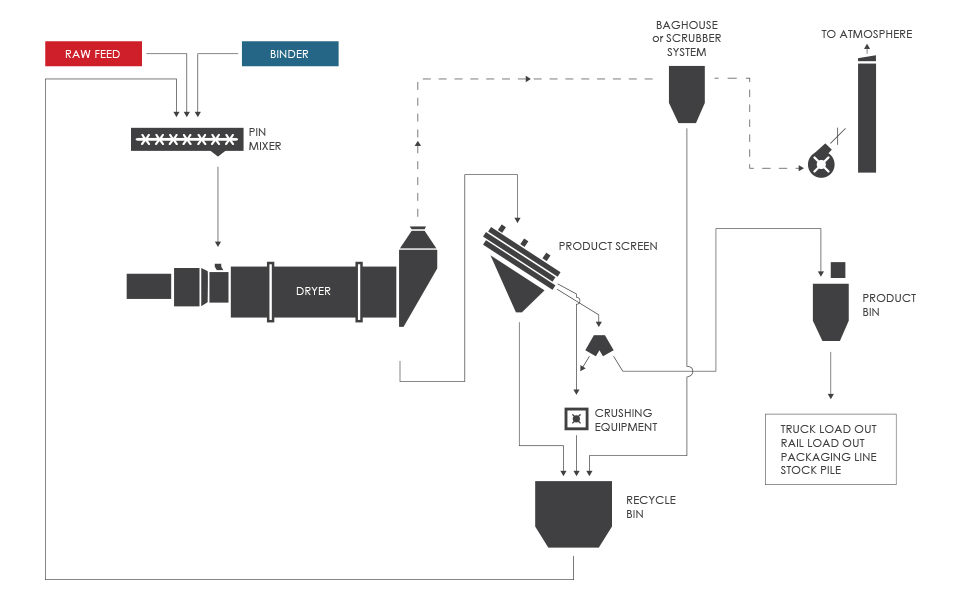
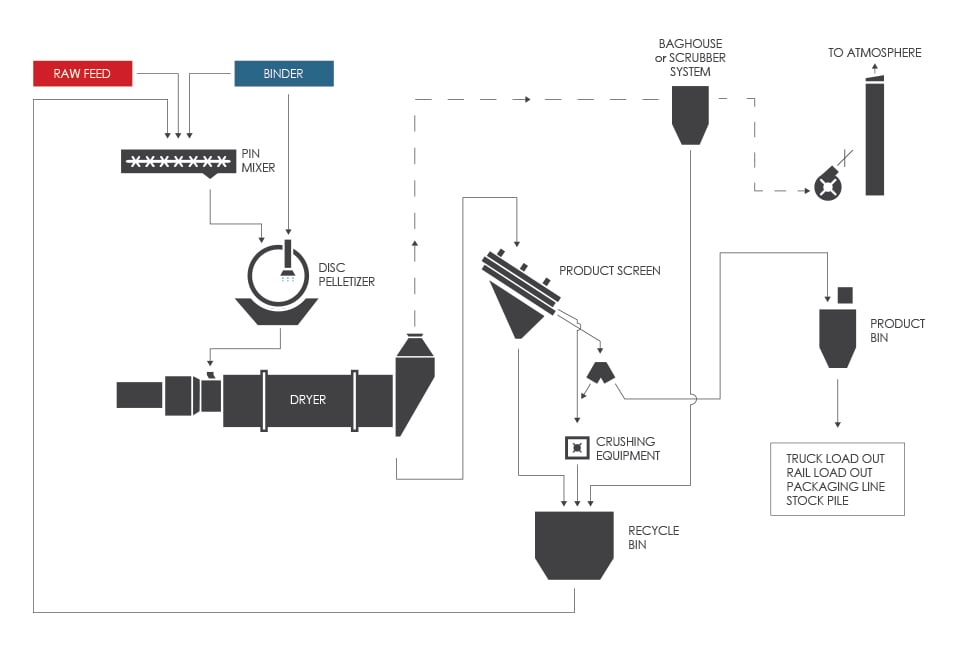
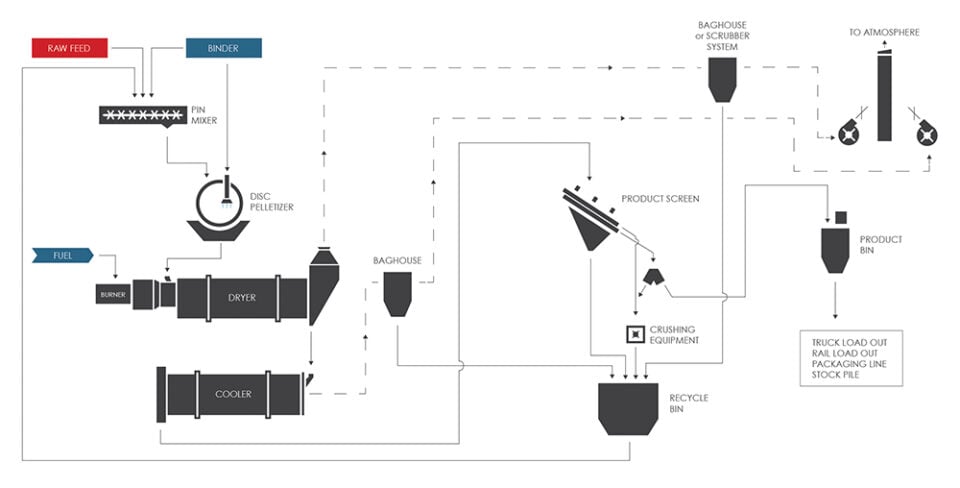
Pin Mixers are ideal as stand-alone pelletizing/agglomeration units, or as a method of pre-conditioning in a two-step agglomeration process involving a disc pelletizer or agglomeration drum.
FEATURES
- Size: 15″ – 50″ (380 – 1,270mm)
- Capacity: 500 lb/hr – 70 TPH
- Full sweep pin design
- Polished stainless steel liner to improve machine operation
- Available custom configuration
- Accurate feed ratios of powder to liquid for precise quality control
- Accurate production rates
- Custom designed control panel for housing controls
Pin Mixer Sizing
| MODEL | DIAMETER | DRIVE HP | CAPACITY | |||
| Std (in) | Metric (mm) | Std (HP) | Metric (kW) | cu. ft./hr | cu. m./hr | |
| 22″ | 22″ | 560 | 40 | 30 | 250-550 | 7-16 |
| 30″ | 30″ | 760 | 100 | 75 | 500-900 | 14-25 |
| 40″ | 40″ | 1,015 | 150 | 110 | 800-1,200 | 23-34 |
| 50″ | 50″ | 1,270 | 200 | 150 | 1,000-1,600 | 28-45 |

FEECO is capable of meeting the requirements necessary for CE marking equipment.

All FEECO equipment and process systems can be outfitted with the latest in automation controls from Rockwell Automation. The unique combination of proprietary Rockwell Automation controls and software, combined with our extensive experience in process design and enhancements with hundreds of materials provides an unparalleled experience for customers seeking innovative process solutions and equipment. Learn more >>
Optional Components
- Zero Speed Switches
- Raising Cover Assembly
- Abrasion-Resistant Pin Coatings
- Two Screw Feeders
- Various Pin Arrangements
- Variable Frequency Drive (VFD)
- Heat Transfer Jacket
PIN MIXER COMPONENTS AND PARTS
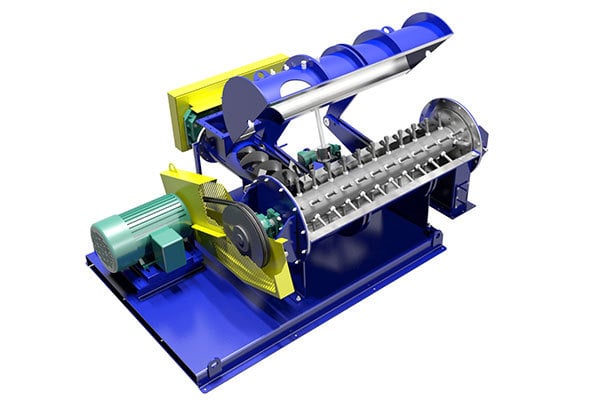
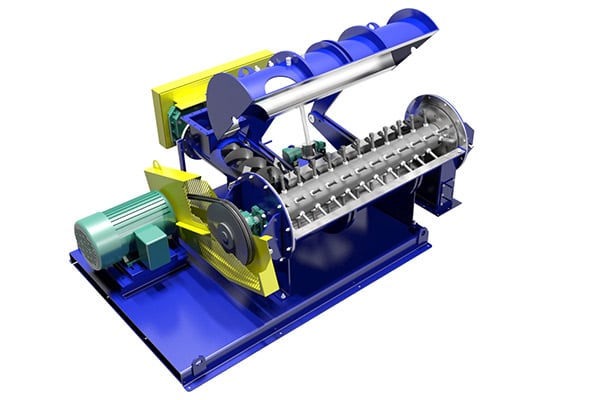
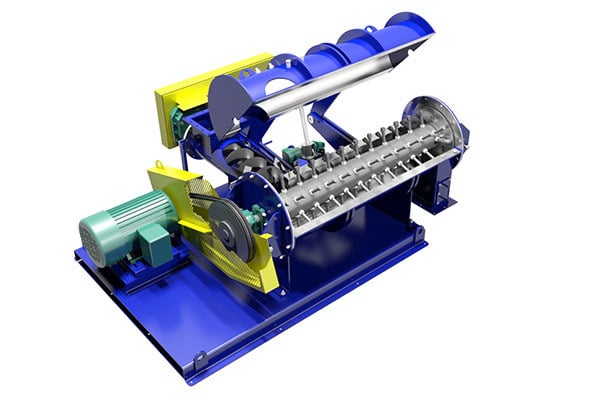
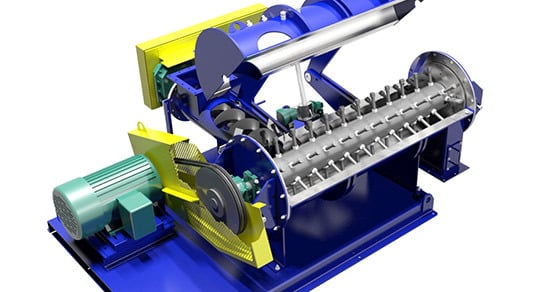
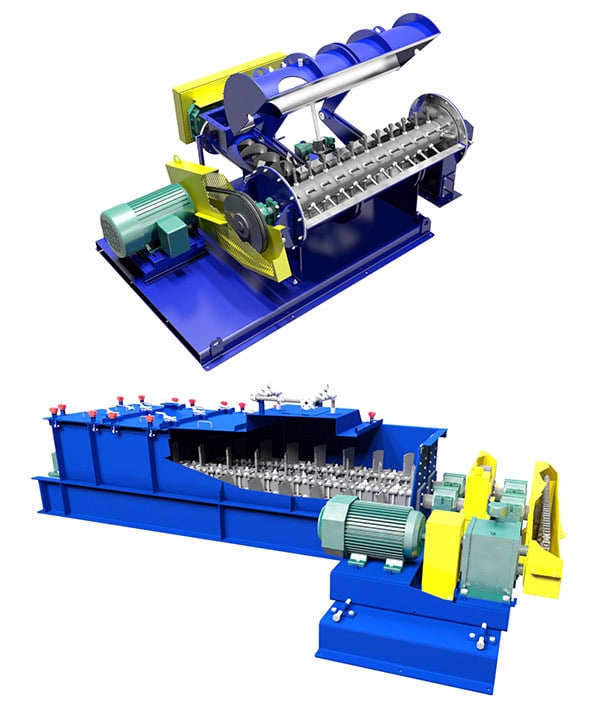
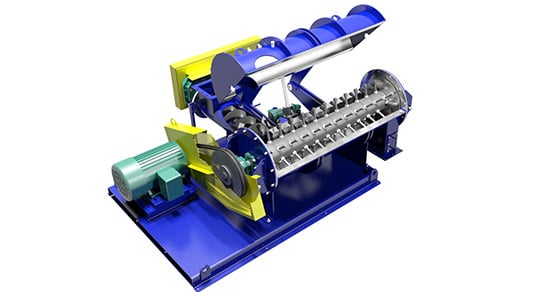
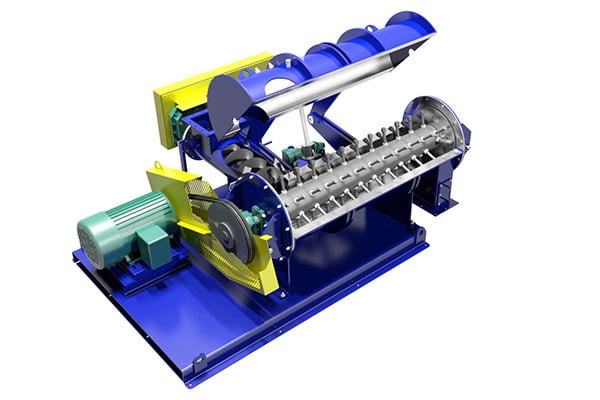
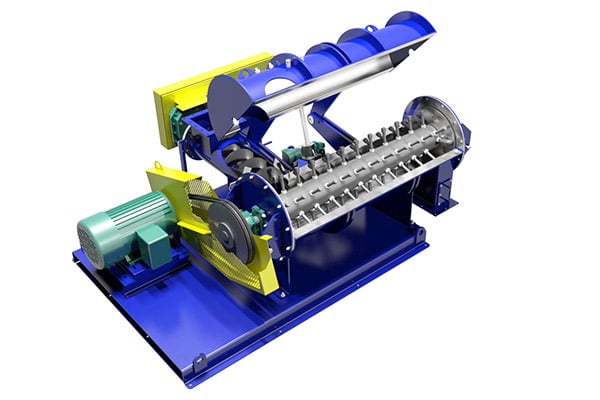
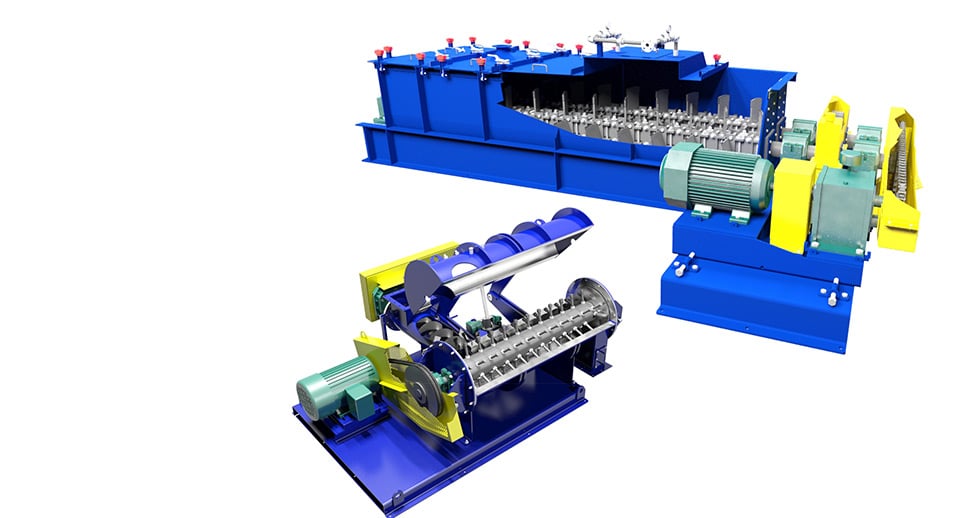
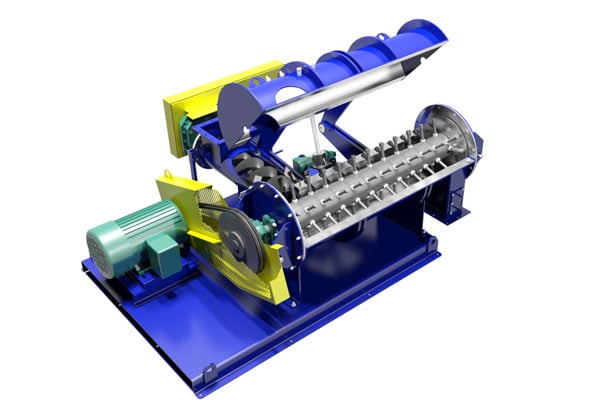
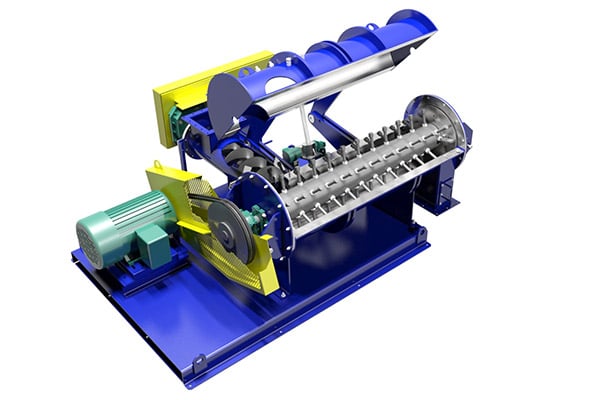
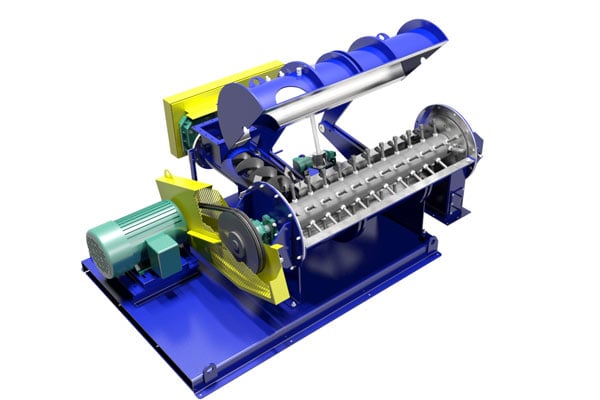
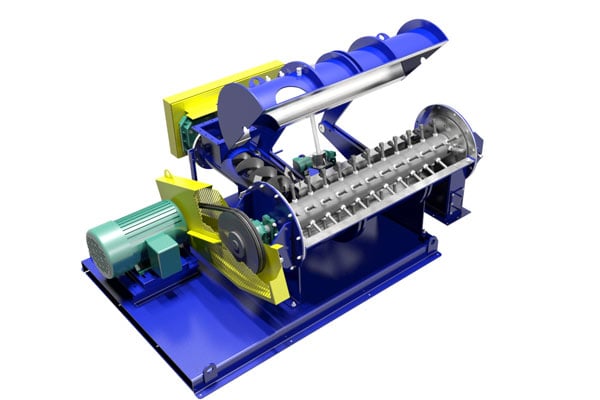
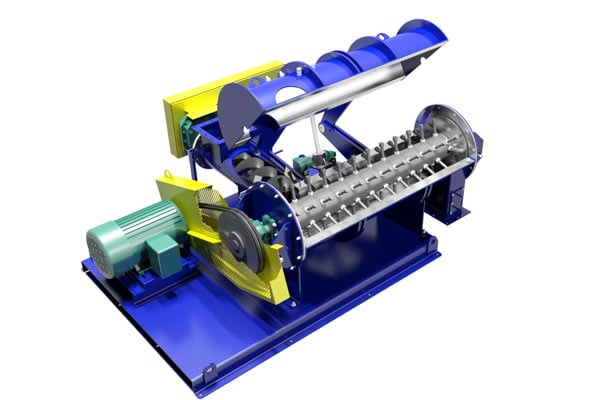
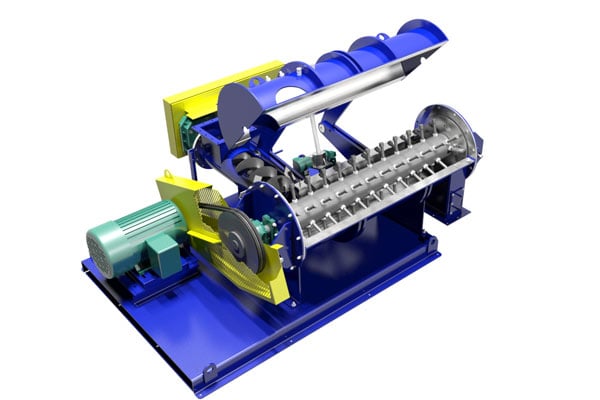
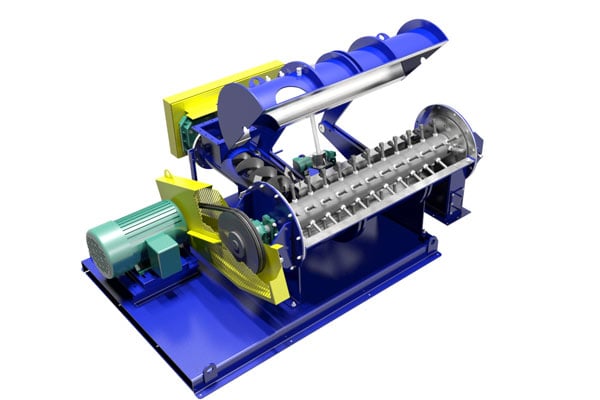
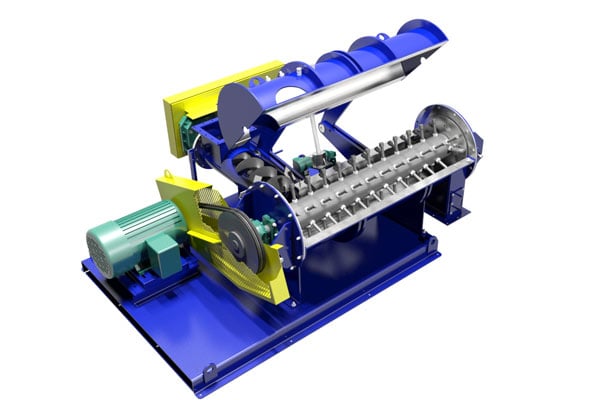
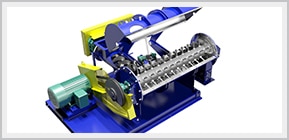
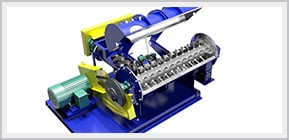
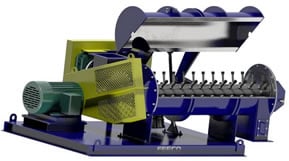
The image below shows the standard components of a pin mixer. Click image to view larger.
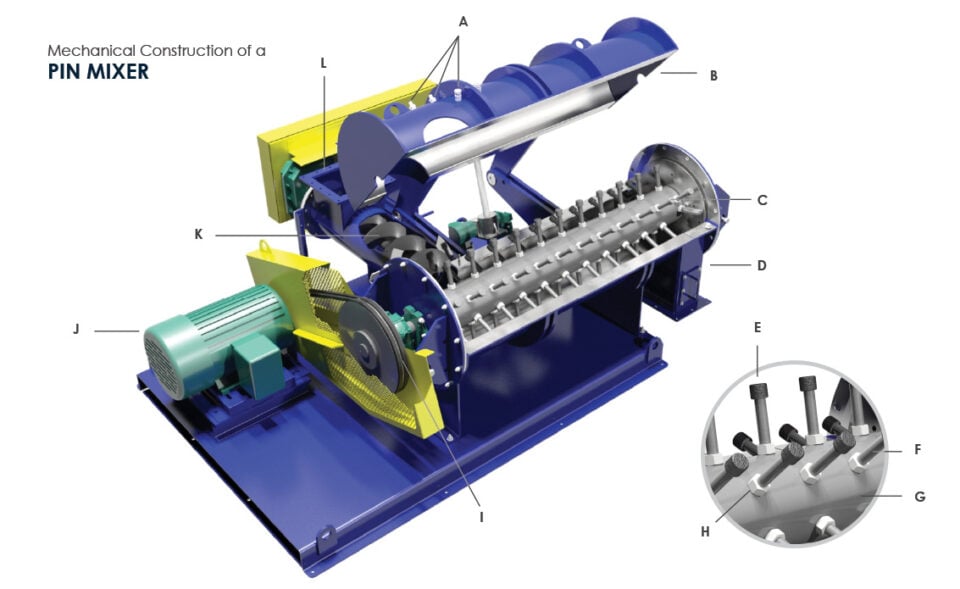
Mechanical Construction of a Pin Mixer (3D Pin Mixer by FEECO International)

A – Spray Ports
B – Actuated Hinged Cover (Screw Jack)
C – Pin & Shaft Assembly
D – Discharge Chute
E – Abrasion Resistant Coating
F – Mixing Pins
G – Mixer Shaft
H – Jam/Locking Nut – High Grade
I – V-Belt Drive
J – Drive Motor
K – Integrated Screw Feeder
L – Material Inlet
APPLICATIONS & MATERIALS
Pin mixers are used in a variety of applications, including:
- Coal Dust
- Ceramics
- Clay for cat litter
- Compost
- Fertilizers
- Flyash
- Gypsum
- Humate
- Inorganic Chemicals
- Limestone
- Organic Chemicals
- Pigments
- Proppants
- Pulp & Paper Products
- Minerals and Ores
- Nickel Concentrates
- Chicken Litter
- Phosphates
- Potash/Langbeinite
- Poultry Manure
- Sulfur
- Synthetic Gypsum
WHAT CAN AGGLOMERATION DO FOR YOUR MATERIAL?
Agglomeration offers a variety of benefits. Among them, agglomeration allows you to:
- Reduce Volume
- Stabilize Mixtures During Handling
- Eliminate/Reduce Dust Problems
- Control Hardness
- Reduce Packing, Storage and Transport Costs
- Improve Product Performance
- Improve Handling
To learn more about how agglomeration can benefit your material, see Why Agglomerate Your Material.
RESOURCES
PIN MIXER ARTICLES
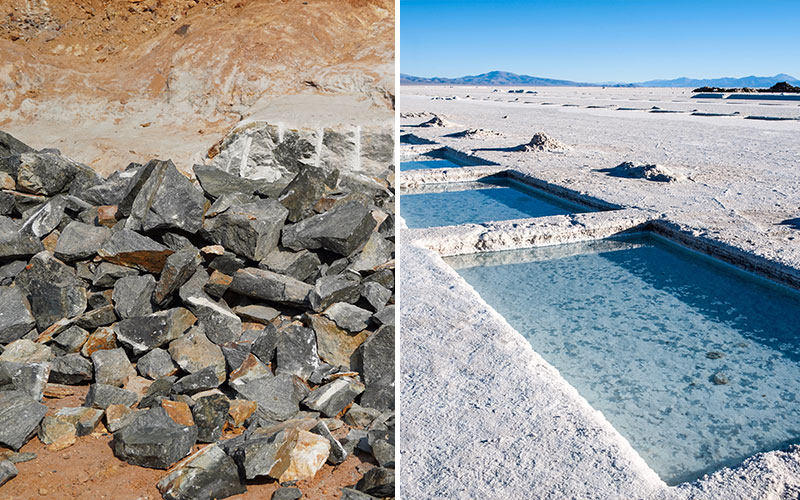
Innovation Center Uniquely Positioned for Lithium Process Development
As demand for lithium continues to surge, the rising use of novel lithium sources, paired with the growing need to maximize …
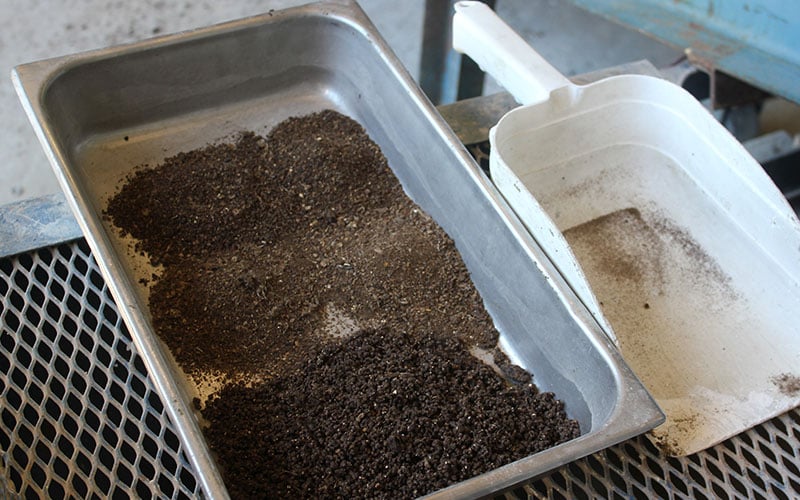
Common Industrial Process Mixing Problems (and How to Solve Them)
Industrial mixers are utilized to process bulk solids ranging from fertilizers and soil amendments to advanced chemical compounds, catalysts, and mineral …
BROCHURES
Agglomeration Brochure
Innovation Center Brochure


Pin Mixer Frequently Asked Questions (FAQs)
A pin mixer works by intensely spinning solids in a horizontal cylindrical trough as a spray system applies a liquid binder, producing a uniform blend and, where desired, small seed pellets.
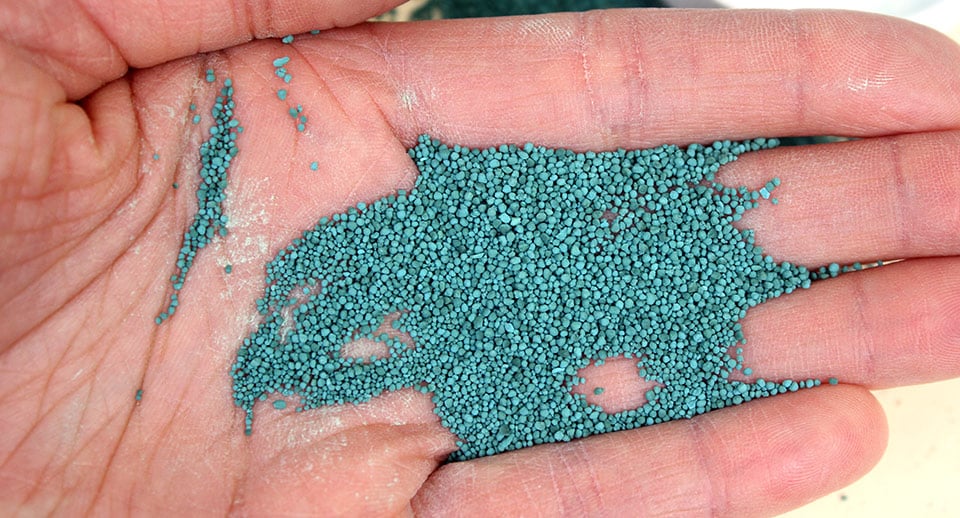
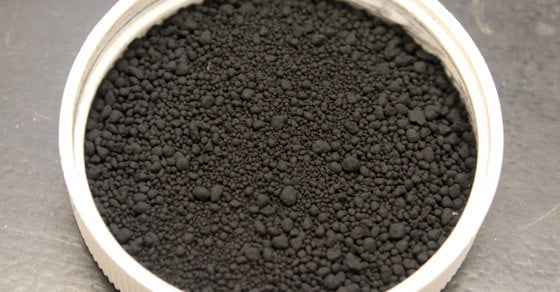
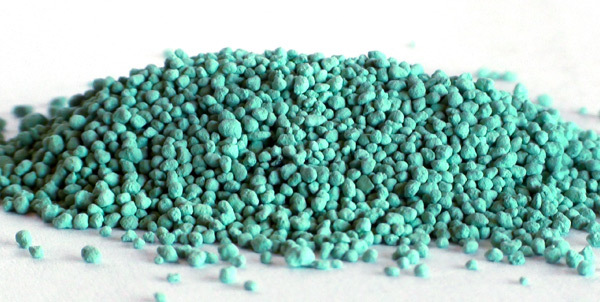
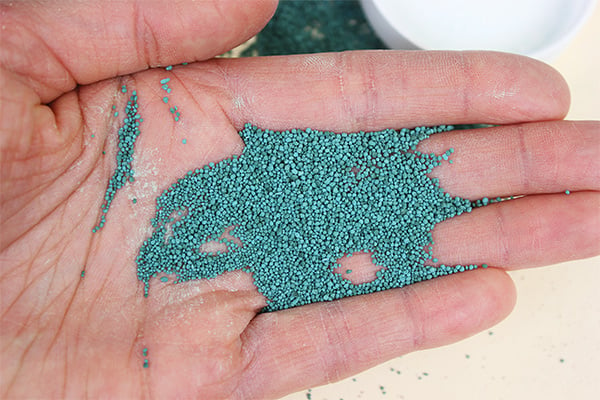
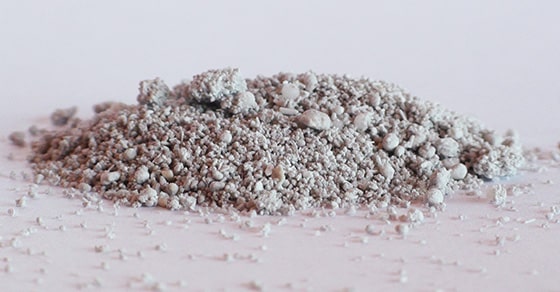
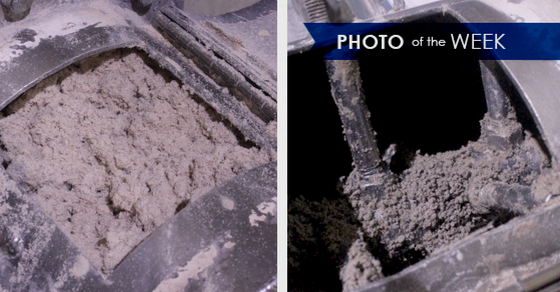
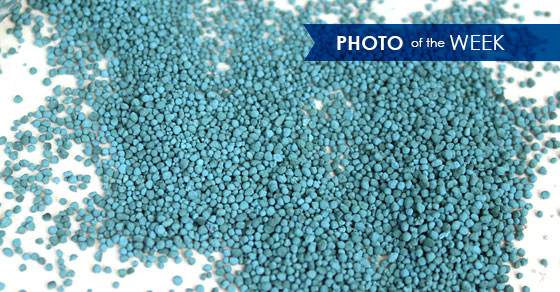
Yes, if desired. A pin mixer can produce a range of material consistencies ranging from a homogenized powder blend, to a wet “fluff,” as well as micro pellets/granules in the range of 20-60 mesh.
Pin mixers can achieve a range of objectives, including de-dusting/material, conditioning, micro pelletizing, and homogeneous mixing of solid and liquid components. Pin mixers can be used as a stand-alone device, or as a preconditioning device ahead of a disc pelletizer.
The pin mixer uses a high-speed, medium-sheer spinning action that imparts centrifugal force to homogeneously mix solid and liquid components.
Pin mixers are continuous horizontal mixers, making them an ideal fit for large-scale applications requiring a high throughput.
The primary difference between a pin mixer and a pugmill mixer is the mixing motion: pin mixers utilize a single spinning shaft, imparting centrifugal force, while pugmill mixers use a dual-shaft design that yields a folding-and-kneading motion. This difference in motion makes each better suited to different applications.
Pin mixers are ideal for operations that require greater material densification, as the high-speed spinning is better at densifying material than the folding motion of the pugmill mixer.
Pin mixers also have a lower torque than pugmill mixers, making them less appropriate in situations where tramp material is common, as this could become lodged between the pins and trough wall, causing damage.
For more information on the differences between these two industrial mixers, see our article, Choosing an Industrial Mixer: Pin Mixer or Pugmill Mixer.
Pin mixer retention time typically falls somewhere in the range of 15 seconds. Retention time is largely a result of the desired output, or the time required to achieve a homogeneous mixture or pellets of the desired size and density. This makes retention time highly application-specific.
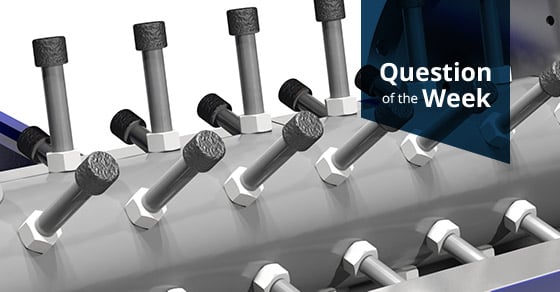
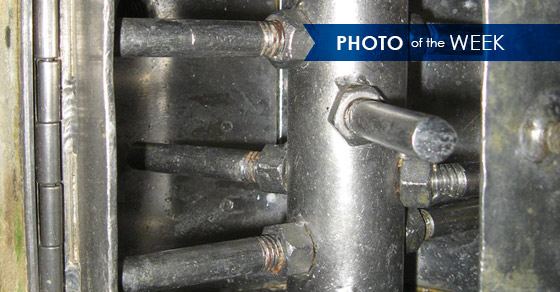
The most typical wear items for a pin mixer are the pins, as they experience the most contact with the material. The shaft and trough liner may also experience wear, but to a much lesser extent, unless working with a highly abrasive or corrosive material, though options for combating such wear are available.
Yes. Pin mixers offer ample opportunity for customization, including various pin arrangements, materials of construction, spray system designs, cover assemblies, and drive assembly types.
Yes, pin mixers are easily automated to assist operators in start-up and shutdown. More advanced automation and control systems are also available for operators looking for greater process transparency and more control over production parameters.
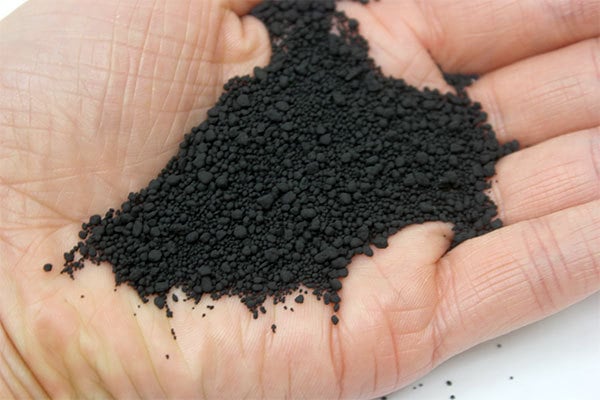
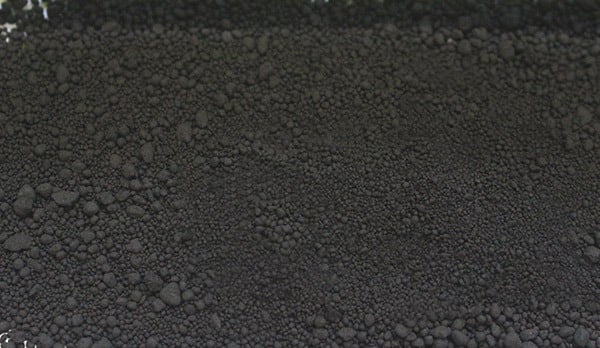
The best applications for pin mixers are those that require homogeneous mixing of solid and liquid components, particularly when the solid exhibits an ultra-fine consistency, such as with carbon black, pigments, gypsum, and clay-based materials. Pin mixers also provide an ideal approach to conditioning material prior to a disc pelletizer.
Whether a pin mixer is right for a given application can often be determined through manufacturer experience. When it is not clear if the pin mixer would produce the desired results, feasibility testing in a facility such as the FEECO Innovation Center may be necessary to confirm that a pin mixer will meet the intended objectives. Once proof of concept is shown, testing can be used to gather process data points for building the commercial-scale unit and operating it on a continuous basis in a production setting.
The benefits of using a pin mixer prior to a disc pelletizer often include:
- More uniform product due to a more even distribution of the binder
- Increased production
- Reduced binder costs (resulting from the pin mixer’s ability to increase density via motion)
- Improved flowability of feedstock onto the disc pelletizer