
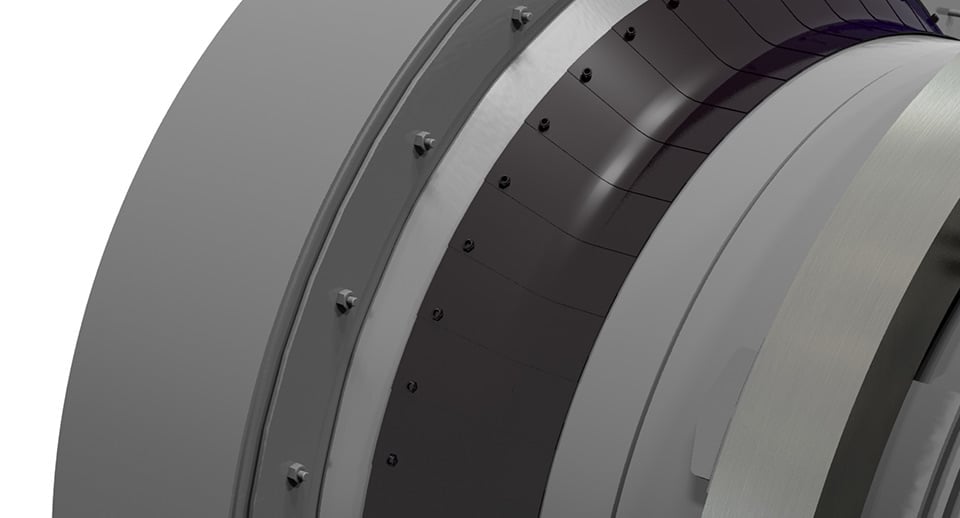
The sealing mechanism on a rotary dryer, kiln, or granulator provides a seal between the rotating drum and stationary housing. Proper sealing is critical to process efficiency, particularly in settings where heat is employed, preventing air ingress into the system. As a result, the replacement of worn seals can often improve process efficiency and reduce fuel costs.
FEECO offers several designs and options, depending on the application and the level of acceptable relative leakage.
AVAILABLE SEALS
FEECO offers the following seal options:
labyrinth seal
Relative Leakage >> 5.0%
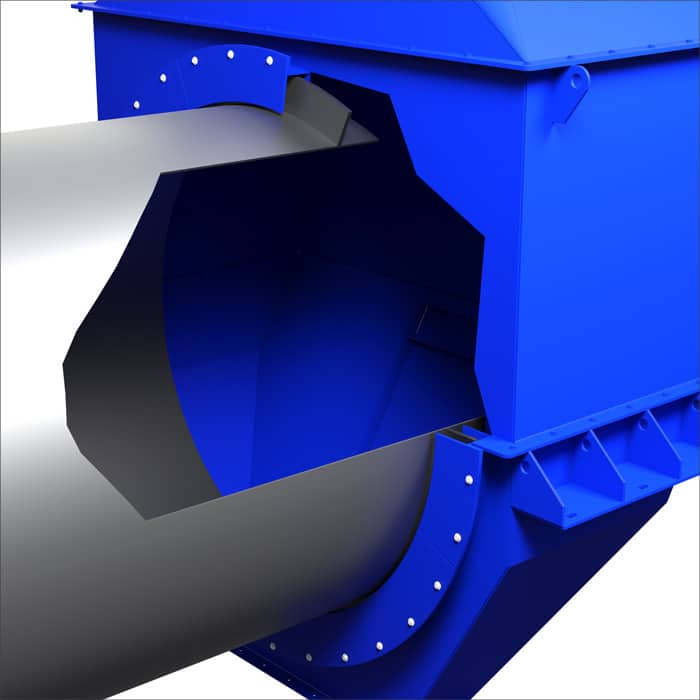
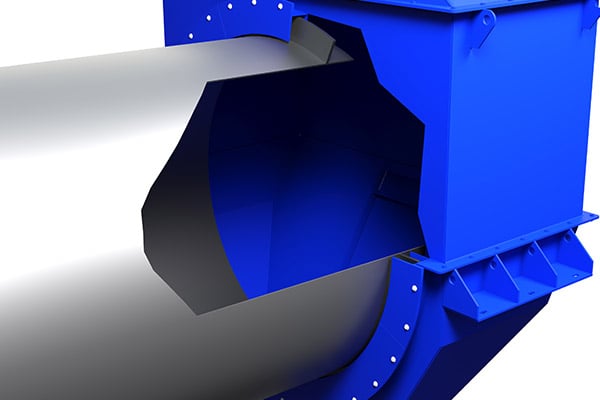
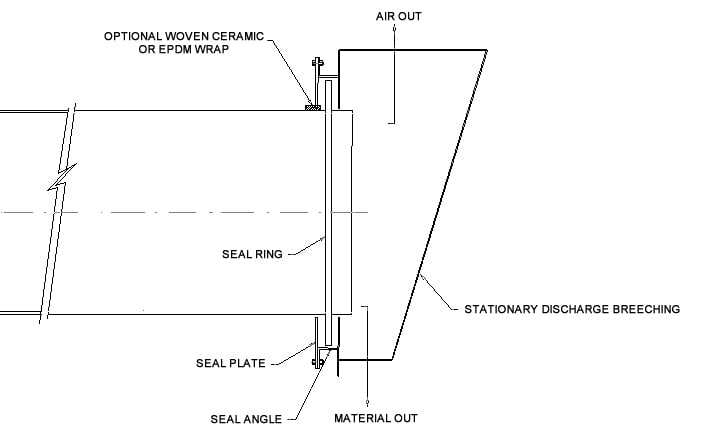
The labyrinth seal is a cost-effective option when air leakage into the system is not a major concern. This seal provides a tortuous path for the ambient air by means of relatively close clearance between the rotating seal ring and the non-rotating housing. Sealing can be improved with the addition of a flexible wrap between the seal plate and rotating shell.
SINGLE AND DOUBLE LEAF SEALS
Single Leaf Seal Relative Leakage << 3.0% to 5.0%
Double Leaf Seal Relative Leakage << 1.0% to 3.0%
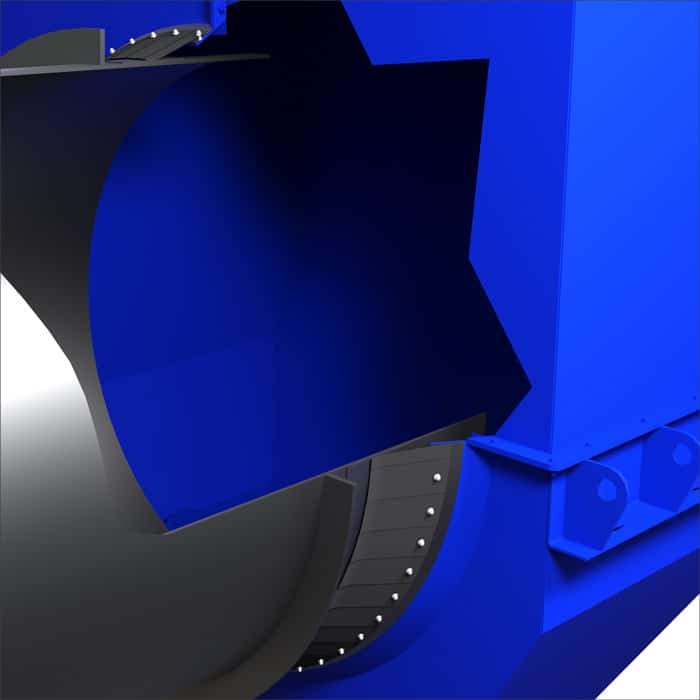
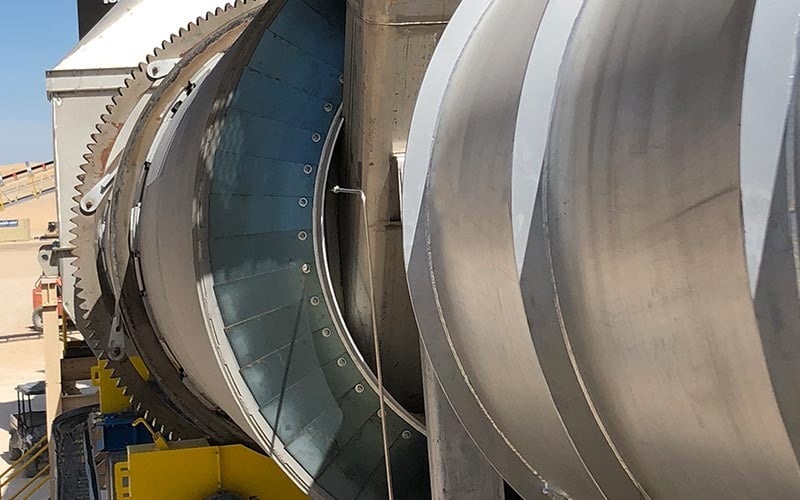
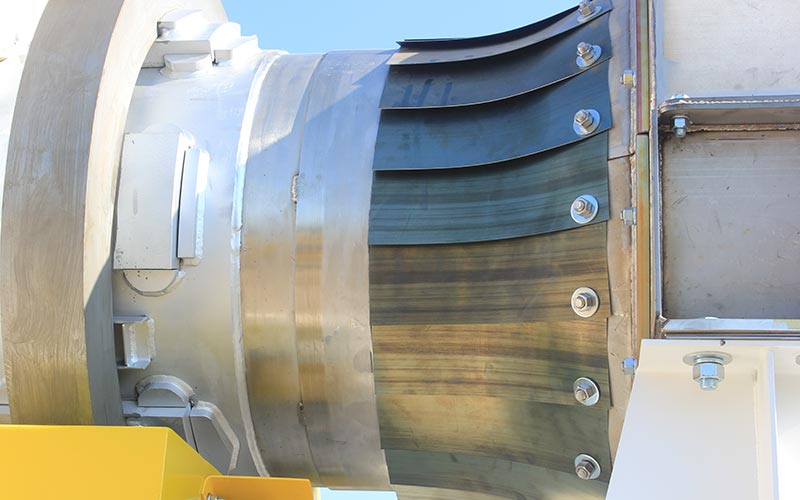
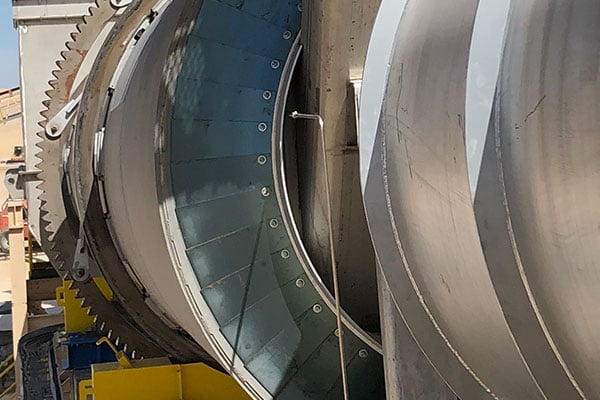
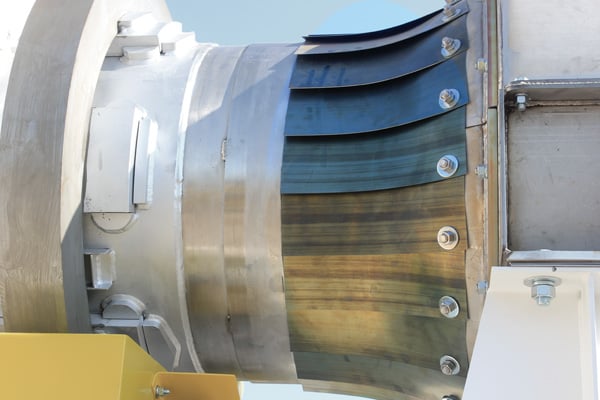
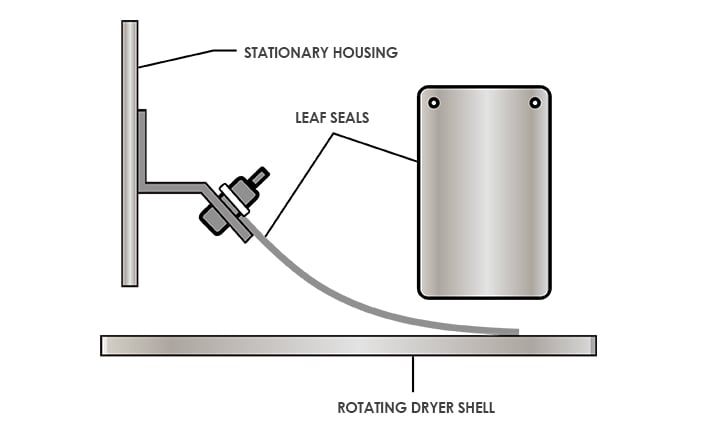
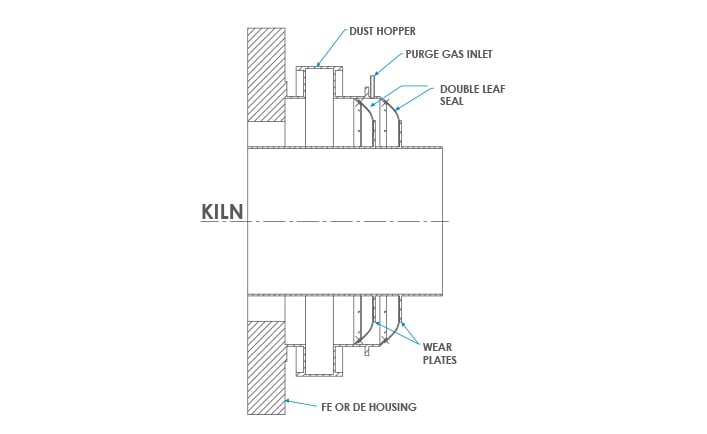
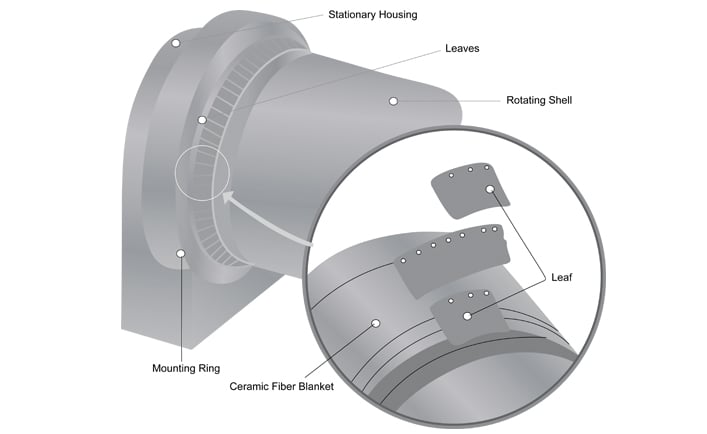
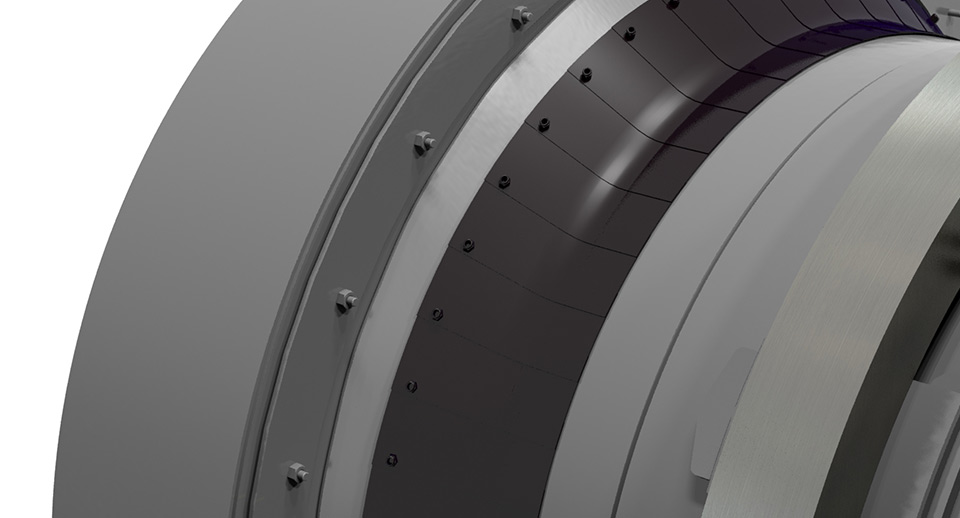
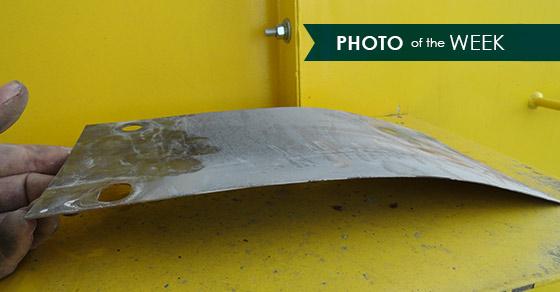
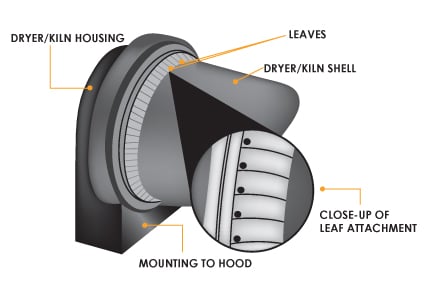
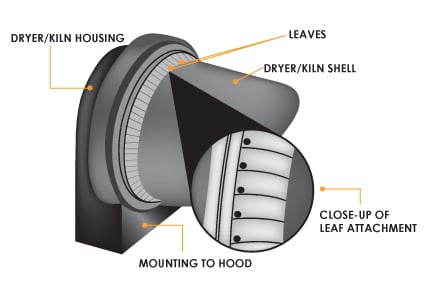
The single leaf seal (shown) is the seal of choice to minimize the leakage of air into a dryer or kiln. Limiting leakage reduces fuel consumption and can result in a capacity increase. The seal consists of a series of overlapping spring steel plates that are mounted to the housing and ride on a wear ring on the rotating shell.
The double leaf seal design is used when less leakage can be tolerated than with the single leaf seal, consisting of two leaf seals with a ceramic fiber blanket sandwiched between the two leaves. Leakage is about 25% of a single leaf.
BELLOWS SEAL
Relative Leakage = << 1.0%
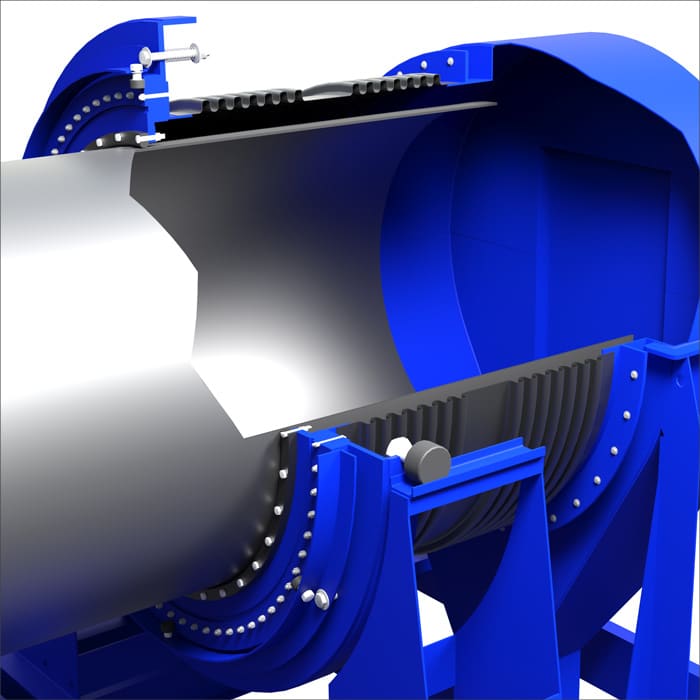
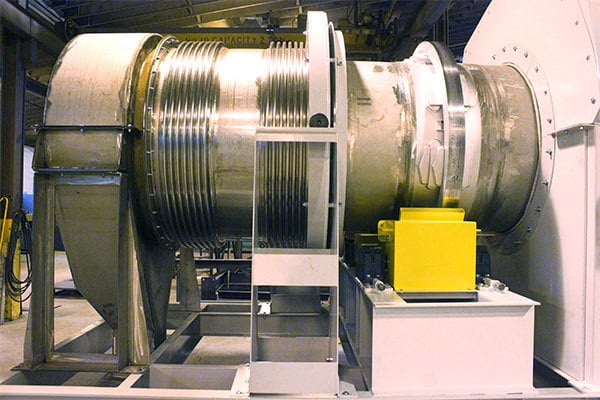
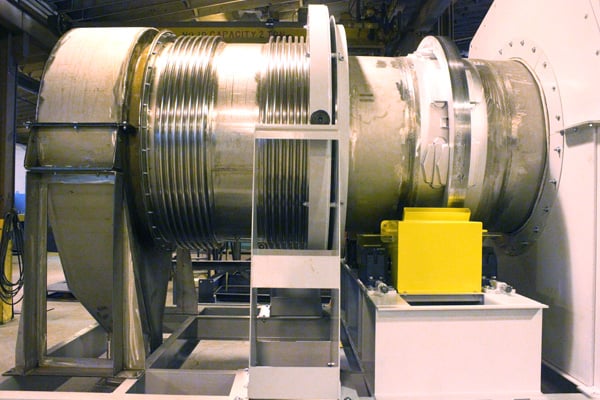
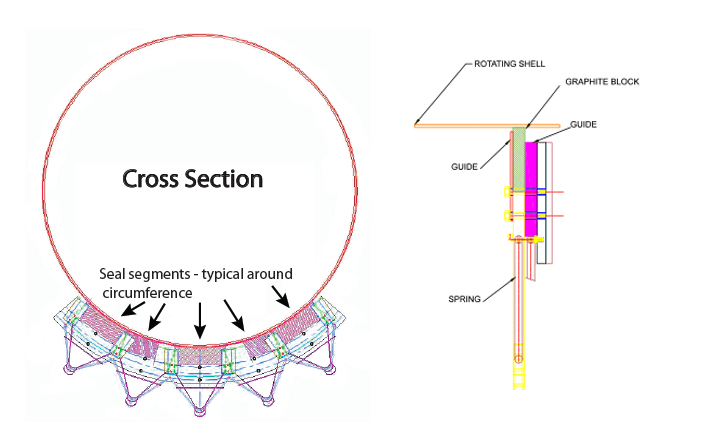
The bellows seal utilizes a wear material, such as graphite, to act as a face seal when compressed against a flat, rotating surface. The corrugated bellows accommodate significant longitudinal expansion—especially useful for higher temperature drums such as indirect kilns. The bellows are guided and supported by cam rollers.
INDICATIONS THAT A SEAL NEEDS REPLACEMENT
Indications that a seal may require repair or replacement include:
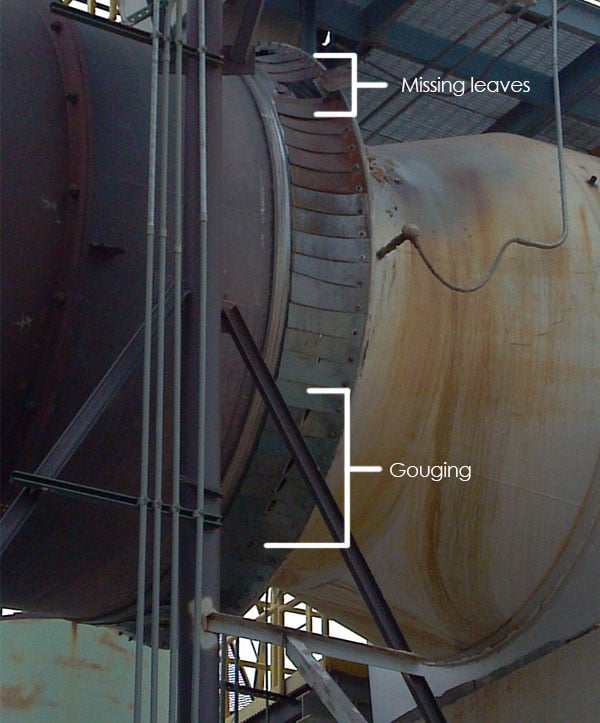
- Visible wear, such as missing or worn leaves
- Chattering or vibration near breechings
- Unexplained process inefficiencies such as a rise in fuel costs
- Material back spill
RESOURCES
SEAL ARTICLES
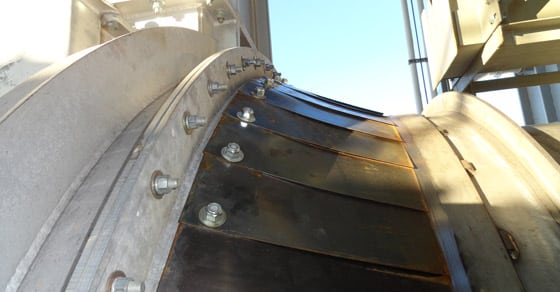
Seal Options for Rotary Dryers and Kilns
Rotary dryers and kilns are an integral part of the many industrial processes that shape our world. From fertilizer and chemical …
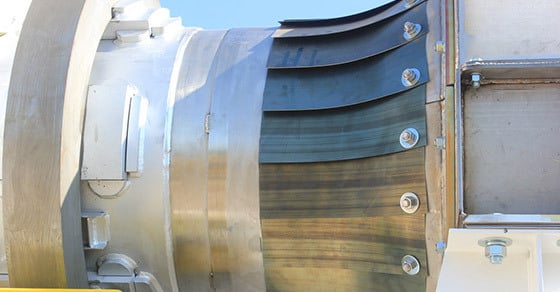
Knowing When it’s Time to Replace your Rotary Dryer or Kiln Seal
When working with a rotary dryer or kiln, the sealing mechanism is a critical component in the overall performance of the …
BROCHURES
Rotary Drum Seal Brochure

Annual Inspections Brochure
Frequently Asked Questions (FAQs)
How often seals require replacement is unique to each setting, dependent on the specific processing environment and operating conditions.
It’s important to note that if a seal requires frequent replacement, this could indicate an underlying issue. The original equipment manufacturer (OEM) or other qualified service provider should conduct a rotary drum audit to determine the cause.
Seals typically have a lead time between 1-4 weeks for new leaf seal plates or 4-10 weeks for a newly designed seal system, though circumstances may vary.
Yes. Seal replacement is a good time to evaluate the performance of the existing seal design and whether a different seal would better serve the process.
Yes. FEECO can evaluate your existing system and recommend the most suitable seal design based on your material and process conditions.
If FEECO provided the original drum, contact your dedicated parts person, including the following information:
- FEECO serial number
- Any changes in specs
If FEECO did not provide the original, contact us and include the following information:
- Corrosive, hazardous gases or vapors
- Drum type (cooler, dryer, etc.)
- Mode of heating (direct or indirect, co-current or counter-current)
- Shell temperature at seal area
- Maximum material temperature
- Drum speed
- Outside drum diameter
- Axial expansion of shell at seal location
- Shell material
- Seal required (discharge or feed end)
- Preferred material of construction
- Breeching type (plugin or enshrouding)
- Dimensions of breeching opening
- Exposed length available for sealing surface
- Suction or pressure