

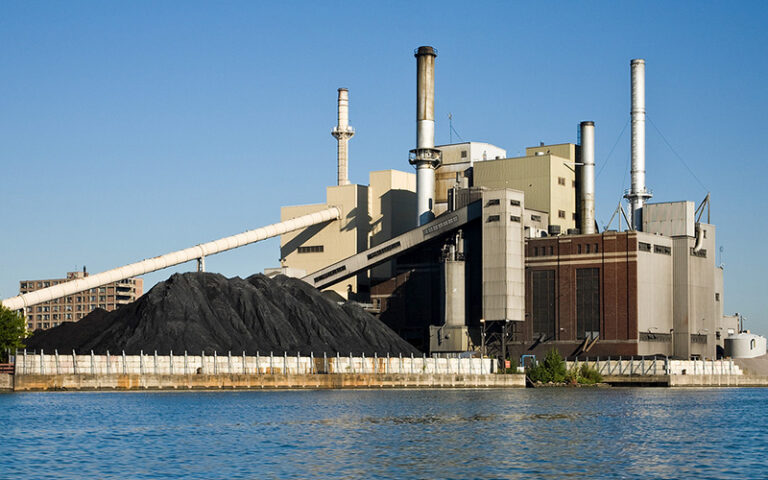
The growing need for a secure domestic supply chain of rare earth elements (REEs) has the U.S. exploring non-traditional sources of the material. With aggressive funding and incentives in place, the nation’s demand for rare earths could soon be satiated, at least in part, by recovering these critical minerals from some unlikely sources: wastes, most notably fly ash.
As the nation moves toward its goal of onshoring supply, the ability to assess processing techniques and establish key process data for scale-up will hinge on comprehensive process development. With batch- and pilot-scale rotary kilns available for testing, plus capabilities in drying, mixing, and agglomeration, the FEECO Innovation Center represents a powerful competitive edge in bringing rare earth recovery options to commercialization.
Demand for Rare Earths
Rare earths boast a number of properties that make them irreplaceable in a litany of high-tech applications. Officially designated as critical minerals in the U.S., as well as in many other nations, rare earths are vital to clean energy systems, defense technology, permanent magnets, electronics, and other applications that fuel our increasingly technological lives.
A 2025 report from Research and Markets expects the rare earths market to see a compound annual growth rate (CAGR) of 10.72% between 2024 and 2030.[1]
The Need for a Domestic Supply
While the U.S. was once the world’s top rare earths producer, several factors converged to allow China to take over the supply chain, which it now dominates at every step. Most estimates put China’s control of rare earth mining at around 70%, while processing and production are closer to 90%.
The risks associated with this level of control became tangible when China began putting export restrictions on the materials. In April of 2025, export controls on seven heavy rare earth elements, alongside related materials, metals, and magnets left some U.S. car manufacturers with no choice but to temporarily halt production.[2]
At the end of 2025, China added to the list of affected rare earths and tightened restrictions, forcing foreign entities to obtain a license for exporting any “parts, components, and assemblies” that held Chinese-sourced rare earths or were made courtesy of Chinese technology.[2]
Specifying that any affiliation with foreign military forces would be cause for denial, the move was a direct blow to the United States defense sector, putting the nation under an increasing sense of urgency to build a domestic supply chain.[3]
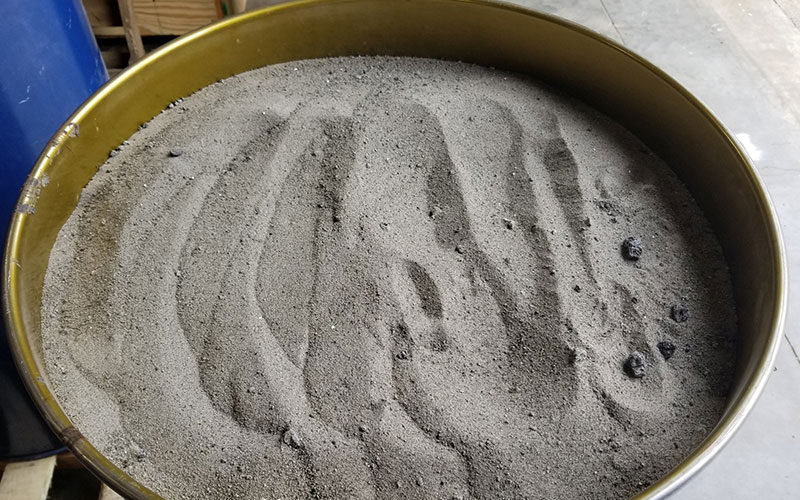
Fly ash to be tested in the FEECO Innovation Center
Opportunities to Recovery Rare Earths from Fly Ash and Other Wastes
While some domestic production from U.S.-based mineral deposits is on the way, the U.S. has been looking to more unconventional sources of rare earths to feed demand in the near-term.
Receiving much of the attention are coal-based wastes, most notably fly ash, a fine particulate residue produced during coal combustion. Produced in significant quantities, the waste has long posed a disposal challenge for coal-fired power plants. As illustrated in the Earth Justice graphic below, numerous ash storage facilities dot the nation.
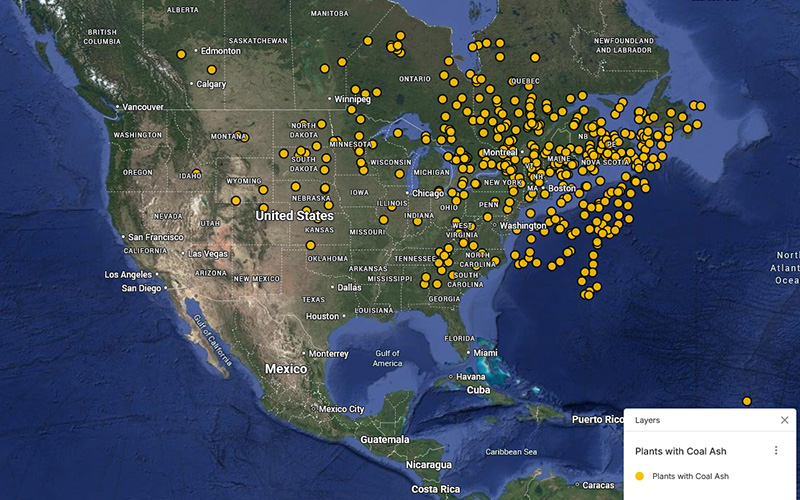
Plants with coal ash – Earth Justice[4]
In 2017, the U.S. Department of Energy (DOE), in partnership with the Office of Fossil Energy (FE) and National Energy Technology Laboratory (NETL), issued a report to Congress detailing the potential to recover REEs from fly ash and related coal byproducts.[2]
This sparked a growing interest in the idea of fly ash as a “secondary resource” for rare earths, providing a way to address a major waste problem while securing critical minerals. Researchers estimated these deposits are a valuable untapped resource, containing enough REEs to meet a century’s worth of U.S. demand.[5]
In 2024, a group of researchers published a study confirming what many suspected all along: the nation’s accessible coal ash piles were holding substantial value in REEs: $8.4 billion worth.[6]
How the U.S. is Incentivizing Rare Earth Recovery
Throughout recent years, the U.S. has continued to fund and incentivize projects aimed at recovering rare earths from fly ash and other wastes (mine tailings, e-waste, etc.) to secure a domestic supply and reduce the nation’s reliance on imports.
In 2021, the U.S. Department of Energy (DOE) awarded $19 million for projects to support rare earth production in communities built around producing fossil fuels. Through this funding, the Virginia Polytechnic Institute and State University were awarded nearly $1.5 million toward their work in recovering REEs and critical minerals from a variety of coal-based products, fly ash included.[7]
In 2023, through the Bipartisan Infrastructure Law, the DOE announced $32 million in funding for Front-End Engineering and Design (FEED) studies aimed at recovering REEs and other critical minerals from coal wastes.[8]
Not long after, the DOE announced an additional $30 million toward improving the economics and lowering the environmental impact associated with recovering REEs and critical minerals from coal resources.[9]
At the end of 2025, the U.S. Department of Energy’s (DOE) Office of Critical Minerals and Energy Innovation (CMEI) announced a Notice of Funding Opportunity (NOFO) that would supply up to $134 million to projects aimed at recovering and refining REEs from non-traditional sources, namely e-waste, mine tailings, and waste materials.[10]
Beyond funding projects, the U.S. has also put legislation in place prohibiting the use of rare earth magnets originating from China in any defense applications, a ban that will go into effect on Jan. 1, 2027. This will force the hand of government contractors to find alternatives, further incentivizing domestic production.
R&D Vital in Defining the Path(s) to Extraction
The path to commercial-scale, economically viable extraction of rare earths from fly ash and other waste sources remains somewhat unclear and will differ significantly across sources.
Further, variations in physical and chemical properties of source materials will add to the complexity of developing standardized flow sheets. Producers may also need to evaluate pretreatment methods such as drying and mixing to optimize downstream recovery.
Ongoing uncertainties and the likely complexity of commercialized fly ash technology suggest that designing processes to incorporate the generation of saleable co-products would be highly beneficial in achieving commercial viability.[11]
The result is a growing need for process development testing around rare earths, their host wastes, and potential co-products. This has been seen first-hand in the FEECO Innovation Center, where companies are trialing various waste sources, fly ash included, to evaluate metal recovery and the generation of co-products.
The Innovation Center Advantage for Rare Earths Recovery
The Innovation Center allows producers and recyclers to test the thermal treatment of materials —spent batteries, fly ash, and other mineral-rich wastes—at both batch- and pilot-scale in various test kilns to carry out processes such as calcination, volatilization, and reduction, among others. The kilns simulate real-world processing conditions, allowing producers to confirm the feasibility of their intended process, as well as refine the process on a continuous pilot scale to establish critical process data such as:
- Temperature profiles
- Residence Time
- Volumetric fill
- Air flow velocity (direct-fired kilns only)
- Atmosphere conditions
- Drum slope and speed
- Internal configuration
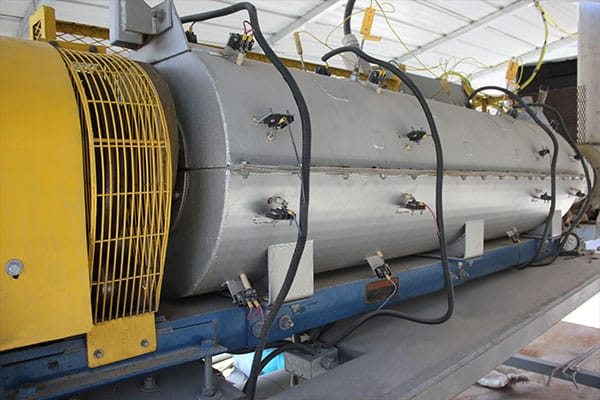
Indirect-fired, pilot-scale kiln used for testing in the FEECO Innovation Center
This type of testing significantly de-risks the scale-up process, providing proof of process and the data FEECO utilizes to engineer custom, purpose-built rotary kilns.
In addition to rotary kilns, the facility also provides testing capabilities for drying (rotary and fluid bed), mixing, and agglomeration, so producers can evaluate multiple process steps as needed.
Conclusion
As the need to reduce reliance on foreign imports of rare earths heightens, the nation’s efforts to recover these critical minerals from unconventional sources could be the key to a secure domestic supply, but only with sufficient process development capabilities at hand.
Process development services such as those offered in the FEECO Innovation Center will be critical in helping producers to illustrate feasibility and develop commercially viable flow sheets, while also establishing the data needed for commercial-scale equipment design.
The Innovation Center is backed by over 75 years of material-testing experience and is expertly staffed. For more information, or to schedule a test, contact us today!
SOURCES:
- Research and Markets. (2025, July). Rare earth elements market – global industry size, share, trends, opportunity, and forecast, 2020-2030F. Research and Markets – Market Research Reports.
- Kim, T.-Y., Dhir, S., Dasgupta, A., & Scanziani, A. (2025, October 23). With new export controls on critical minerals, supply concentration risks become reality – analysis – IEA. International Energy Agency.
- Baskaran, G. (2025, October 9). China’s New Rare Earth and magnet restrictions threaten U.S. defense supply chains. CSIS | Center for Strategic & International Studies.
- Where are coal ash dump sites?. Earthjustice. (2025, April 17).
- Crawford, M. (2024, April 23). Harvesting rare earth elements from Coal Ash. ASME.
- Reedy, R. C., Scanlon, B. R., Bagdonas, D. A., Hower, J. C., James, D., Kyle, J. R., & Uhlman, K. (2024, September 17). Coal ash resources and potential for rare earth element production in the United States – International Journal of Coal Science & Technology. Springer Nature Link.
- U.S. Department of Energy. (2021, April 29). DOE awards $19 million for initiatives to produce rare earth elements and critical minerals. Energy.gov.
- U.S. Department of Energy | National Energy Technology Laboratory. (2023, July 14). DOE invests $32M for projects to study production of critical minerals and materials from coal-based resources.
- U.S. Department of Energy | National Energy Technology Laboratory. (2023b, August 25). Biden-Harris Administration announces $30 million to build up domestic supply chain for critical minerals.
- U.S. Department of Energy. (2025, December 1). Energy Department announces $134 million in funding to strengthen rare earth element supply chains, advancing American Energy Independence. Energy.gov.
- Hower, J., Kolker, A., Hsu-Kim, H., & Plata, D. (2022, November 26). Rare earth elements in coal-combustion fly ash and their potential recovery | ESS open archive. ESS Open Archive.
