


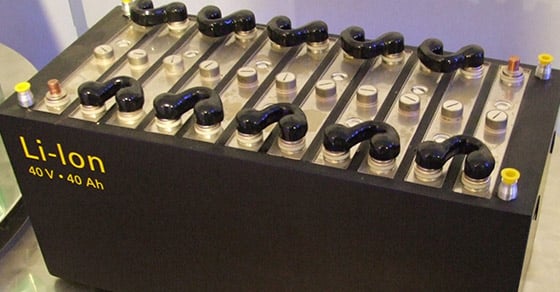
Obtaining lithium for use in advanced batteries has never been more critical. As resource scarcity, mineral distribution, and growing geopolitical tensions are putting increasing pressure on nations to build a secure, reliable supply chain of critical minerals to meet rising demand, the United States government is implementing initiatives to incentivize domestic critical mineral production and recovery, particularly when it comes to lithium-ion batteries.
While the U.S. is also looking to bolster domestic production of critical minerals and advanced batteries, given that China dominates much of the existing supply chain, recycling looks to be the most effective near-term approach to gaining a foothold in the battery market.
About Lithium-ion Batteries
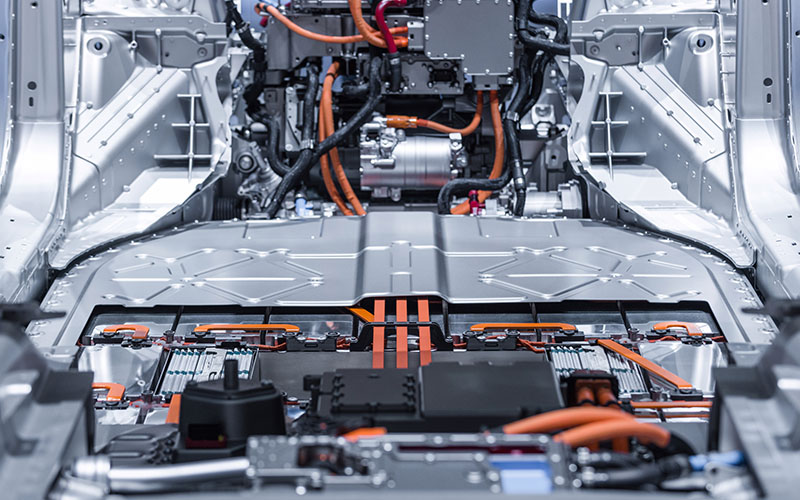
Lithium-ion batteries are a key tool in efforts to reach a more sustainable society. In addition to the opportunities they can provide, LIBs are also less toxic than their predecessors (ex., lead-acid batteries).
There are many types of lithium-ion batteries, categorized according to the active materials (AM) employed in the chemistry of the cathode. As a result, the makeup of these high-energy-density batteries can differ, but in general, contains a variety of increasingly valuable components such as:
Recovering these metals is essential to avoiding the depletion of finite resources, reducing reliance on mining new resources, decreasing environmental risks, and reaching a circular economy.
Demand for Battery Recycling
Several factors are driving demand for widespread battery recycling both globally and in the United States:
A Healthier Environment
Battery recycling is recognized for the significantly lower environmental impact it has compared to the production of batteries from virgin resources. Not only does it address resource scarcity, but a study out of Stanford University found that battery recycling:[1]
- Emitted 58-81% less greenhouse gas emissions
- Used up to 88% less water
- Used between 77% and 89% less energy
Beyond a healthier environment, several other factors are pushing demand for battery recycling. Chemical Abstracts Service (CAS), a division of the American Chemical Society (ACS), identified four overarching themes in a recent report:[2]
Regulatory Requirements
The increasing focus on establishing a circular economy in every aspect is ushering in a new wave of regulatory requirements all over the world. From managing hazardous wastes to recovering valuable materials, regulation is tightening around each step of the mineral lifecycle, leading to extended producer responsibility (EPR) programs, stringent recycling policies, carbon footprint requirements, and more.
Auto-Industry Supply Chain Decarbonization
Auto makers are responding to the combined call from governments and their customers to reduce their carbon footprints. With the production of lithium-ion batteries making up a significant portion of total electric vehicle (EV) manufacturing emissions (40-60%), batteries are a primary focus for sustainability gains.
CAS report authors cite a study by Fraunhofer IWKS in 2023, which found that recycling 1 kg of lithium-ion batteries could reduce carbon emissions by up to 4.6kg CO2 equivalent.
End-of-Life Batteries
The existing stock of EVs on the market has begun reaching end of life, with experts anticipating a wave of end-of-life batteries hitting the market in the coming years as EV adoption continues to rise. The growing deluge of these spent batteries creates a pressing need to properly manage this new “waste” stream.
Need for Critical Minerals
Perhaps the most widely recognized push for battery recycling is the rapidly growing need for critical minerals, a demand the pace of which cannot be matched by current mining activities and development timelines. The CAS report expects a gap between supply and demand to emerge and widen after 2035.
U.S. National Security
In addition to the trends identified by CAS, another factor is making battery recycling especially crucial to the U.S.
Rising geopolitical tensions overseas have put national defense efforts – and the materials that support them – under a microscope. The communications systems, drones, and electronics underpinning modern warfare all run on lithium-ion batteries.
According to industry experts, Beijing currently controls between 85% and 90% of global cathode production and over 97% of anode manufacturing, creating a critical vulnerability in U.S. national defense.[3]
How the U.S. is Addressing Battery Recycling Needs
The CAS report provides an overview of global battery recycling capacity, finding that current capacity falls around 1.6 million tons per year, with an expected increase to over 3 million tons per year once planned facilities are operational.
China’s capacity, which continues to expand, far exceeds any other nation, with current estimations at 1,210,000-ton annual capacity. In contrast, North America holds just 144,000 tons.[2]
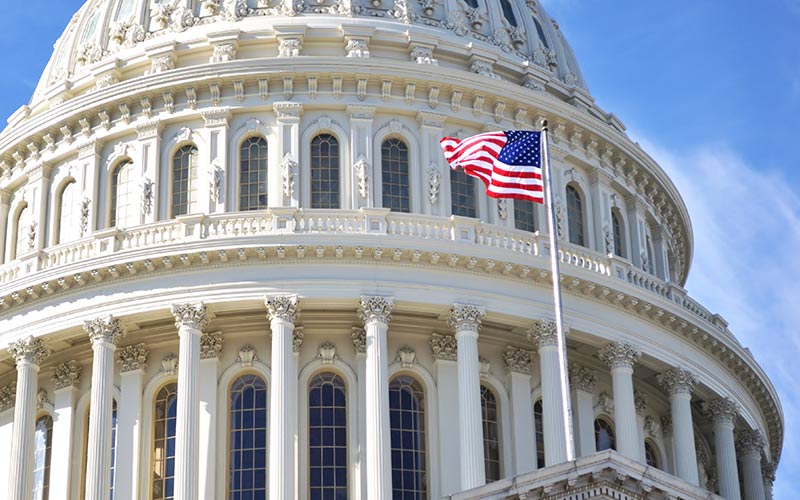
Recognizing this staggering gap, the U.S. has been putting initiatives and funding in place to grow battery recycling (and production) capacity.
In 2021, the Federal Consortium for Advanced Batteries, under the Departments of Energy, State, and Commerce, released a National Blueprint for Lithium Batteries. The blueprint lays out several goals aimed at building a secure supply of domestic batteries and covering the complete value chain.[4]
To meet these goals, the U.S. began aggressively funding the industry.
Funding Opportunities
The United States started ramping up efforts to incentivize domestic battery processing in 2022 under the Inflation Reduction Act, implementing a grant program aimed at funding research, development, and demonstration projects around battery processing, recycling, and material production. Numerous projects were selected for funding under the program.
Most recently, the U.S. Department of Energy (DOE) announced a Notice of Funding Opportunity (NOFO) of up to $500 million, marking the third round of funding under the DOE’s Battery Materials Processing and Battery Manufacturing and Recycling programs, both of which are funded by the Infrastructure Investment and Jobs Act (IIJA 40207 (b)).
In addition to grants, the government has been investing heavily in the private sector to advance progress through direct loans as well.
Changes to the NDAA
While funding projects is the foundation needed for building a domestic supply chain, the growing sense of urgency around eliminating national security risks has led to further, more aggressive action as well.
In December 2025, Congress passed the Fiscal Year 2026 National Defense Authorization Act, or NDAA. Passed annually, this year’s NDAA came with a few critical reforms related to advanced batteries, introducing several restrictions on how the Department of Defense (DoD) acquires advanced batteries and related materials.
The changes, which will be implemented in phases starting in 2028, have significant implications on government contractors and subcontractors. According to government contract legal consultant agency Crowell:[5]
The FY 2026 NDAA codifies DFARS [Defense Federal Acquisition Regulation Supplement] 252.225-7052, which prohibits sourcing critical minerals — including components or elements — that are mined, refined, or separated in non-allied foreign nations (Section 848).
The legislation also specifically prohibits acquisition of advanced batteries and components from certain foreign entities through Section 842.[6]
In other words, any company that supplies battery-containing systems or components to the U.S. military will no longer be able to source any of their materials from Foreign Entities of Concern (FEOC). They will also, through transparent documentation, be required to prove where materials and components originated from.
Approaches to LIB Recycling
Benchmark Minerals estimates that bridging the battery supply and demand gap will require at least $1.6 trillion of global investment in infrastructure to process end-of-life batteries and pre-consumer feedstocks, such as battery manufacturing scrap and recalled products.[7]
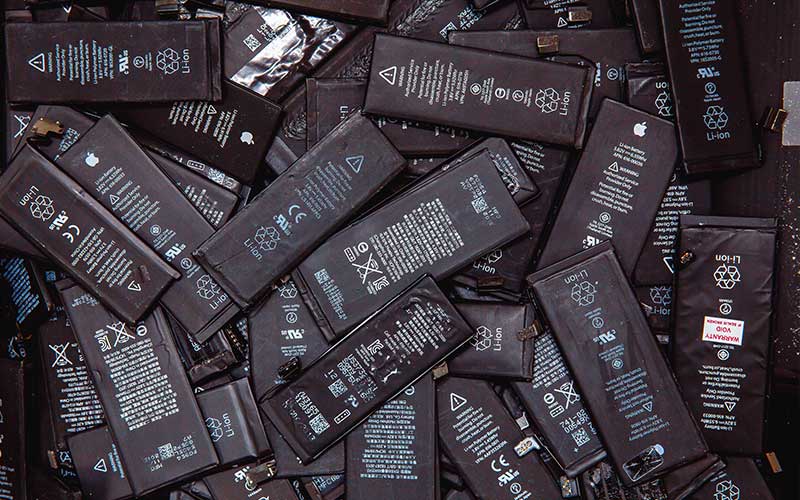
While research has increased around the recycling of lithium-ion batteries and many processes are being examined, the industry has generally yet to realize an economic way of fully recycling LIBs and recovering all valuable components within. After processing spent LIBs into black mass, recycling technologies center around three main categories: hydrometallurgical, pyrometallurgical, and direct recycling, each with its own advantages and challenges.
Hydrometallurgical approaches, which rely on aqueous chemistry to recover metals, are efficient but require the use of toxic chemicals and also present a high waste management burden. Pyrometallurgical techniques, which are often carried out in rotary kilns that use high temperatures and a controlled atmosphere for recovery, allow for processing different types of batteries effectively, but are energy intensive and require off-gas treatment.
Direct recycling, which focuses on recovering and regenerating cathodes, is considered the most environmentally friendly, but is the most nascent approach, facing challenges in efficient sorting and generating high-value materials from mixed feed without cathode degradation.8
As a result, significant research and development work around these techniques and hybrid approaches to recovering metals from spent batteries continues.
And while the United States currently lacks the infrastructure to support the level of commercial battery recycling required, the aforementioned government incentives, paired with private sector investments, are moving the needle, with producers continuing to explore and refine options around specific battery chemistries.
Whichever method(s) is chosen, producers will require commercial-scale equipment backed by thorough validation testing, particularly when it comes to scaling technology.
Equipment manufacturers must be ready to meet producers on their development journey, offering batch- and pilot-scale testing for metal recovery and related material processing.
Why Recyclers Are Turning to the FEECO Innovation Center
The FEECO Innovation Center offers comprehensive testing capabilities around mixing, agglomerating (pelletizing), drying, and thermally treating hundreds of materials, including recovering metal from spent batteries.
For metal recovery using rotary kilns, producers can confirm feasibility and demonstrate proof of process, testing a variety of process conditions to establish:
- Air flow (co-current or counter-current)
- Configuration (direct or indirect)
- Temperature profiles
- Drum slope
- Drum rotational speed
- Configuration of internals
- Residence time
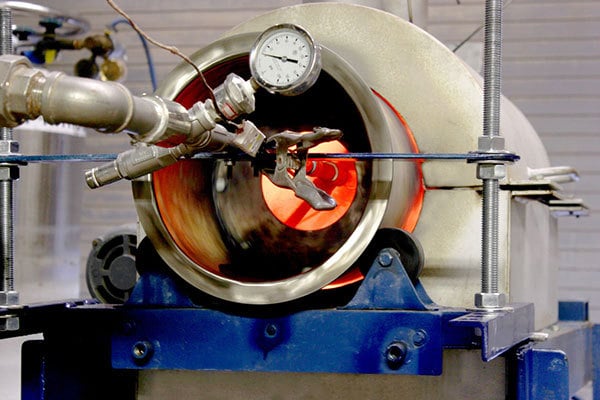
Indirect batch kiln used for testing in the FEECO Innovation Center
Data gathered during testing not only helps to establish feasibility and demonstrate proof of process, but it also helps to de-risk the scale-up process by collecting real-world data for use in equipment design.
“I think everyone recognizes that LIBs are not going away; we have to find an economic way to recover the critical materials that go into them in order for this to be sustainable in the long run,” states Alex Ebben, FEECO Process Sales Engineer and thermal processing expert. Ebben has been on the front lines of testing such processes in the Innovation Center.
Conclusion
Several factors, ranging from changing regulatory requirements to national security risks, are creating an urgent need to recycle lithium-ion batteries and the valuable minerals they contain, both globally and within the United States.
And although a standard approach to efficiently and economically realizing the full value contained in spent batteries has yet to be realized, government incentives, paired with the growing sense of urgency, are making progress. Recyclers and mineral resource companies are making progress and exploring options, with facilities like the FEECO Innovation Center providing a critical outlet for testing concepts and developing commercial-scale equipment.
The Innovation Center is backed by over 75 years of experience and expertise and features a variety of batch- and pilot-scale equipment for testing a range of processes and materials. FEECO then uses this data to engineer and manufacture custom rotary kilns, tailored specifically to their intended application. For more information on the Innovation Center, or to schedule a test, contact us today!
SOURCES:
- Stanford University. (2025, January 31). Recycling Lithium-ion batteries delivers significant environmental benefits. Stanford Report.
- CAS, Deloitte. (n.d.). Lithium-Ion Battery Recycling Market and Innovation Trends for a green future. Chemical Abstracts Service (CAS).
- Stars and Stripes. (2026, January 15). America’s Defense Arsenal runs on Chinese batteries and the clock is ticking to build domestic capacity.
- U.S. Department of Energy. (2021, June). National Blueprint for Lithium Batteries 2021–2030 executive summary June 2021. Federal Consortium for Advanced Batteries.
- Barbee-Garrett, A., Lynch, O., Baker, J., Cliffe, A., Canter, J., Brown, C., Mitchell Baker, L., Robb, K., Perumal, V., Montani, S., Mathieson, S., Kouroupas, B., Harrison, J., Gruden, M., Growley, K., Golchini, E., Gashaw, R., Ferraro, M., Delfeld, R., … Curran, C. (2025, December 29). The FY 2026 National Defense Authorization Act. Government Contracts Legal Forum.
- Congress.gov. (2025, December). Text – S.1071 – 119th Congress (2025-2026): National Defense Authorization Act for fiscal year 2026 | congress.gov | Library of Congress.
- Benchmark. (n.d.). Lithium-Ion Battery Recycling Guide: Process, Technology & Market Analysis. Benchmark Mineral Intelligence.
- Rezaei, M., Nekahi, A., Kumar, A., Nizami, A., Li, X., Deng, S., Nanda, J., & Zaghib, K. (2025, February 28). A review of lithium-ion battery recycling for enabling a circular economy – sciencedirect. ScienceDirect.

