


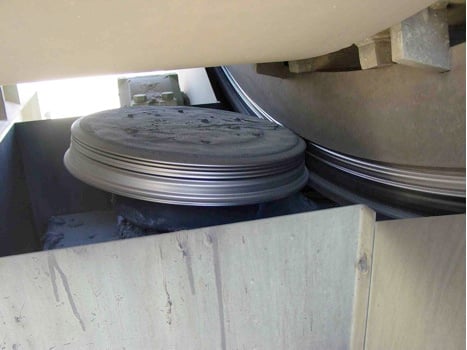
Rotary drum alignment is a critical factor in maintaining the long-term performance and reliability of industrial rotary equipment—whether it’s a dryer, kiln, cooler, or agglomerator. Misalignment is one of the most common and potentially damaging issues encountered in drum operation. And while it may begin as a minor deviation, misalignment can quickly lead to mechanical stress, excessive wear, and unplanned downtime if not addressed.
Proper alignment is a cornerstone of any rotary drum preventative maintenance program. In this article, we’ll explore what causes rotary drum misalignment, how to recognize the signs, and why regular realignment may be essential to protecting your equipment and maximizing uptime.
Why Alignment Is Essential
Proper drum alignment is not just a best practice—it’s a necessity for minimizing downtime and ensuring long-term equipment performance. Proper alignment:
- Prevents short- and long-term wear by reducing stress on mechanical components
- Extends the life of critical parts, including trunnions, tires, bearings, and gears
- Reduces maintenance costs by catching issues early and preventing major repairs
For most operations, routine realignment is not uncommon, especially if the drum operates in a demanding environment or shows early signs of wear.
What Causes Rotary Drum Misalignment?
Misalignment in rotary drums can stem from a variety of issues, both during installation and over the course of regular operation:
1. Improper Base Installation
During initial installation, trunnion wheels must be set square to each other and on the same slope. With trunnions properly installed, skewing and training of the drum has the optimum chance of success. If trunnions are not properly set, the drum will not sit correctly, resulting in misalignment that can increase wear on:
- Trunnion wheels
- Tires (riding rings)
- Thrust rollers
- Drive components (e.g., gears and pinions)
Proper installation ultimately ensures that the drum is evenly supported and mechanically stable. It also ensures the drum “floats” between the thrust rollers with minimal axial loading, helping to extend component life and promote stable operation.
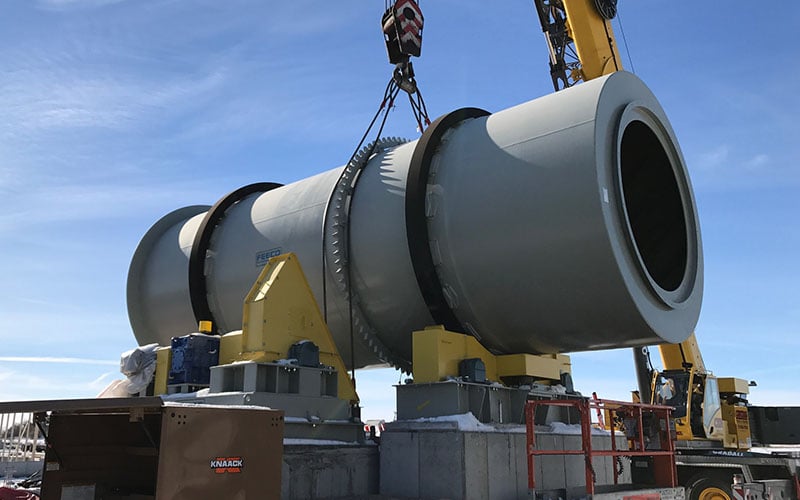
A FEECO granulation drum being installed on its base.
2. Operational Wear and Settling
Even a properly installed drum can drift out of alignment over time due to regular operational wear. This might result in:
- Wear or damage on trunnion wheels or tires
- Settling or shifting of foundations
- Load variations putting uneven stress on the drum
- Poor lubrication of wheels and tires
Because this type of wear is gradual, it’s critical to regularly monitor rotary drum measurements over time and correct any deviations before they lead to more serious damage. Annual inspections by the OEM or other qualified service provider are an especially helpful tool in catching problems early.
Signs Your Drum May Be Misaligned
Misalignment often produces clear symptoms that can be identified through routine monitoring and operational performance, underscoring the critical role of regular inspections in identifying issues before they have a chance to escalate. Potential signs of misalignment include:
- Excessive wear on tires or trunnions – This can appear as grooving, scoring, “timing marks,” or other types of wear.
- Thrust roller wear or damage – Misalignment causes the drum to ride excessively against the thrust roller, leading to premature wear. Left unchecked, this can result in wear on the tire sidewall.
- Drive system abnormalities – Vibrations, chatter, or unusual noises in the drive assembly can indicate that the load is not being transmitted evenly.
- Drum tracking issues – A drum that “walks” excessively or appears unstable during rotation is often a sign of poor alignment.
In well-aligned systems, the drum should rotate smoothly with little-to-no consistent contact against the thrust rollers. The drive system should run quietly and evenly.
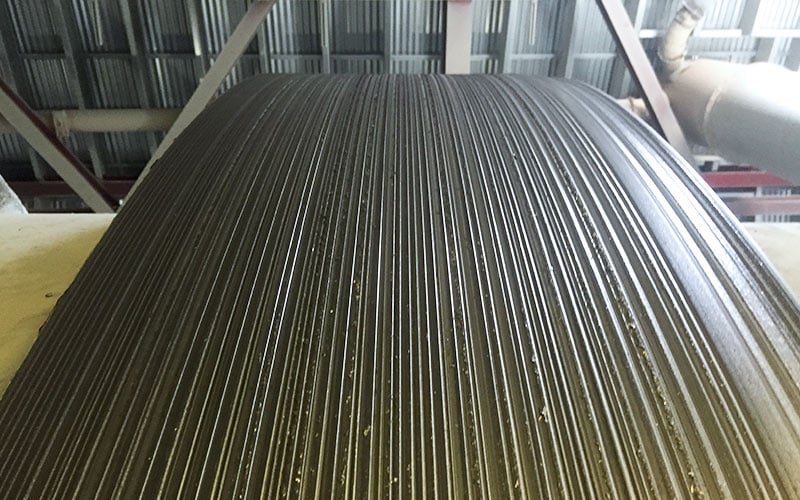
The wear on this tire/riding ring is an indication that the rotary drum has been misaligned for some time.
Alignment Methods
On new installations (before the drum is installed), the traditional “manual” approach to alignment (string alignment) can still be employed. However, FEECO recommends the use of a state-of-the-art laser alignment system to ensure a precision alignment with recordable data.
On existing installations, laser alignment is more accurate than traditional methods. Also, because the wheel can be profiled to find the center of the wheel axis, the diameter of the wheels is not critical when using axis data from the laser tool and software. This approach to alignment can provide:
- Trunnion-to-trunnion spacing and skewing
- Wheel-to-wheel axis reference
- Wheel-to-tire axis reference
- Drum slope and elevation
This technology allows technicians to make precise adjustments that restore the proper load distribution across all components for optimal mechanical stability. Moreover, when the line of sight from wheel to wheel is not available, the laser allows technicians to shoot around infrastructure through the use of station moves (measuring the drum against known data from various anchor points).
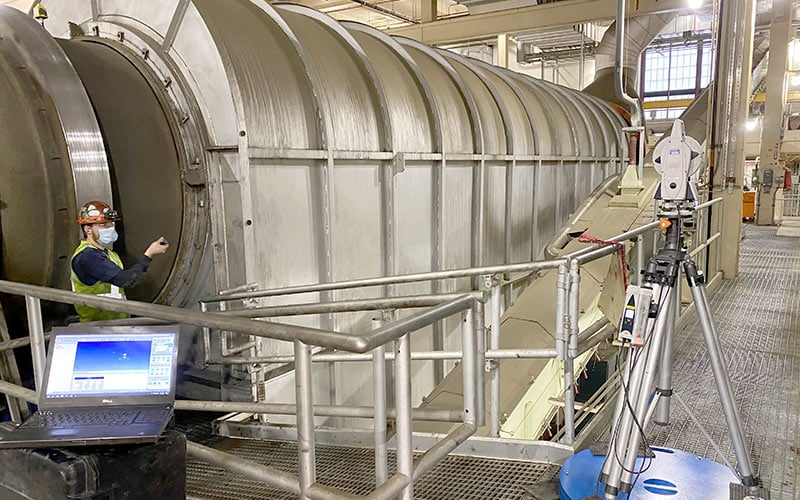
A FEECO Customer Service Engineer performs a laser alignment on an indirect rotary dryer.
Partnering With the Right Service Provider
Rotary drum alignment is a specialized service that requires expertise, precision, and the right tools. The FEECO Customer Service Team brings decades of experience in drum design, installation, and maintenance, alignment included. FEECO is uniquely positioned to:
- Conduct comprehensive alignment audits
- Provide precision field adjustments
- Replace worn components
- Offer long-term support for optimizing drum process and mechanical performance
Conclusion
Rotary drum alignment is one of the most important aspects of equipment maintenance, directly impacting reliability and lifespan. Whether you’re operating a rotary dryer in a fertilizer plant or a rotary kiln in catalyst production, ensuring proper alignment is key to maximizing your investment.
Don’t wait until excessive wear or mechanical failure disrupts your operation—make alignment part of your preventative maintenance strategy. For more information, contact us today!

