


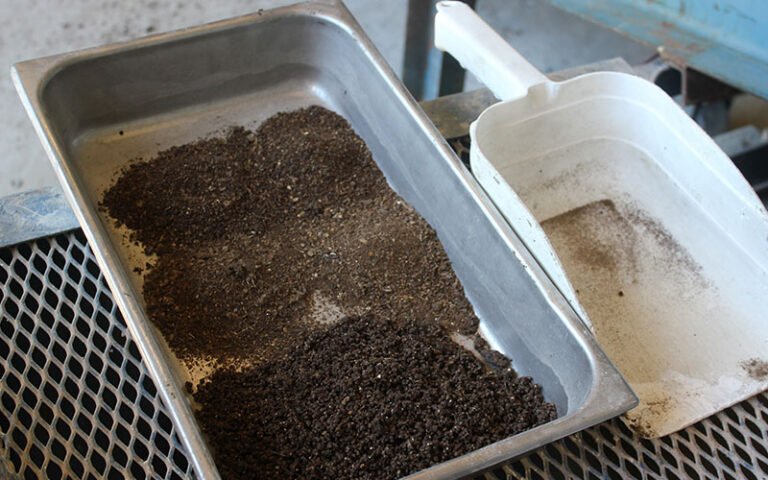
Industrial mixers are utilized to process bulk solids ranging from fertilizers and soil amendments to advanced chemical compounds, catalysts, and mineral concentrates.
The flexible processing capabilities of these mixers, paired with their ability to continuously create homogeneous blends, makes them a preferred option for plants that require a heavy-duty mixer capable of uniformly blending solid and liquid feeds.
And while these mixers are recognized for their heavy-duty, continuous operation, they can experience issues related to process- or material-specific challenges. The following information covers some of the most common problems industrial process mixer operators run into, how to solve them, and what to do when a problem persists.
Industrial Process Mixer Basics
The following information covers pin and pugmill mixers, two types of continuous horizontal mixers used across a wide range of industries to blend solid and liquid feeds, and in some cases, to produce a granular product.
Pin Mixers
Pin mixers impart an intense spinning action on material through the use of a single shaft fitted with pins spinning at several hundred rotations per minute (RPMs) within an enclosed cylindrical trough.
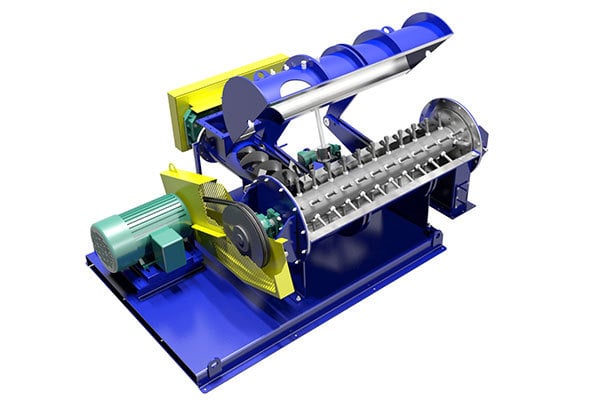
3D Rendering of a FEECO Pin Mixer
Solids entering the mixer are sprayed with the liquid component or binder via spray ports along the top of the mixer. As material moves through the trough, the intense spinning action intimately blends the feeds into a homogeneous mixture. Continued processing causes the material to begin agglomerating into small, rounded pellets.
Pin mixers are particularly effective for mixing ultra-fine solids with a liquid component for uniform wetting. They can also be used to produce consistently sized micro pellets.
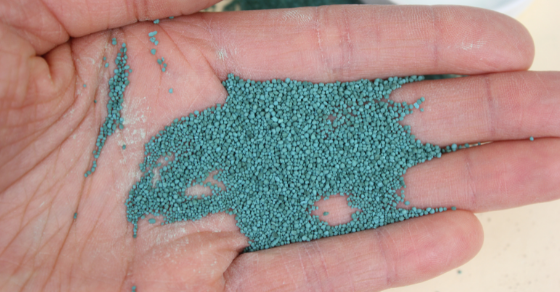
Micro pellets produced in a pin mixer
Pugmill Mixers
While pin mixers use high-speed centrifugal force to blend material, pugmill mixers utilize a slower folding-and-kneading motion imparted by dual, counter-rotating shafts fitted with paddles. The liquid additive is sprayed over the tumbling bed of material, being thoroughly integrated into the mix.
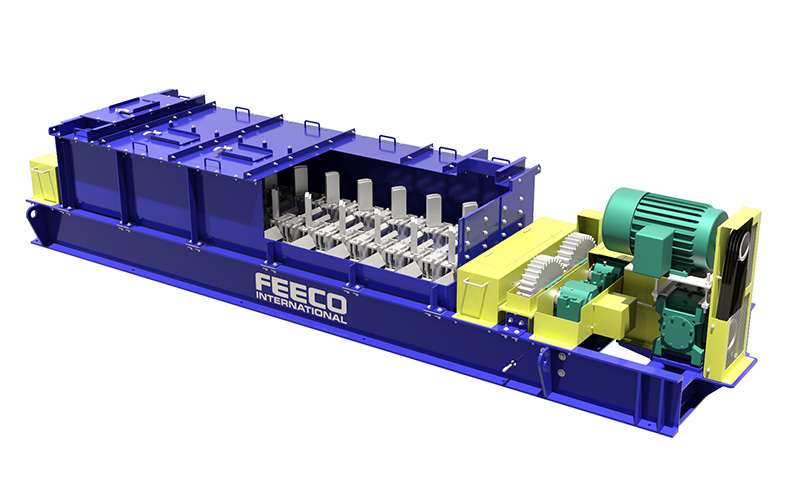
3D Rendering of a Pugmill Mixer
This action, combined with the machine’s high torque, has made pugmill mixers the equipment of choice in many harsh mixing environments, such as in the processing of copper concentrates in the smelting process.
In addition to their uniform conditioning capabilities, pugmill mixers can also be used to produce rough granules.
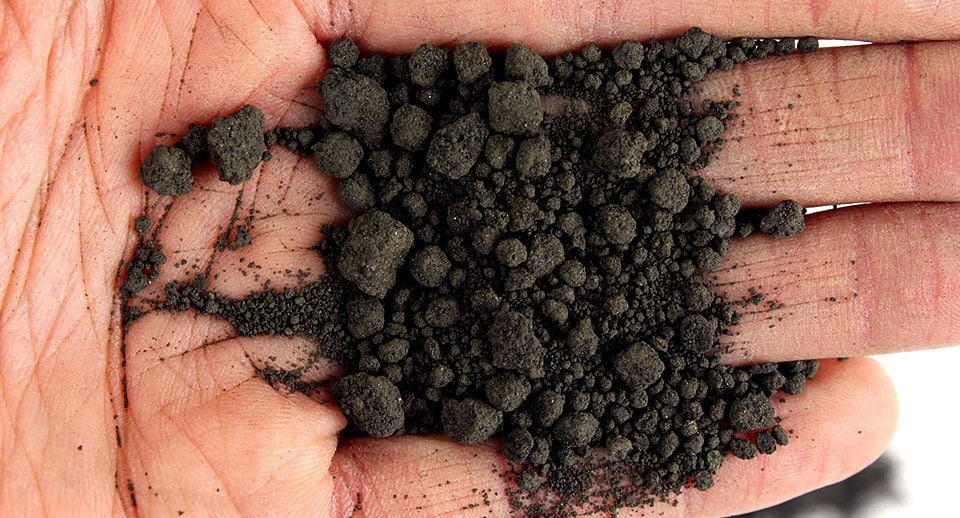
Material conditioned in a pugmill mixer
What are the Most Common Problems with Continuous Industrial Mixers?
A pin or pugmill mixer designed for its intended application should experience minimal issues. However, when feed or process conditions fluctuate, problems can arise. The most common issues are outlined here.
Non-Uniform Mixing
Whether an operation will be producing granules or not, the underlying goal of most industrial mixing applications is to yield as uniform a mixture as possible.
A non-uniform or inconsistent mixture can be the result of several factors, all of which ultimately lead to an irregular distribution of the liquid component:
- Clogged nozzle(s)
- Missing pins or paddles
- Insufficient retention time
- Need for added or changed spray locations
How to Address a Non-Uniform Mixture
The many factors that can contribute to an irregular mixture can make identifying the cause challenging. The first step in addressing any change in the output is to adjust the amount of recycle going into the process to moderate fluctuation.
A recycle loop is an essential buffering tool when fluctuations occur, minimizing deviations to avoid affecting the product. However, operators must still identify the root cause of the problem.
While some operators may know immediately where to start looking based on past experience, operators should also have access to a troubleshooting protocol tailored to their operation to help them systematically identify and resolve issues.
This may start with an examination of the feedstock to ensure uniformity, followed by a review of key operating parameters to confirm everything is within spec. Depending on the severity of the problem, operators may need to shut down the operation to inspect the equipment’s internals and spray nozzles.
Poor Moisture Control
Because pin and pugmill mixers are used to combine solid and liquid feed components, one of the most common challenges operators run into is sufficiently controlling moisture in the mixer.
Mixers are typically operating within a narrow moisture window, meaning the material exiting the mixer has to fall within a specific target range. Operators may struggle with too little moisture, or more commonly, too much moisture.
Too Little Moisture (Under-Wetting)
Too little moisture can occur if feedstock moisture content is inadvertently reduced. This may be the result of a change in upstream conditions or in the feedstock itself, or even a change in the mixer, such as a clogged nozzle.
When a deviation occurs, operators may see that the product exiting the mixer is consistently under-wetted. If the mixer is intended to form rough granules or seed pellets, operators will struggle to achieve sufficient granule formation, instead yielding a high fines content.
Too Much Moisture (Over-Wetting)
More often, operators encounter a problem with too much moisture in the mixer, resulting in over-wetting of the material. Excessive moisture is more common than under-wetting because of the fact that moisture is being added to the process, requiring a careful balance between liquid addition and feedstock moisture content.
Over-wet material may exit the mixer in the form of mud, clumps, or a cake-like material. Operators may also notice a corresponding rise in amperage.
How to Resolve Moisture Management Challenges
The most reliable way to avoid over- or under-wetting is to maintain a uniform feedstock. Particularly in settings subject to stringent product quality control, feedstock uniformity must be an ongoing priority.
In some cases, however, control over feedstock may not always be possible; vendors change, mineral deposits become exhausted, and unexpected challenges arise. This again emphasizes the essential role of a recycle loop in moderating fluctuations, allowing operators to increase or decrease the amount of material being reintegrated into the process to avoid affecting the product.
In other cases, the feedstock may not be to blame. Changes in upstream process conditions or within the mixer itself may cause over- or under-wetting. Here again, operators must be able to systematically identify and resolve the problem, knowing when to adjust spray locations or recycle input, where to head off potential issues, and how to quickly stabilize a faltering operation.
Insufficient Particle Size Control
When the mixer is being used to produce seed pellets or granules, whether for downstream equipment or as a finished product, achieving the target particle size distribution (PSD) is crucial to meeting product expectations and ensuring downstream equipment can operate as designed.
Even when the mixer is not expected to agglomerate material, PSD must still typically fall within the desired range to accommodate downstream equipment requirements. In some settings, operators may experience a high yield of over- or under-size pellets.
A High Portion of Over-Size Pellets
As with moisture content, particle size distribution also relies on maintaining a balance between feedstock and operating conditions.
If the particle size distribution of the feedstock gets larger, so too will the output. Further, because pin and pugmill mixers utilize tumble-growth/agitation agglomeration principals, larger pellets could also be triggered by a slight rise in moisture content, which would cause particles to become tackier and collect more fines.
A High Portion of Under-Size Pellets
Similarly, a high portion of under-size pellets could be indicative of different fluctuations:
- A decline in feedstock PSD
- A decrease in the amount of moisture particles are exposed to (ex., clogged nozzle, etc.)
How to Resolve PSD Challenges
As with addressing moisture content, the first approach should be to maintain a uniform feedstock and use the recycle loop to buffer any fluctuations. If a deviation in feedstock is not to blame, operators have a few options.
If permissible, adjusting the amount of liquid additive going into the mixer can help to rebalance particle size. Particle size distribution is closely related to moisture content, making proper moisture management critical to reaching product quality goals. Several aspects of moisture addition can influence particle size:
- Quantity of moisture
- Spray location(s)
- Spray dispersion (nozzle type)
The amount of moisture added, as well as where in the mixer that moisture is added can require adjustment if feed conditions change. While nozzle type is unlikely to change, a nozzle that becomes clogged can change both the quantity of moisture delivered, as well as how moisture is introduced to the material (ex., fine spray vs. large drops).
Alternatively, operators that cannot adjust moisture content may be able to achieve the desired result by modifying the retention time. In general, a longer retention time produces larger pellets, while a shorter retention time yields smaller pellets, though there are some exceptions to this rule.
Other factors may also be contributing to changes in particle size distribution and merit exploration. Buildup in the mixer, as well as wear such as missing pins or paddles, for example, can affect yield. For this reason, regular inspections are essential to ensure mixers are capable of operating as designed. Those working with sticky or cementitious materials such as gypsum, may require routine cleanout to prevent buildup issues from escalating.
No matter what kind of issue a mixing operation experiences, maintaining the right balance between operating conditions, feedstock parameters, and recycle input is dependent on two key factors: a skilled operator and a thorough understanding of the process.
Minimizing Issues Through Operator Training
The importance of a properly trained operator cannot be underestimated. When operators struggle to identify the underlying cause of an issue, they can get caught in a cycle of unending problems, with the operator’s troubleshooting creating new issues without solving the initial one.
For this reason, FEECO recommends training operators and maintenance personnel so they know what to watch out for, where potential for trouble lies, and how to prevent an issue from becoming a major upset.
Properly trained operators can, in most cases, identify and resolve an issue on their own by making informed adjustments to restabilize the process.
Gaining a Familiarity Through Process Development
As is illustrated here, combining solid and liquid feed components into a homogeneous mixture (or producing granules) is not always as straightforward as it might seem. For this reason, process development testing can be a key tool in helping producers to understand the unique subtleties associated with their material source and operating parameters.
Through testing such as that conducted in the FEECO Innovation Center, producers can become familiar with their process and where potential for problems can arise, allowing them to better respond in times of fluctuation and minimize upsets.
While process development is typically carried out prior to investment in commercial-scale equipment, it can also be used to troubleshoot issues. By simulating process conditions in a test environment, producers can systematically test and resolve problems.
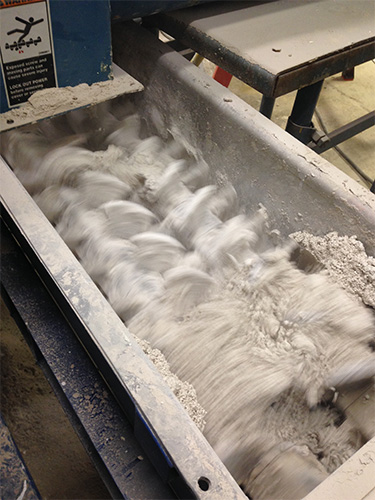
Interior view of pugmill mixer during testing in the FEECO Innovation Center
When All Else Fails: Resolving Mixer Problems With a Process Audit
Process development testing and properly trained operators go a long way in maintaining smooth, continuous operation and consistent product quality. When an issue occurs that on-site personnel cannot readily resolve, however, a process audit from the original equipment manufacturer (OEM) or other qualified service provider is often the fastest approach to restabilizing the process and minimizing losses. With an unmatched knowledge of the equipment, the OEM is uniquely positioned to quickly identify and resolve issues, making mixer OEMs with reliable service support an essential partner in keeping operations running smoothly.
Depending on the provider and the issue in question, the OEM will typically start by comparing original process design data with current operating conditions to identify discrepancies. This may be followed by process observation and troubleshooting, with the technician working closely with on-site personnel to understand and resolve the problem.
Conclusion
While pin and pugmill mixers are reliable and consistent in their ability to combine liquid and solid feeds into a homogeneous mixture, material- and process-specific issues can still arise. Non-uniform mixing, fluctuations in moisture, and lack of particle size control due to changes in feedstock parameters or operating conditions all have the potential to throw a production line off balance.
For these reasons, thorough process development, paired with skilled operators, lays the foundation for producers to minimize process upsets and unexpected issues. When issues persist, the OEM or other qualified service provider should be brought in to evaluate the process and resolve issues as quickly as possible.
With over 75 years of experience, FEECO has been helping customers to design, build, and maintain the processes and equipment they need to meet product quality goals and process objectives. From batch- and pilot-scale mixer testing services, to custom pin and pugmill mixers, and extensive parts and service support, FEECO can assist everyone from fertilizer producers to catalyst manufacturers. For more information on our equipment or services, contact us today!

