
BELT CONVEYORS
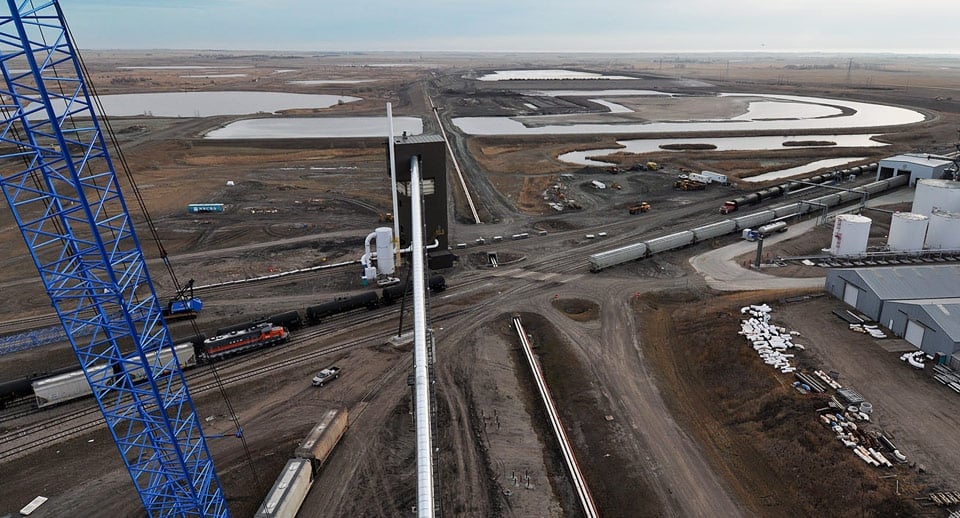
FEECO is the leading provider of custom bulk conveying systems. We offer heavy-duty belt conveyors for a wide range of bulk handling applications.
The right bulk material handling system can add automation and fluidity to any application. We offer a diverse range of optional equipment to complement our conveying systems in order to provide you with a complete system designed to handle your specific material. Belt trippers, weighing units, delumpers, reclaiming equipment, loading shelters and load out systems for trucks, rail cars, and barges are all available.
All FEECO belt conveyors and conveyor systems are engineered around your unique application to ensure the best bulk handling solution possible.
FEECO is capable of meeting the requirements necessary for CE marking equipment.

All FEECO equipment and process systems can be outfitted with the latest in automation controls from Rockwell Automation. The unique combination of proprietary Rockwell Automation controls and software, combined with our extensive experience in process design and enhancements with hundreds of materials provides an unparalleled experience for customers seeking innovative process solutions and equipment. Learn more >>
CONVEYOR COMPONENTS AND PARTS
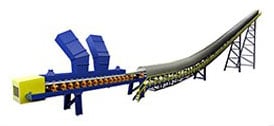
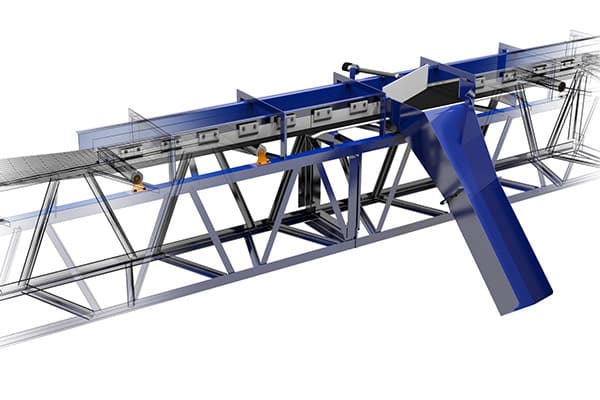
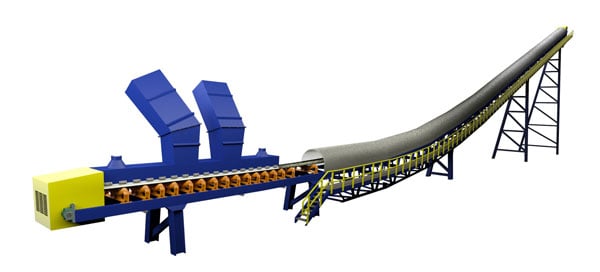
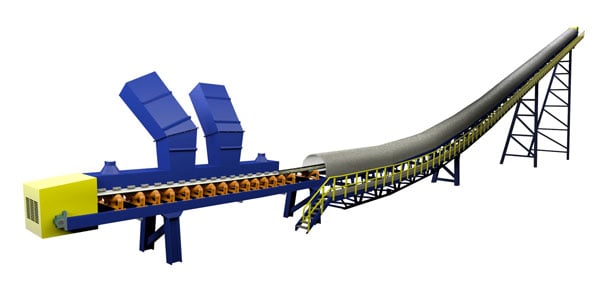
The image below shows a 3D model of a belt conveyor with incline. Click image to view larger.
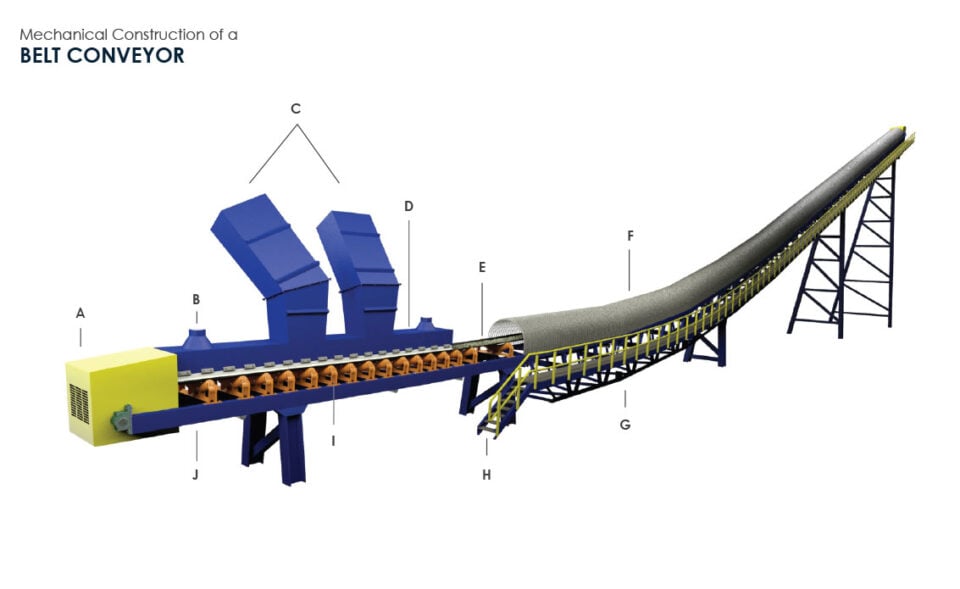
A Tail Pulley Guard
B Exhaust Port
C Inlet Chutes
D Skirtboard
E Troughed Belt
F Weather Cover
G Truss Frame
H Walkway
I Idlers
J Channel Frame
FEATURES
Size: 18” – 72” wide
Capacity: up to 8,000 TPH
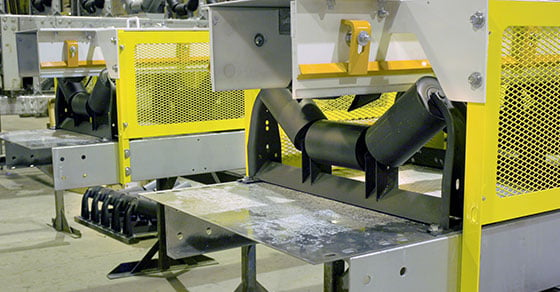
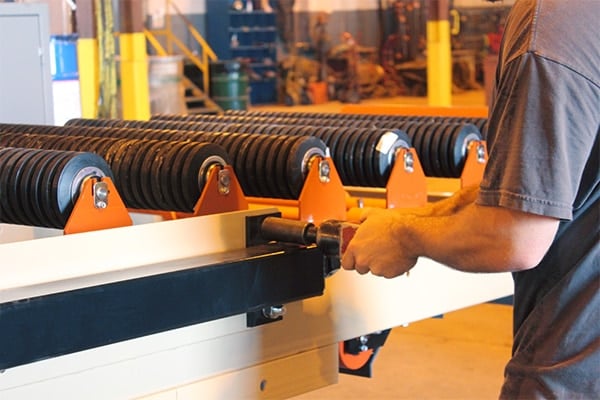
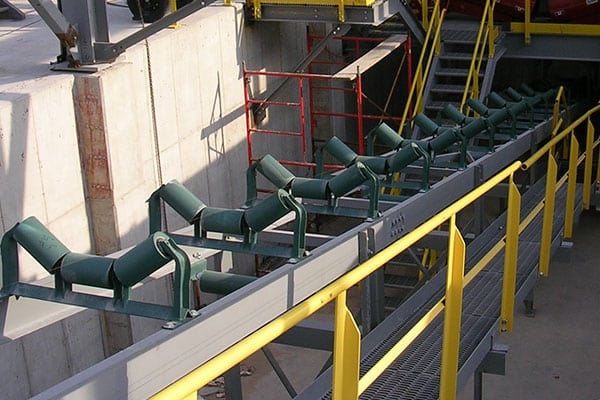
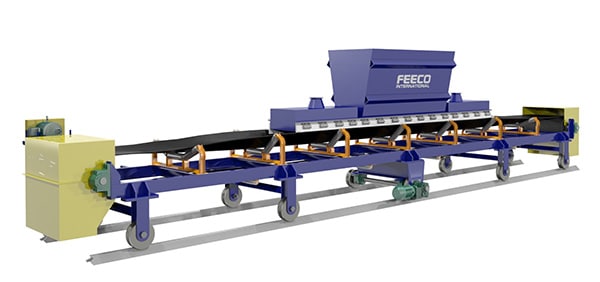
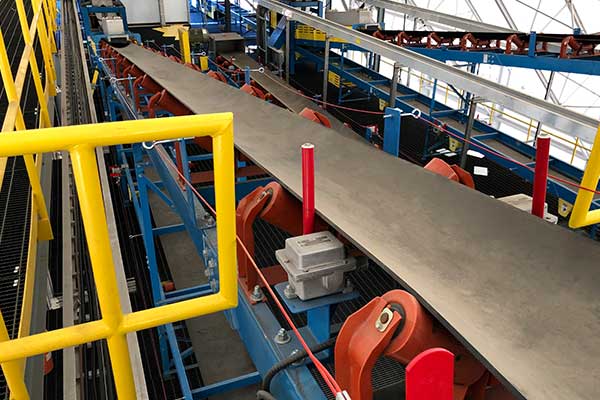
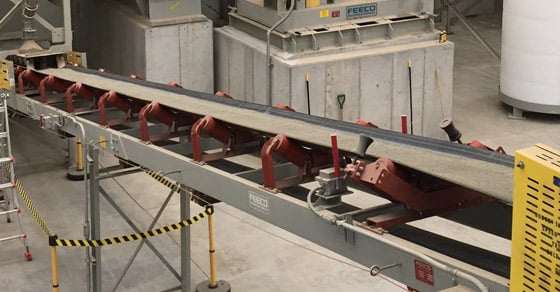
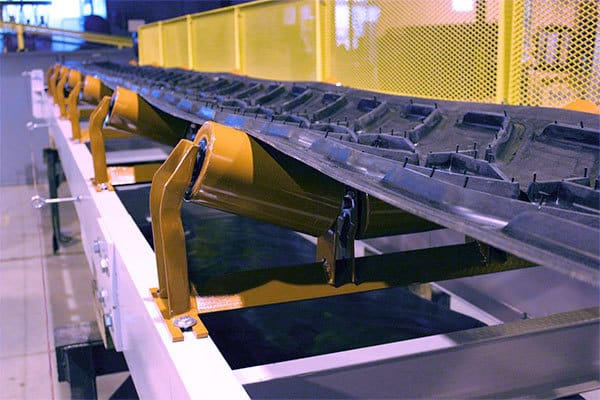
Standard troughed belt conveyors are comprised of conveyor belting that rides on heavy-duty troughed idlers. Idlers range in angles from 20°-45° and are securely mounted to a structural steel frame.
INCLINED CONVEYORS
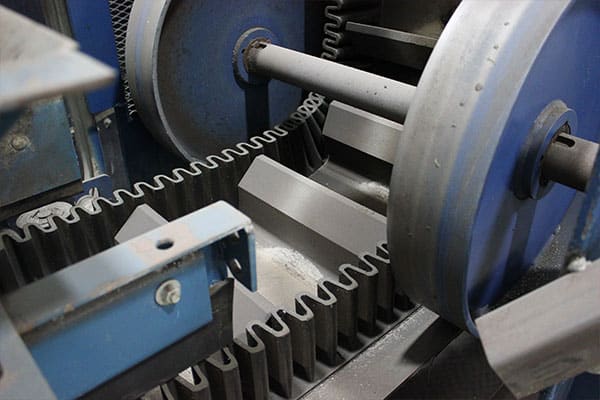
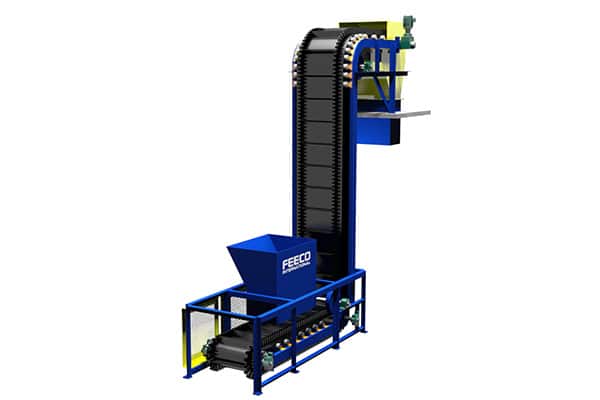
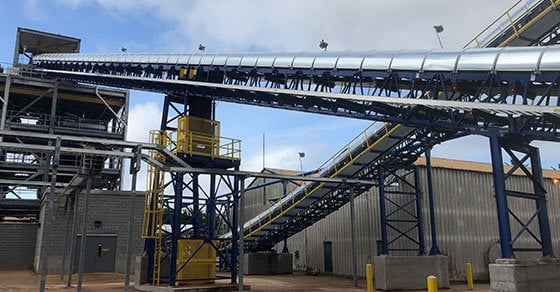
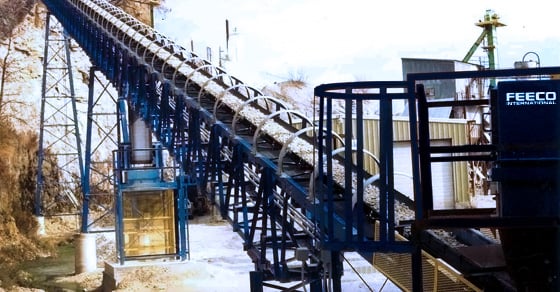
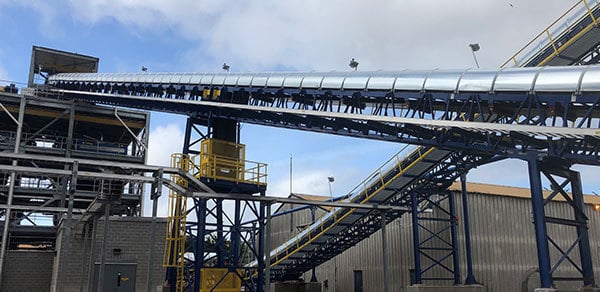
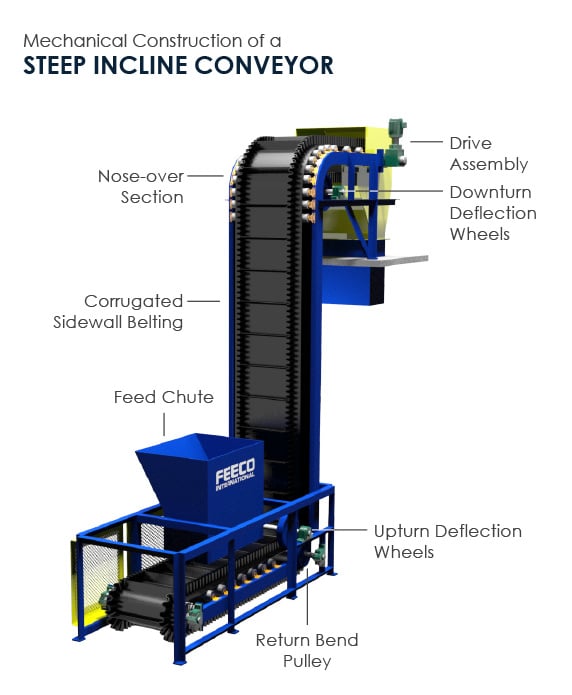
These belt conveyors can be run at various inclined angles, typically between 0°- 20° (30° with cleated/chevron belting). For conveyors that operate beyond this incline, steep incline conveyors, which can operate at angles all the way up to 90°, are also available.
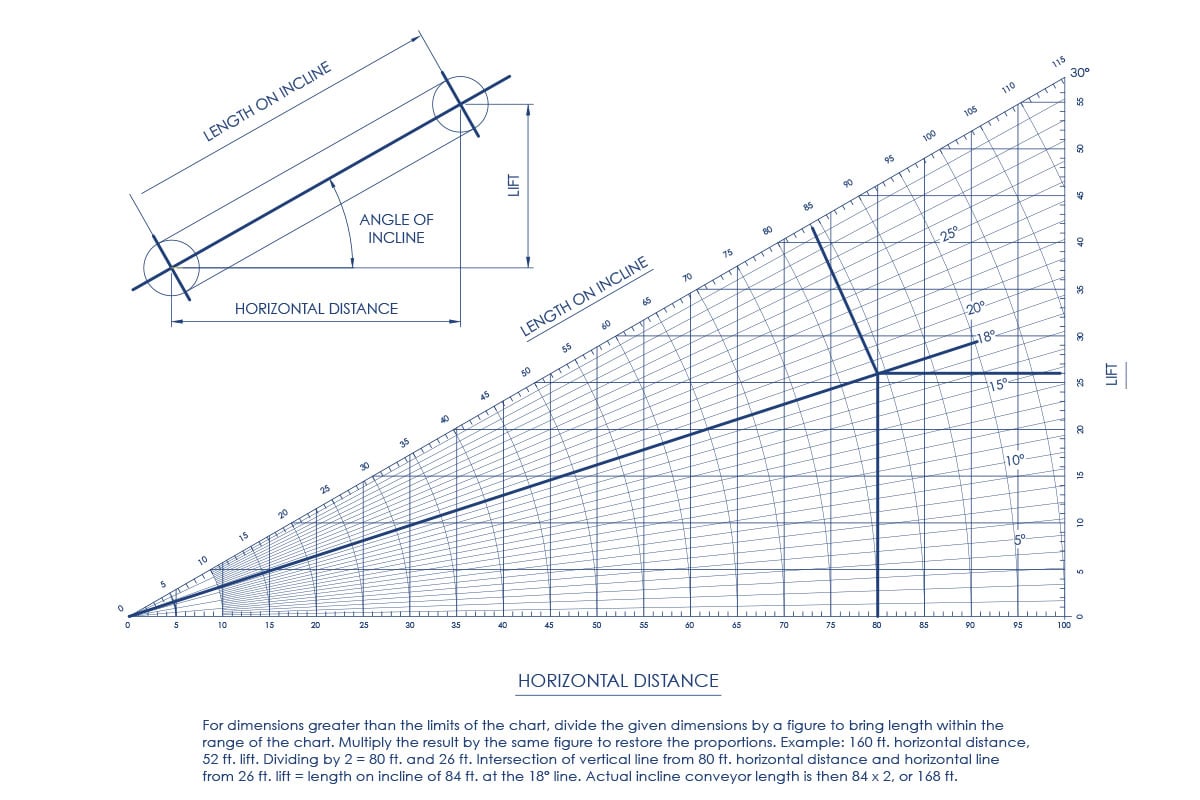
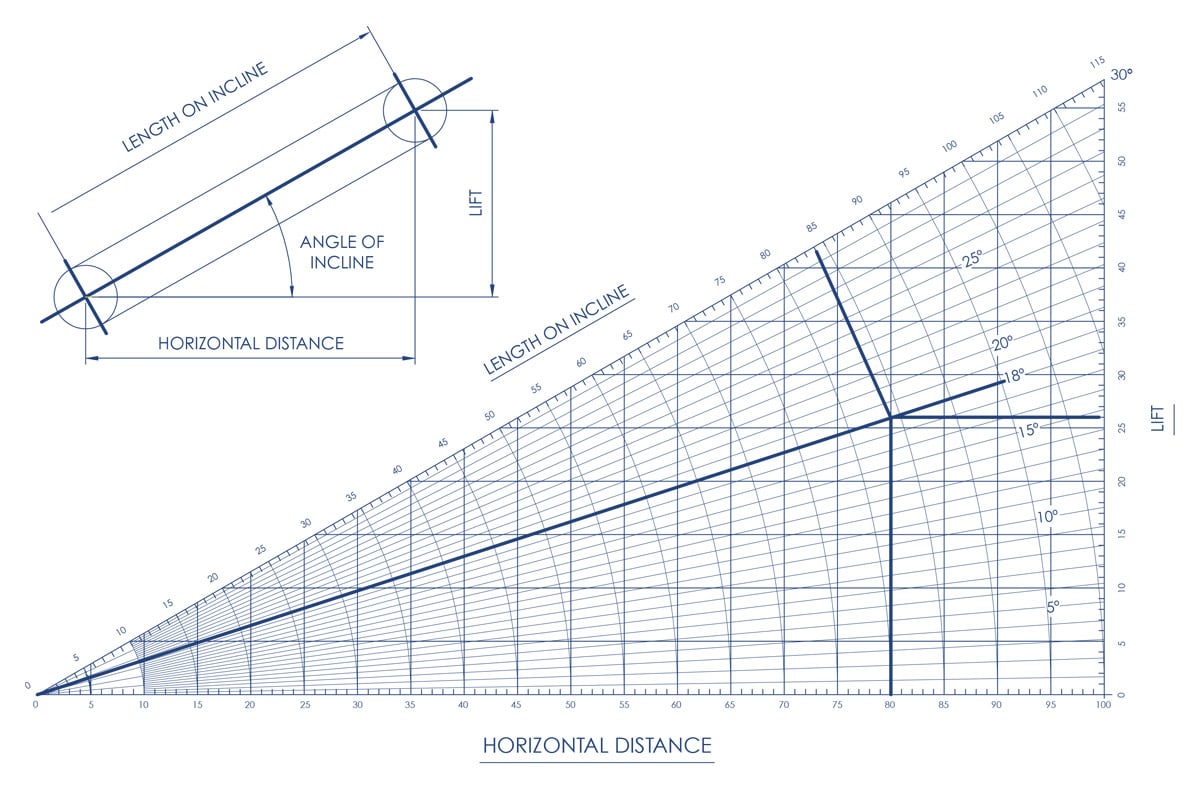
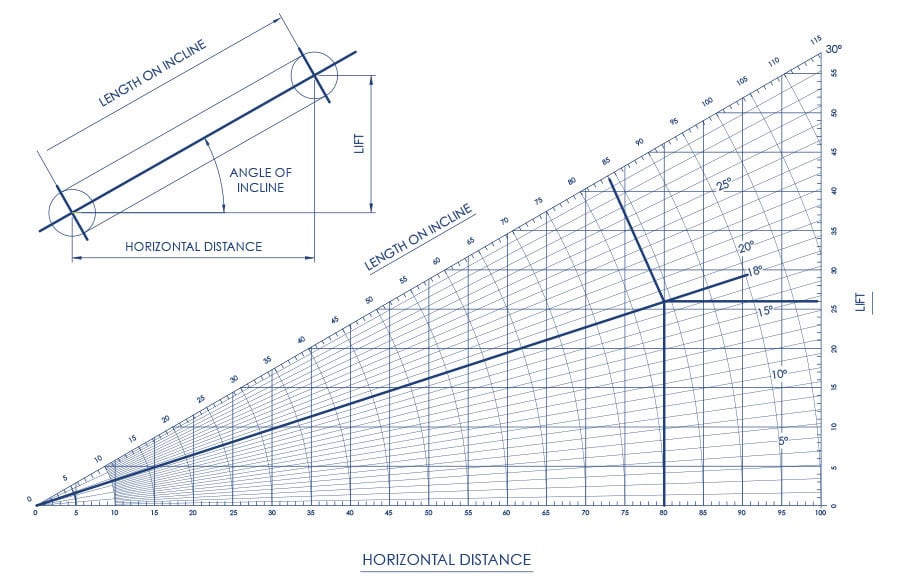
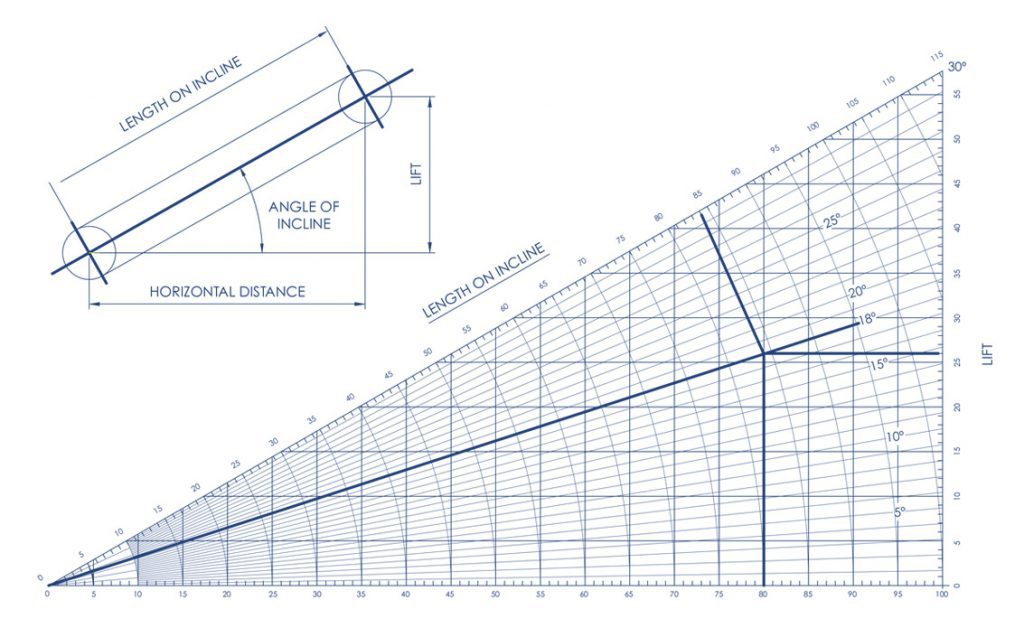
The diagram below shows the relationship between conveyor center-to-center (C/C) length, angle of incline, horizontal distance, and conveyor lift.
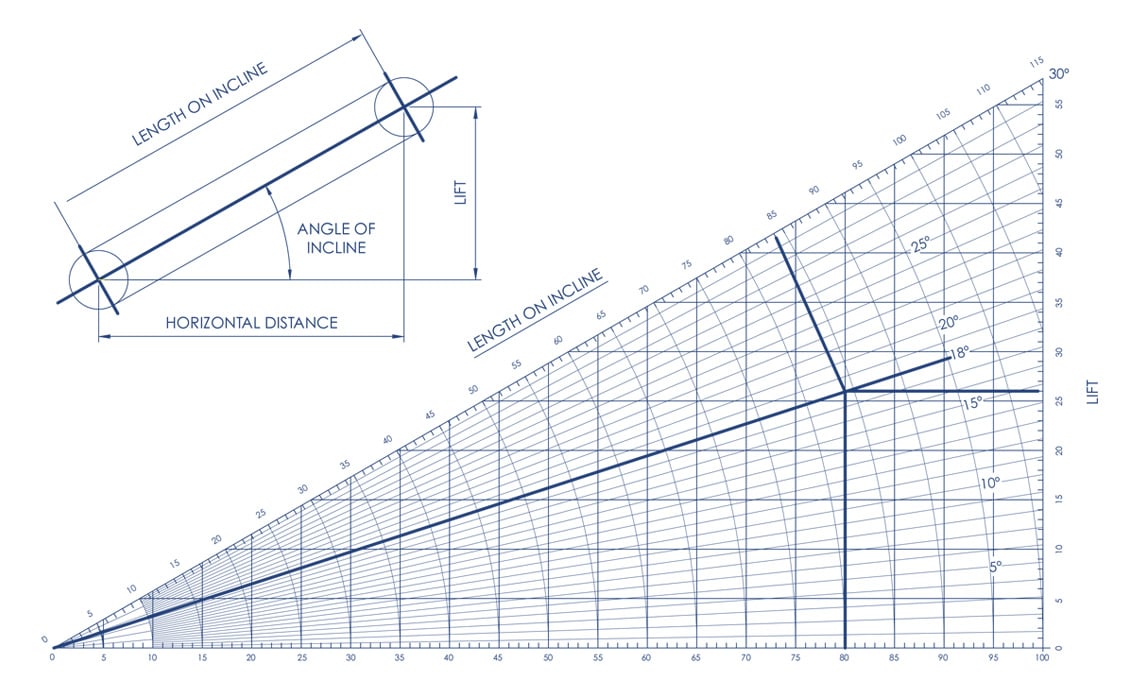
For dimensions greater than the limits of the chart, divide the given dimensions by a figure to bring length within the range of the chart. Multiply the result by the same figure to restore the proportions. Example: 160 ft. horizontal distance, 52 ft. lift. Dividing by 2 = 80 ft. and 26 ft. Intersection of vertical line from 80 ft. horizontal distance and horizontal line from 26 ft. lift = length on incline of 84 ft. at the 18º line. Actual incline conveyor length is then 84 x 2, or 168 ft.
TROUGHED SIDE WALLS
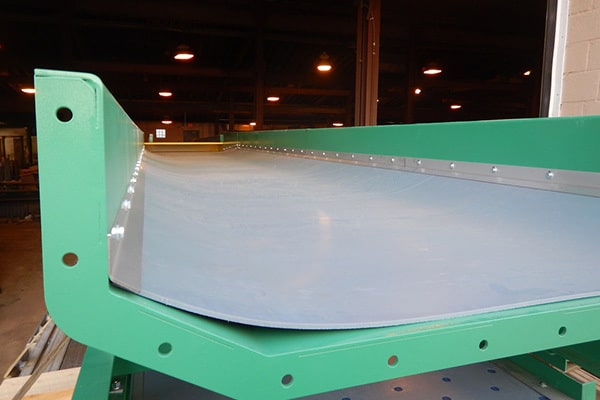
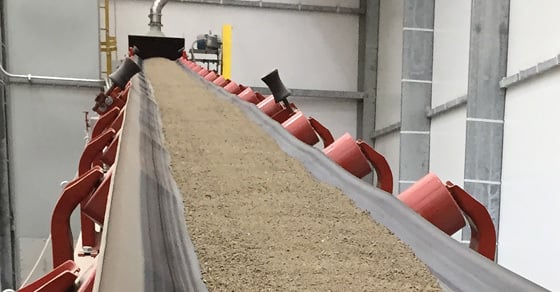
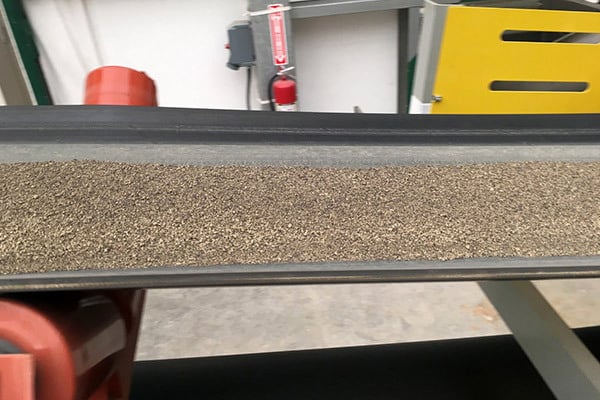
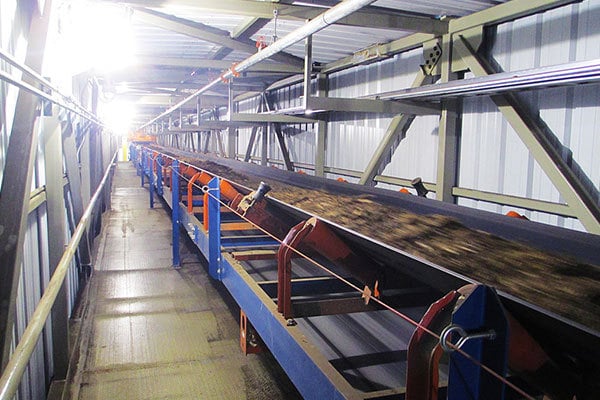
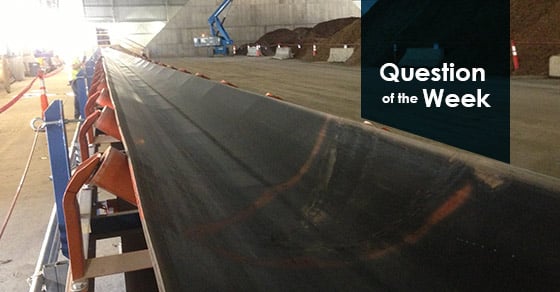
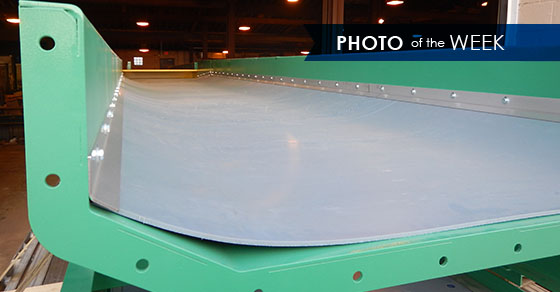
Troughed belt conveyors provide high-capacity bulk material handling. The trough design also contains and arranges material in one continuous stream, while at the same time, eliminating spillage. The troughed belt can also help shield material from unforeseen forces, such as airflow from other equipment operating nearby.
DUST CONTROL AT LOAD POINTS
Integrated skirtboard and exhaust ports provide additional control for each customer’s specific application. These are usually located at the tail section of the conveyor where the material is loaded onto the belt. This design centers the material on the belt while also containing dust and fines. A dust pick-off point is often located at the top of the discharge hood.
TRUSS FRAME
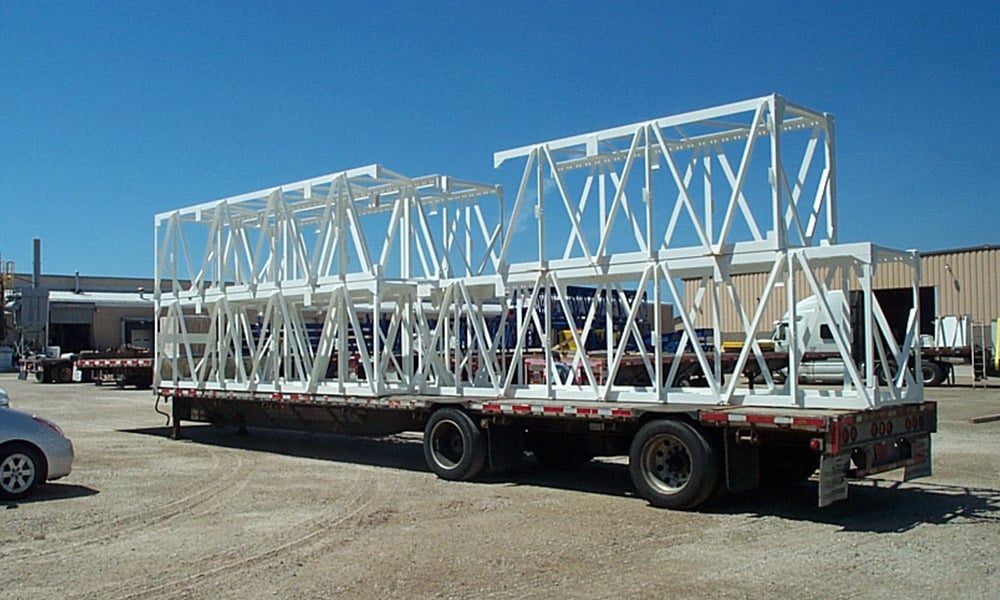
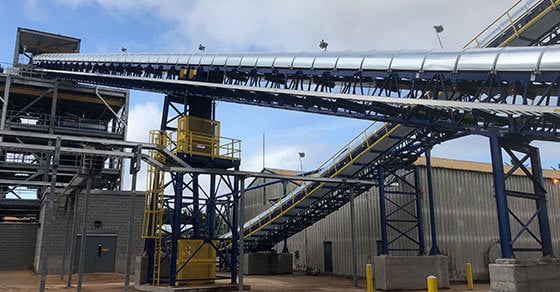
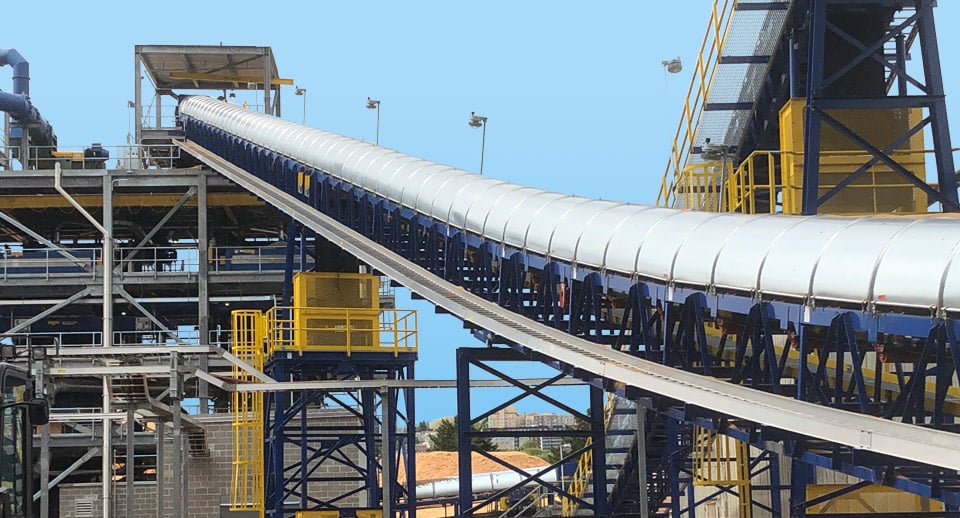
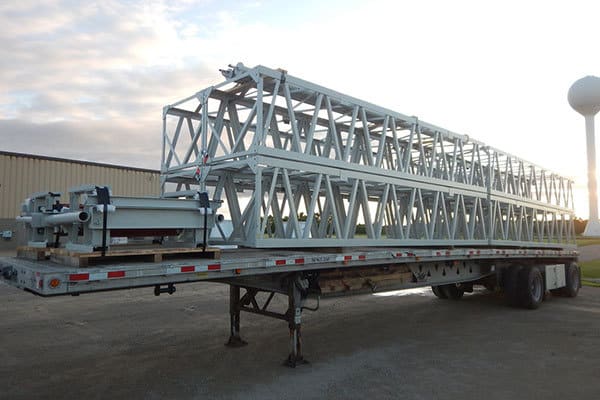
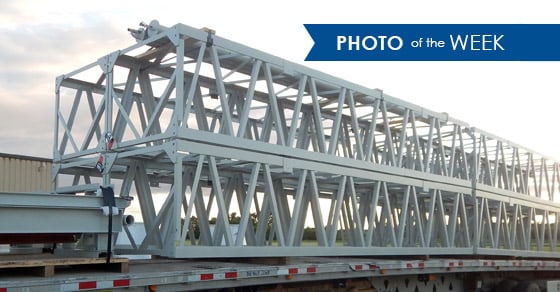
Heavy-duty box truss frames are available in several standard depths. This type of frame construction is used when long spans are required between support points. In addition to span length, proper truss selection also accounts for load factors such as wind and snow.
CHANNEL FRAME
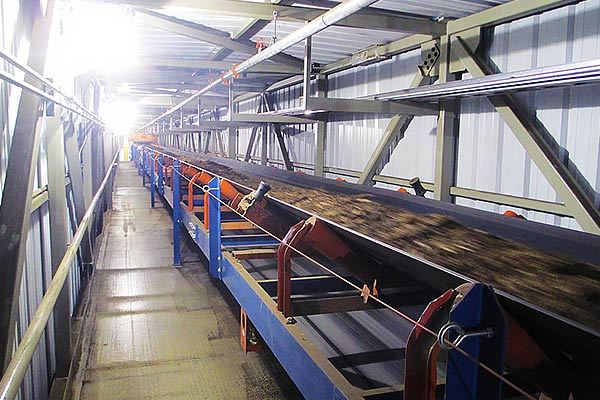
Conveyors that do not require long spans between supports may benefit from the channel frame design. Because they are often located close to grade, a cantilevered walkway is not required. Above all, channel frame conveyors receive the same precision engineering expected from all FEECO material handling equipment.
All FEECO belt conveyors feature:
- Heavy-duty construction
- Custom design for optimal handling
- Various belting options
ADDITIONAL OPTIONS
- Hoppers, Bins & Silos
- Gates
- Transfer Towers
- Screens
- Dust Collection
- Inspection Doors
- Guards
- Mechanical or Gravity Take-up
- Concave or Convex Path
- Structural Platforms
- Walkways & Service Platforms
- Belt Cleaners/Scrapers
- Weather Covers
- Loading Skirtboards
- Transfer Chutes
- Safety Cables and Shut-offs
- Belt Scale (Used for tracking quantity/interval of time)
- Gallery Enclosures
APPLICATIONS
FEECO has been providing bulk material handling equipment and solutions to a variety of industries since 1951. This includes:
- Coal Handling for Power Plants
- Clinker and other raw materials for Cement Plants
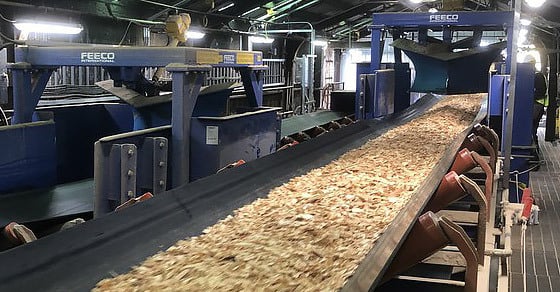
- Woodchip and Bark Handling for Pulp/Paper Mills
- Sludge Handling for Process Applications
- Rail Unloading/Loadout
- Bulk Warehousing of Granular Products
- Sand Conveying Systems for Foundries
- Underground Conveying
- And more…
ADDITIONAL CONVEYOR TYPES:
- Slider Bed
- Flexible Side Wall – “Steep Incline”
- Gallery
- Overhead
- Cleated
- Reclaim Conveyors
- Loadout
- Vertical Sidewall
- Barge loading/unloading
- Railcar loading/unloading
- Sidewall Conveyors
- Continuous Flow
RESOURCES
BELT CONVEYOR ARTICLES
Long-Term Conveyor Storage: Best Practices
The bulk material handling equipment employed in any operation, be it frac sand processing, potash mining, or other industrial endeavor, is …
FEECO Offers Bulk Material Handling Equipment Manufacturing
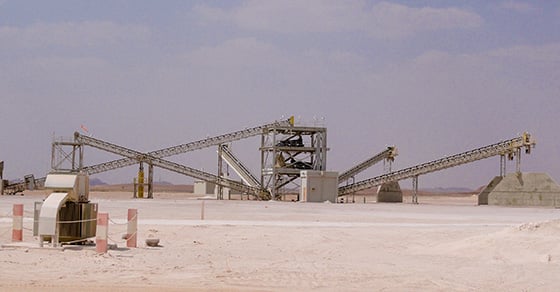
Bulk material handling equipment ensures material can move efficiently throughout and around facilities such as fertilizer plants, mine sites, and more. …
BROCHURES

FEECO Conveyor Systems Brochure
FEECO Bucket Elevators Brochure



Belt Conveyor Frequently Asked Questions (FAQs)
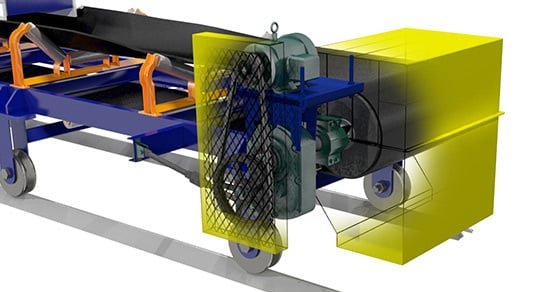
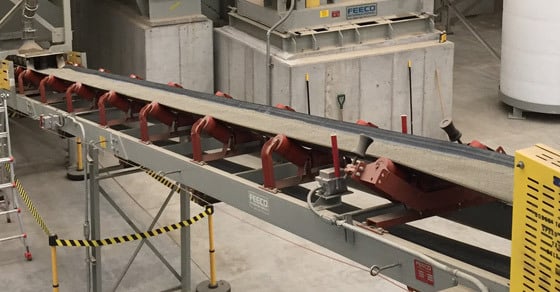
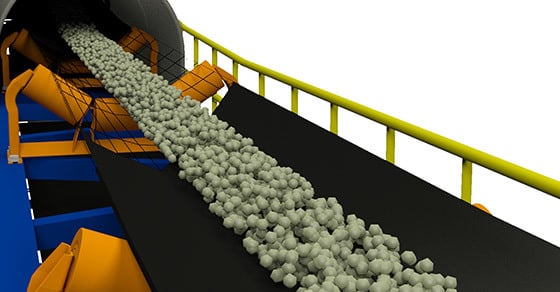
A troughed belt conveyor is a carrying surface that runs between two points to transport material from one location to another. Troughed belt conveyors are distinctly different from flat belt conveyors in that idlers, which support the belt, are angled to create a trough of material. This is ideal for handling bulk solids as it helps to keep material contained and minimize spillage.
Troughed belt conveyors can run either horizontally, or at a slight incline.
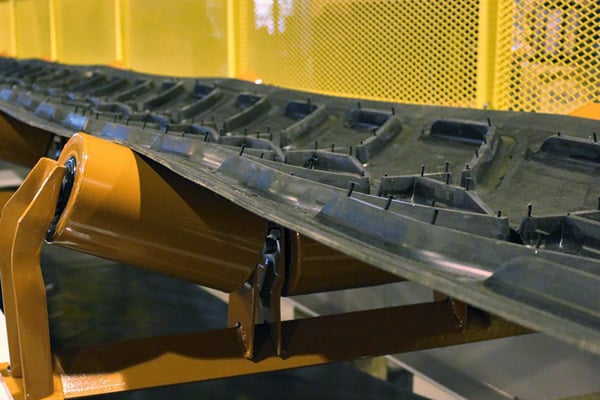
The maximum angle of incline at which a troughed belt conveyor can run is dependent on the material to be conveyed, but a general rule of thumb is 20° maximum. With cleated belting, the angle may be increased to as high as 30°.
The maximum material temperature a conveyor belt can handle depends on the type. A standard conveyor belt is typically rated to handle material at temperatures up to 200°F. For applications where material temperature is higher, different types of heat-resistant belting can be employed, which can handle material up to 750°F.
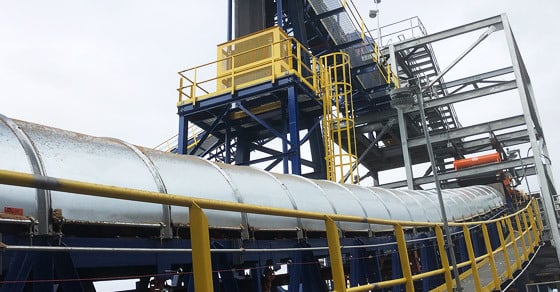
No. Troughed belt conveyors are not limited in length. Any length can be accommodated, but lengths beyond several hundred feet (typically considered an “overland conveyor”) may require modifications to the design and various components to handle the extensive length. FEECO manufactures conveyors up to several hundred feet.
The maximum capacity of a belt conveyor is limited only by design and components, with typical troughed belt conveyors capable of handling upwards of 8,000 TPH depending on the belt width.
Capacity estimation charts are available in our Belt Conveyor Brochure.
Horsepower (HP) is determined in three parts:
- The HP required to move an empty conveyor
- The HP required to move the specific material horizontally
- The HP required to move the specific material vertically
Basic estimations for horsepower can therefore be calculated using conveyor belt speed, length, rise, belt width, and capacity, though it’s important to note that factors such as drive efficiency and friction forces also come into play.
If the conveyor includes a belt tripper, additional horsepower will be required. For horsepower estimation tables, see our Belt Conveyor Brochure.
Spillage can be prevented through design in new conveyors and modifications in existing systems. Modifications to existing conveyors include the addition of skirtboards, reduced idler spacing, an increase in trough depth, and the incorporation of belt cleaners. For more information on spillage, see our article: Minimizing Spillage With Troughed Belt Conveyors.
Yes, discharge points can be increased through the addition of a belt plow or tripper.
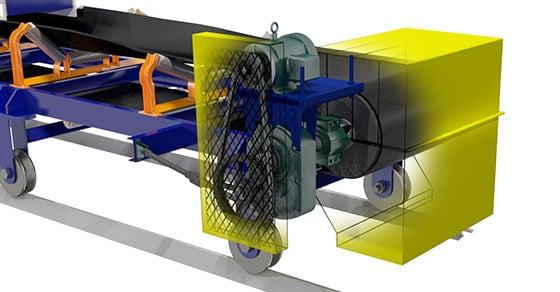
The incorporation of a belt plow, sometimes also called a discharge V-plow, allows material to be discharged on either or both sides of the belt at a fixed point along the conveyor.
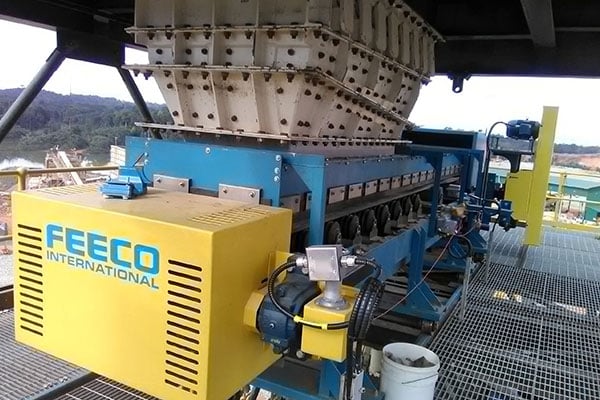
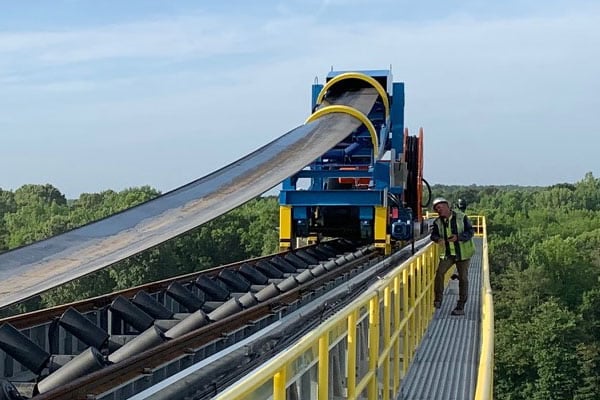
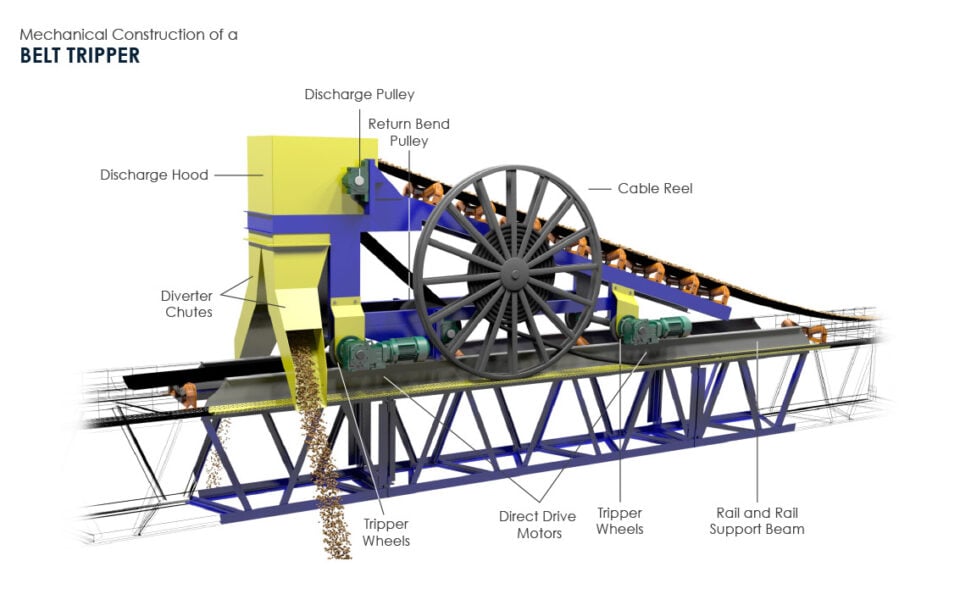
A tripper, also known as a traveling tripper or tripper car, is more flexible, allowing material to be discharged at any point along the conveyor, either continuously, or at predetermined points, also on one or both sides.
For more information, see Belt Trippers Vs. Plows.
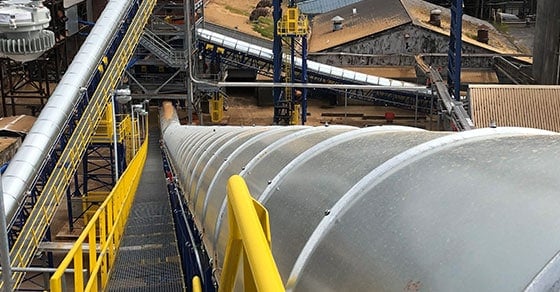
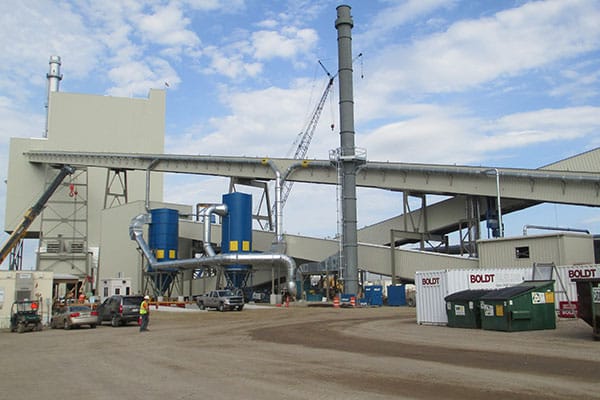
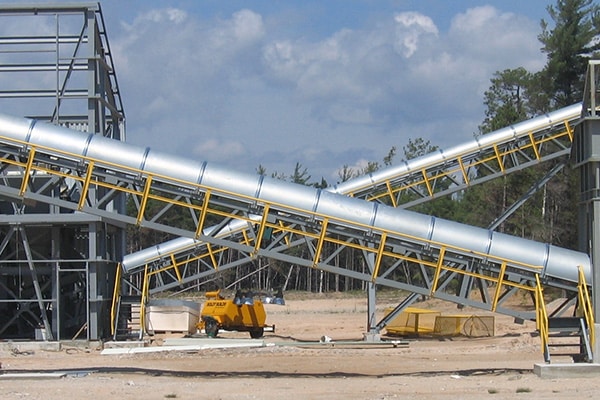
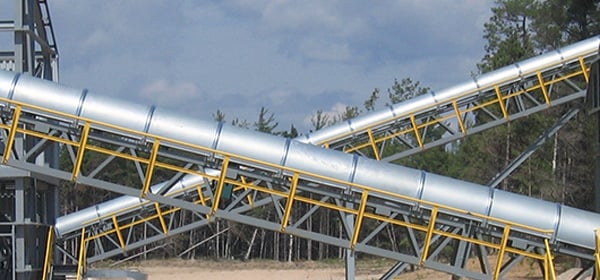
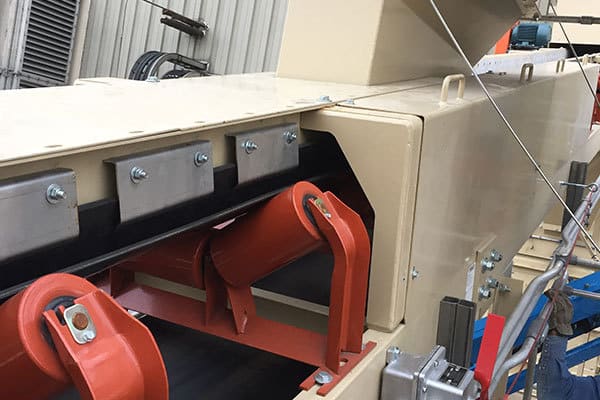
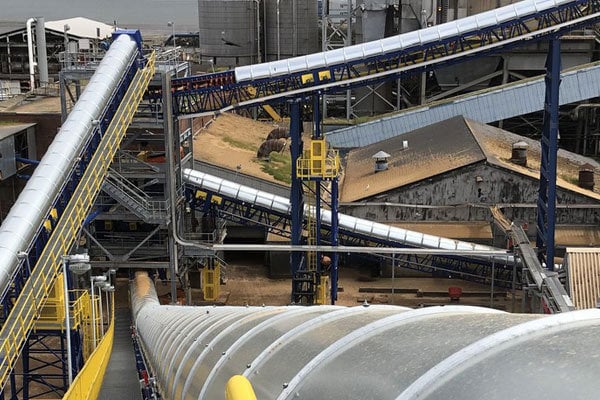
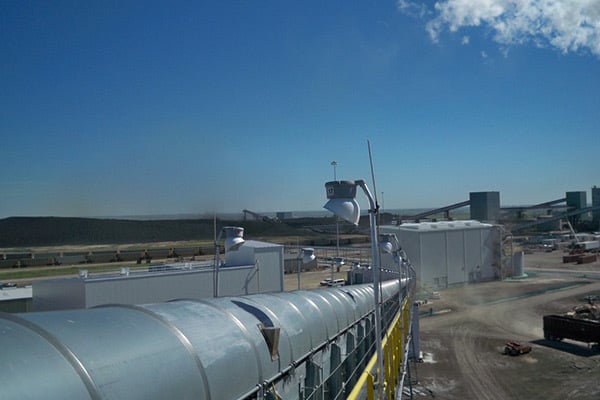
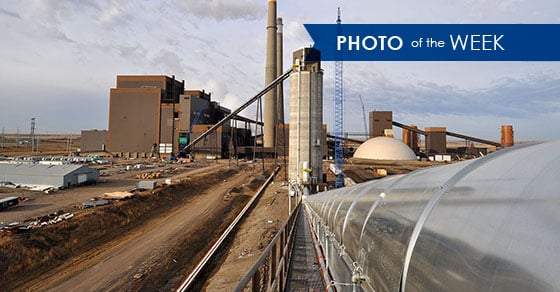
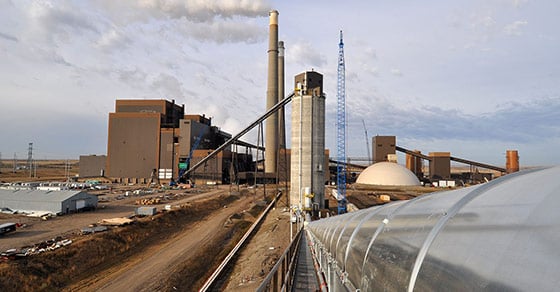
Material can be protected from the environment through the addition of weather covers, which shield material from wind, snow, and rain. When protection is especially critical, conveyors can be provided with full gallery enclosures.
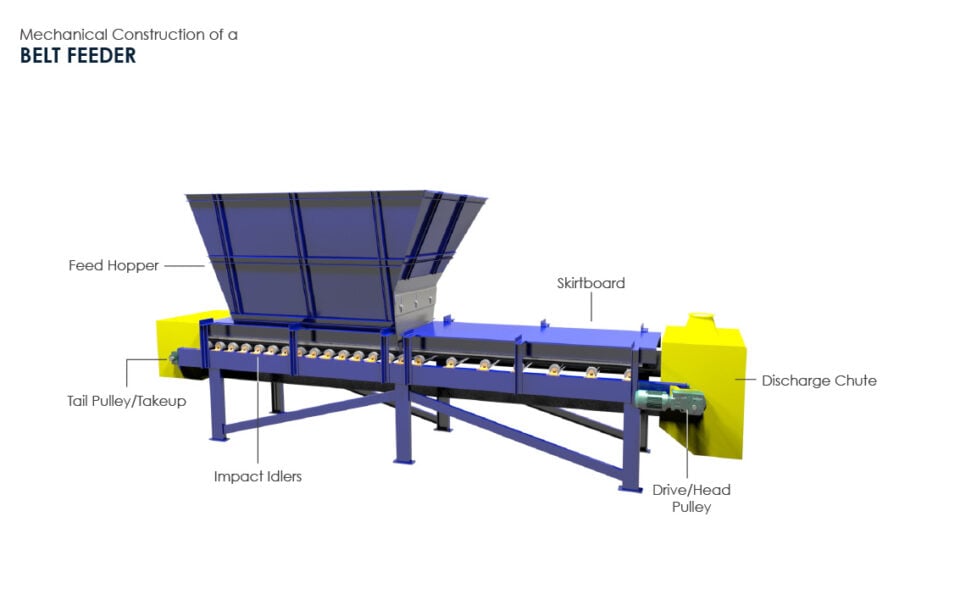
Troughed conveyor idlers can be positioned at angles of 20°, 35°, and 45°, depending on the required trough depth. A deeper trough allows the conveyor to carry a higher volume of material, but requires extra height and transition distance to flatten around pulleys. A shallower trough is typically used in applications where overall conveyor height must be kept to a minimum, such as when a fully skirted belt feeder is employed.
Several belt options are available depending on the needs of the material. In addition to heat-resistant belting, conveyor belt manufacturers offer raised-profile/cleated belting for conveying at steeper angles, oil-resistant belting for protection from the risks of oily materials, and other options such as high-temperature, chemical resistant, solar resistant, abrasion/cut resistant, and fire resistant.
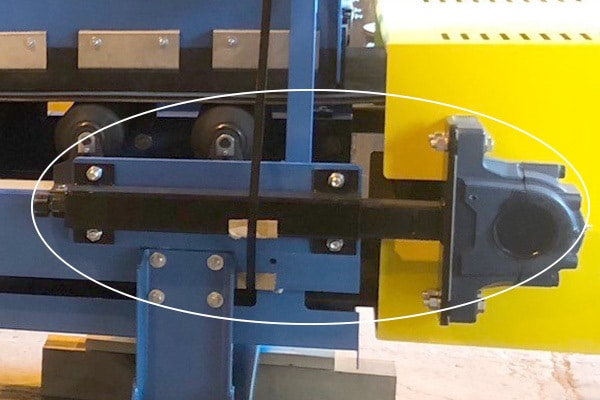
The best type of take-up for a conveyor depends on the level of duty required, customer preference, the length of the conveyor, and spatial limitations. For standard applications less than 150’ in length, FEECO recommends the screw take-up style. For applications greater than 150’ in length, FEECO recommends a gravity-style take-up.
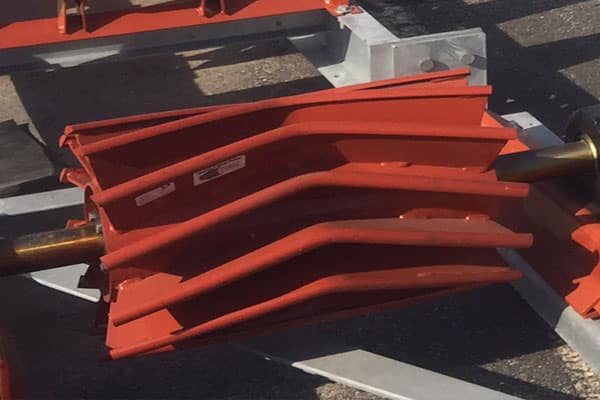
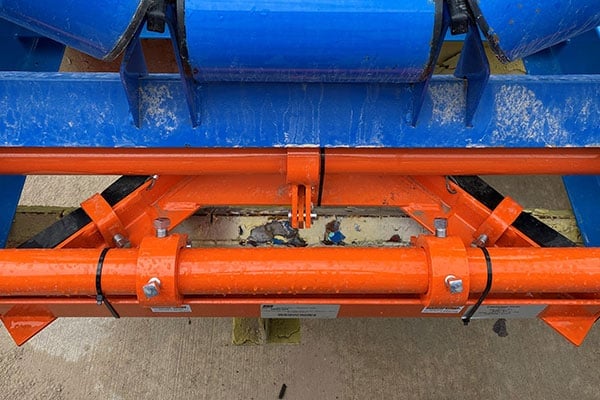
Conveyor belts can be kept clean by incorporating single or double belt cleaners (scrapers), return-side belt plows (v-plows), and self-cleaning tail pulleys, depending on the level of cleaning required.