
ROTARY COOLERS
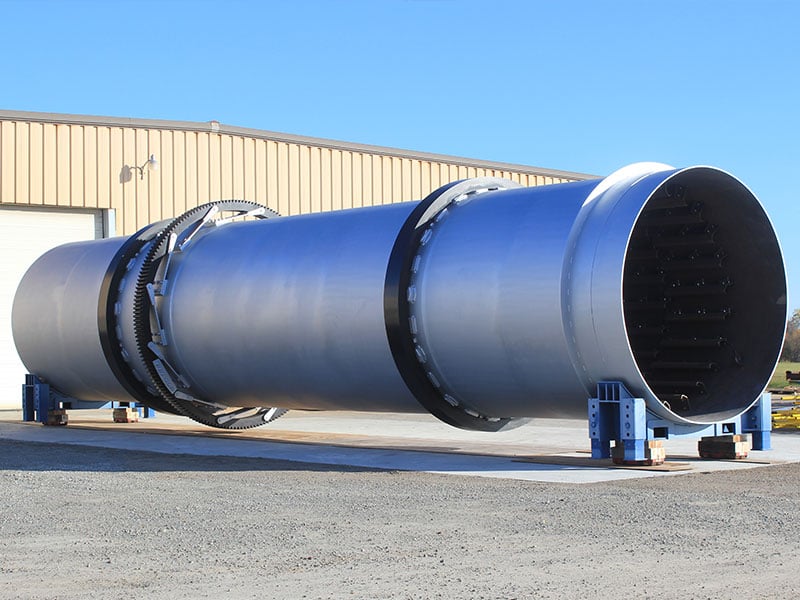
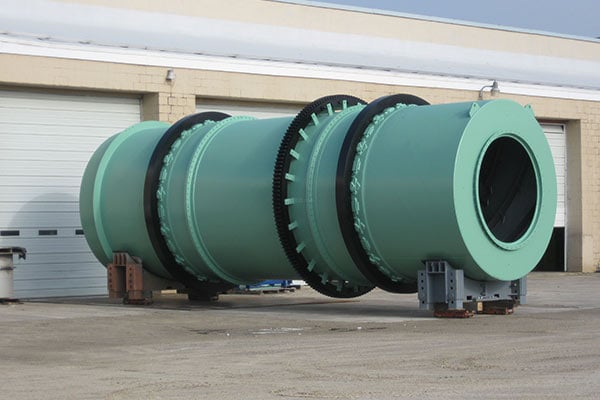
From pilot scale units, to commercial size coolers, we have the knowledge and experience to build a rotary cooler that’s right for you. FEECO’s rotary coolers are custom designed and built to meet the needs of your process. Whether you require short or long residence times, carbon steel or specialty steels, FEECO can design a rotary cooler for your application.
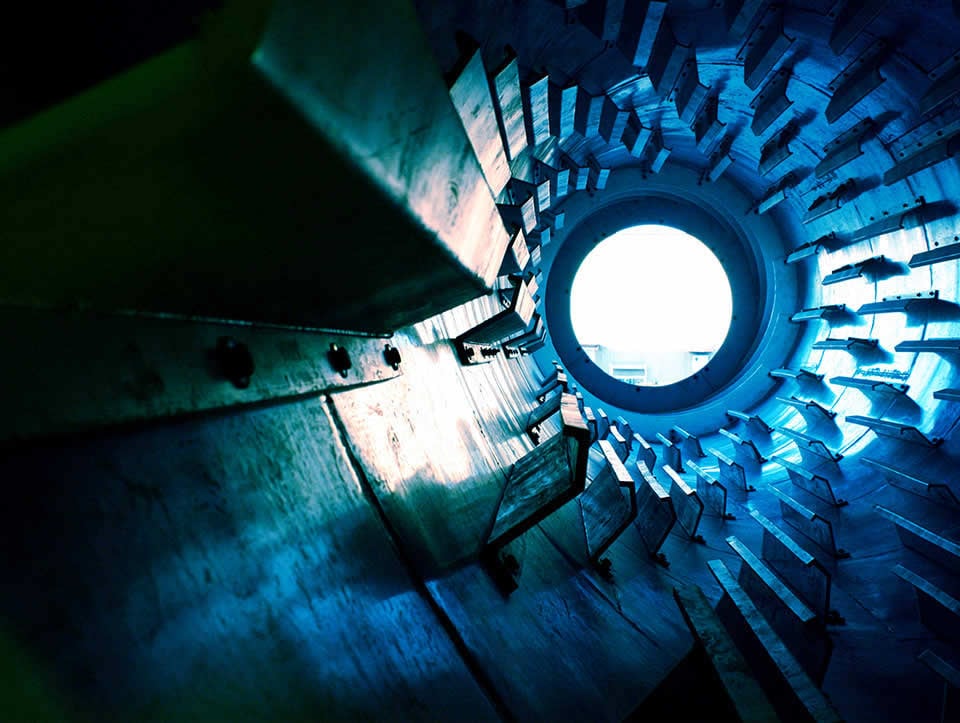
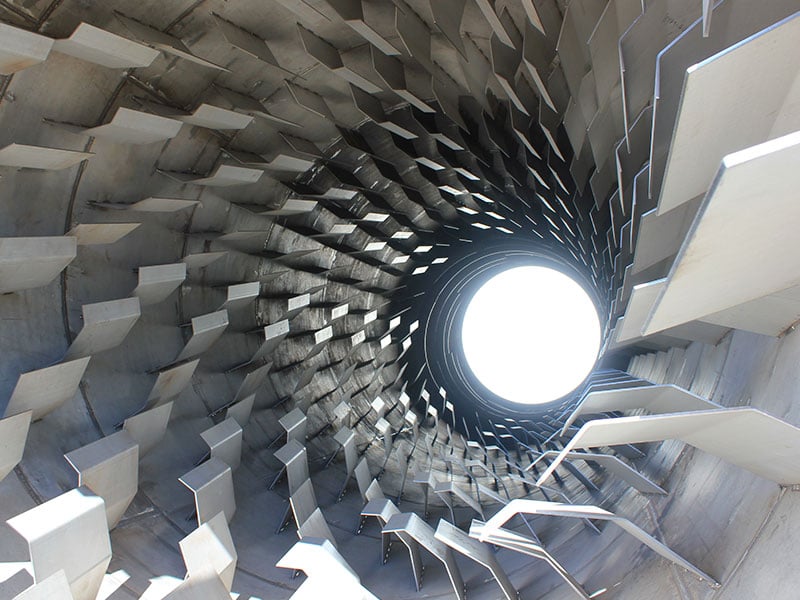
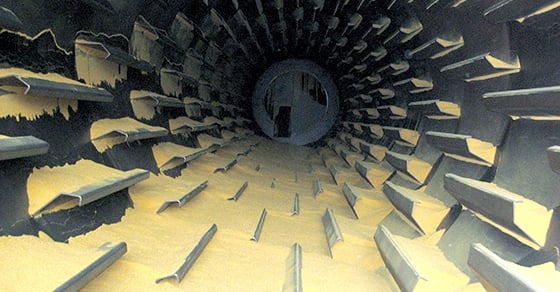
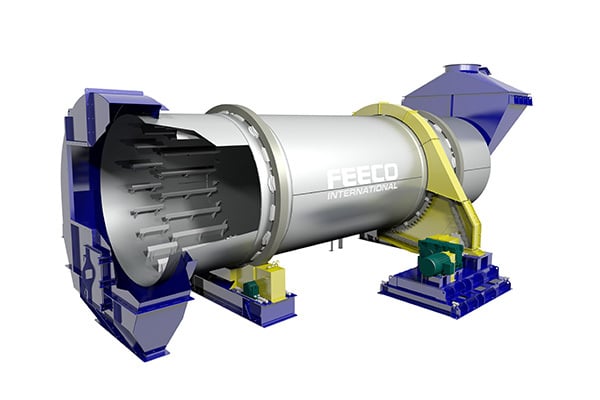
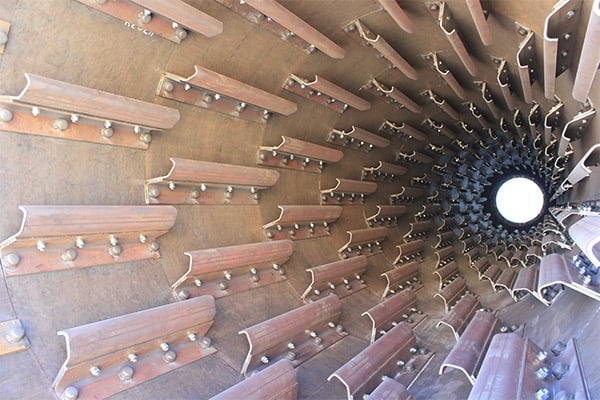
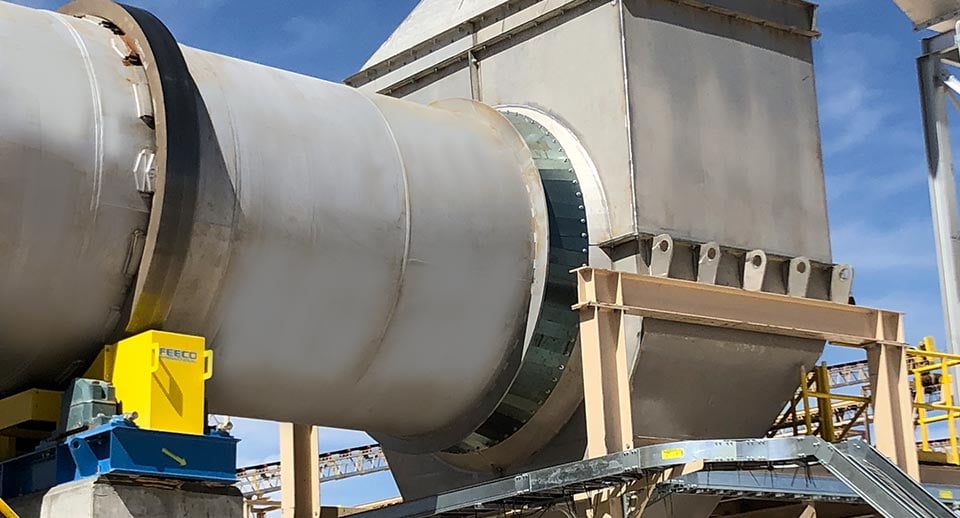
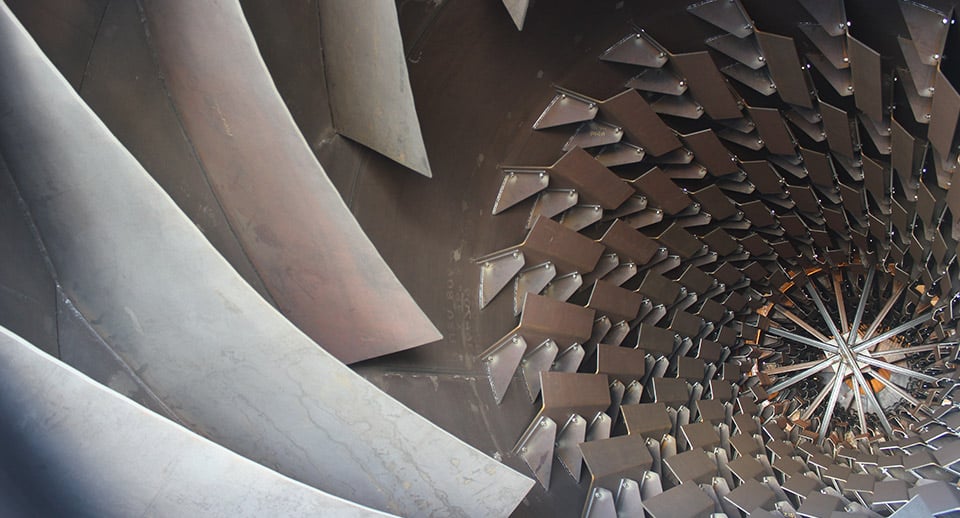
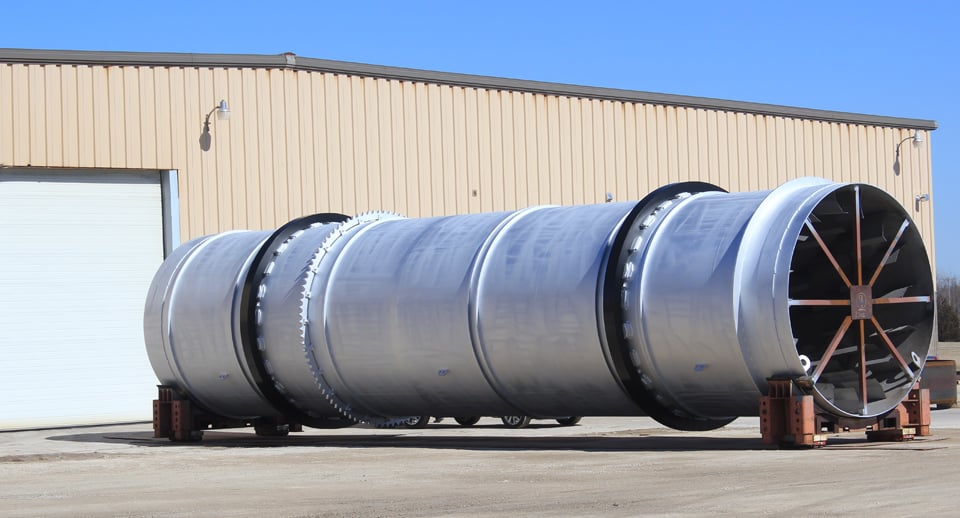
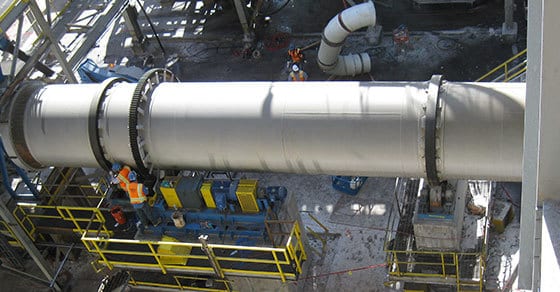
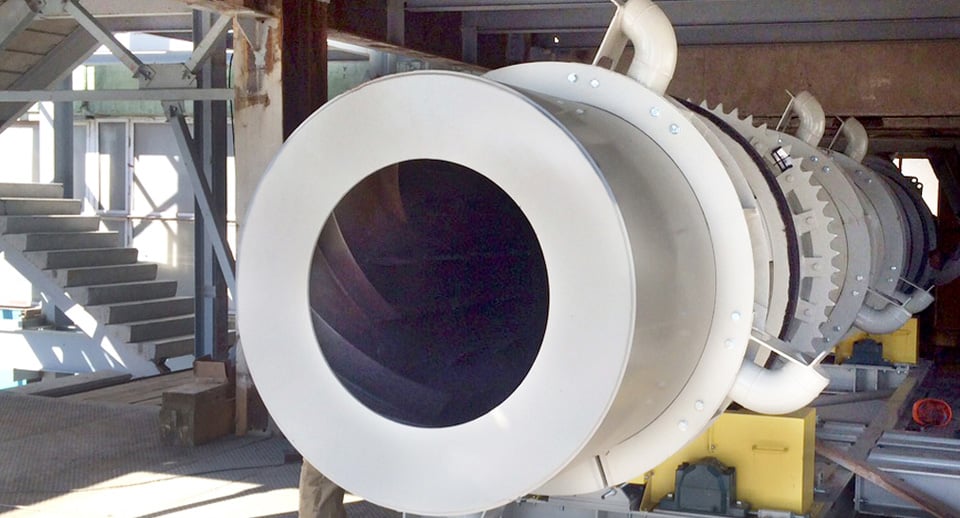
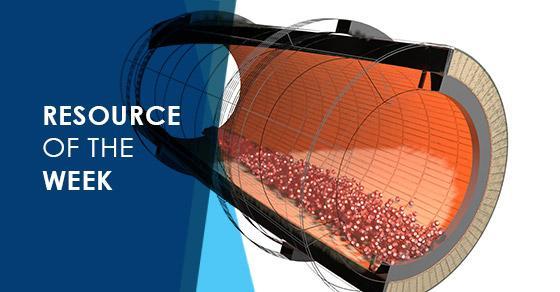
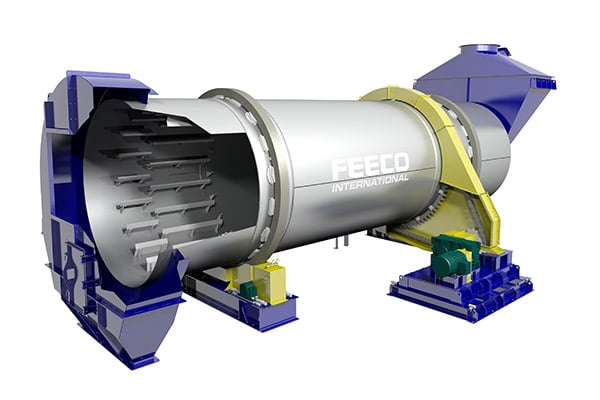
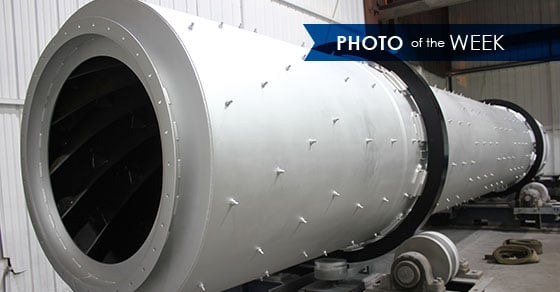
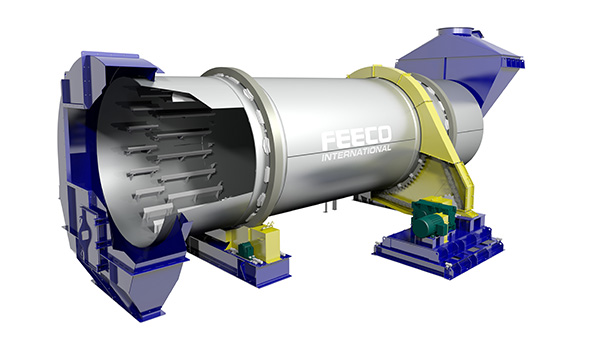
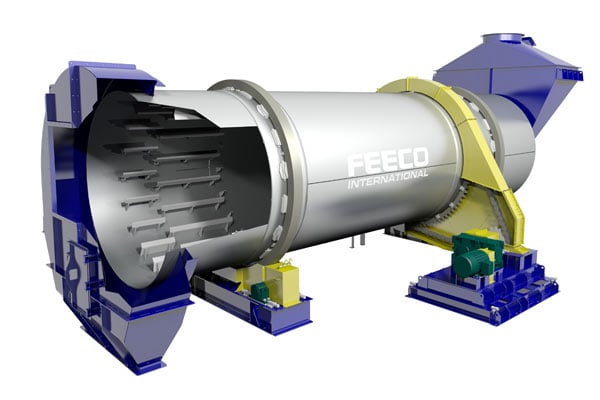
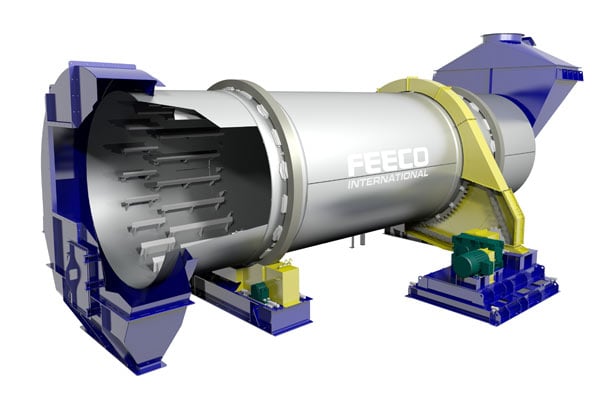
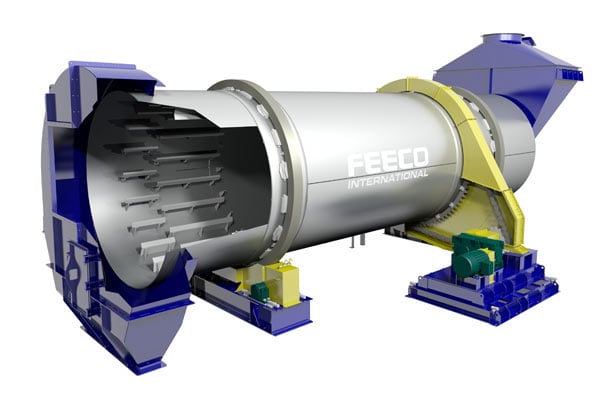
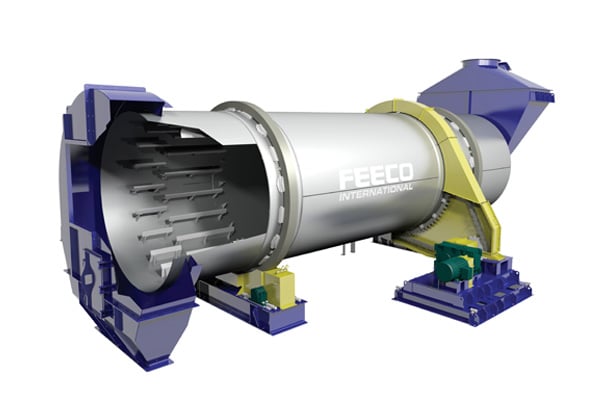
Rotary coolers work by tumbling material in a rotating drum in the presence of chilled or ambient air. The drum is set at a slight horizontal slope to allow gravity to assist in moving material through the drum. Lifting flights maximize heat transfer efficiency by lifting up material and dropping it through the chilled air as the drum rotates. Indirect water deluge coolers are also available.
FEATURES
- Diameter: 3′ – 15′ (1 – 4.6m)
- Capacity: 1 TPH – 200 TPH (1 MTPH – 181 MTPH+)
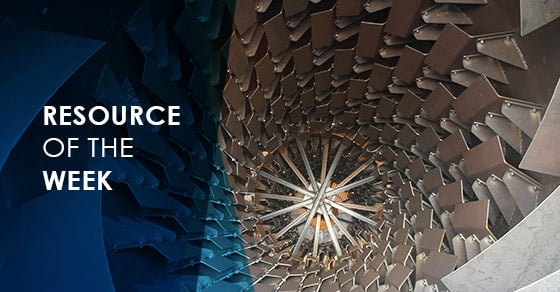
- Custom flight design and layout to maximize efficiency
- Counter-current flow design to optimize cooling efficiency
- Durability in construction for long life
- Process and Mechanical Warranties
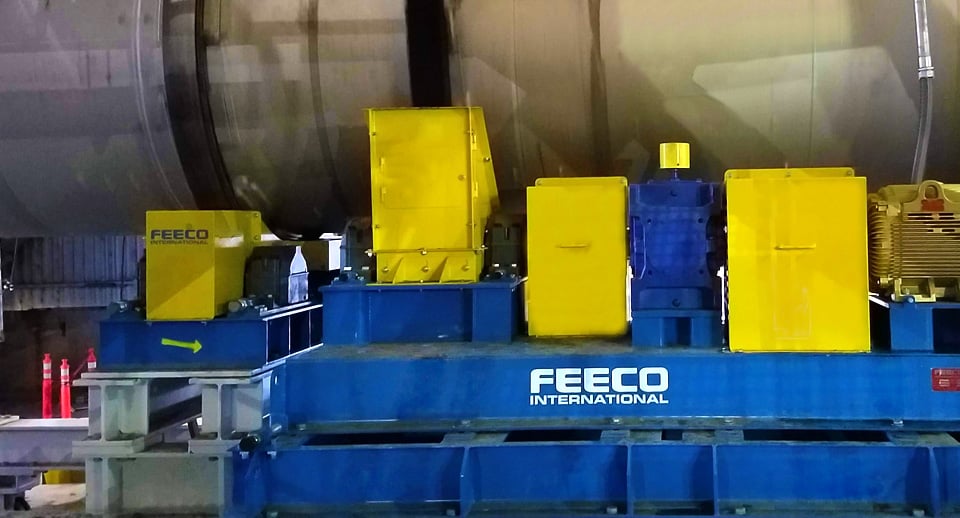
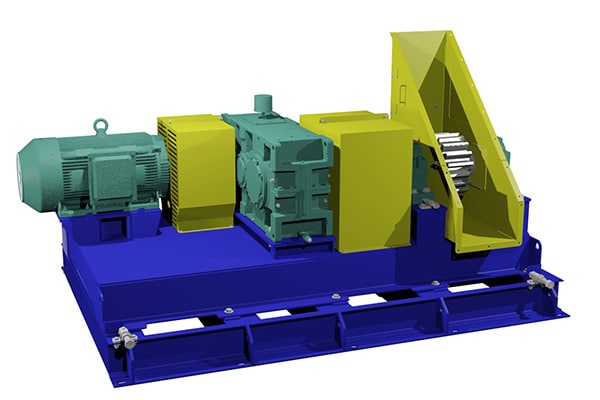
- Various Drive Assemblies Available
- Trommel
- Liners
- Machined Bases
- Screw Conveyor Feeder
- Automatic Gear Lubrication System
- Exhaust Handling Equipment
- Ductwork
- Carbon Steel
- Stainless Steel
- Specialty Alloys
- Explosion Bonded
- AR Steel
Rotary Cooler Sizing
The chart below illustrates common rotary cooler data points. Please note that all FEECO equipment
is custom engineered around the project at hand, and this data is only a general representation.
| STANDARD | METRIC | DRIVE ASSY. | ||||||
| Diameter (ft.) | Length (ft.) | Capacity (STPH)* | HP | Diameter (m) | Length (m) | Capacity (MTPH)* | k5.5W | Drive Sprocket or Gear |
| 3′ | 20-30′ | 8 | 7.5 | .9 | 6-9 | 7 | 5.5 | Sprocket |
| 4′ | 20-30′ | 20 | 10-15 | 1.2 | 6-9 | 18 | 7.5-11 | Sprocket |
| 5′ | 20-40′ | 30 | 15-25 | 1.5 | 6-12 | 27 | 11.0-18.5 | Sprocket |
| 6′ | 30-50′ | 45 | 25-40 | 1.8 | 9-15 | 41 | 18.5-30 | Sprocket |
| 7′ | 40-60′ | 60 | 50-60 | 2.1 | 12-18 | 55 | 37-45 | Sprocket |
| 8′ | 50-70′ | 80 | 75-125 | 2.4 | 15-21 | 73 | 55-90 | Sprocket |
| 9′ | 50-80′ | 100 | 100-125 | 2.7 | 15-24 | 91 | 75-90 | Sprocket |
| 10′ | 50-80′ | 125 | 100-200 | 3.0 | 12-24 | 114 | 75-150 | Gear |
| 11′ | 60-90′ | 150 | 150-250 | 3.4 | 18-27 | 136 | 110-150 | Gear |
| 12′ | 60-90′ | 180 | 200-300 | 3.6 | 18-27 | 164 | 150-220 | Gear |
| 13′ | 70-100′ | 210 | 250-350 | 4.0 | 21-31 | 191 | 185-260 | Gear |
| 14′ | 70-100′ | 250 | 300-400 | 4.3 | 21-31 | 227 | 225-300 | Gear |
*Varies with materials to be dried. Capacity based on 60#/Cu. Ft. granular fertilizer materials having up to 10% moisture removal.

FEECO is capable of meeting the requirements necessary for CE marking equipment.

All FEECO equipment and process systems can be outfitted with the latest in automation controls from Rockwell Automation. The unique combination of proprietary Rockwell Automation controls and software, combined with our extensive experience in process design and enhancements with hundreds of materials provides an unparalleled experience for customers seeking innovative process solutions and equipment. Learn more >>
ROTARY COOLER COMPONENTS AND PARTS
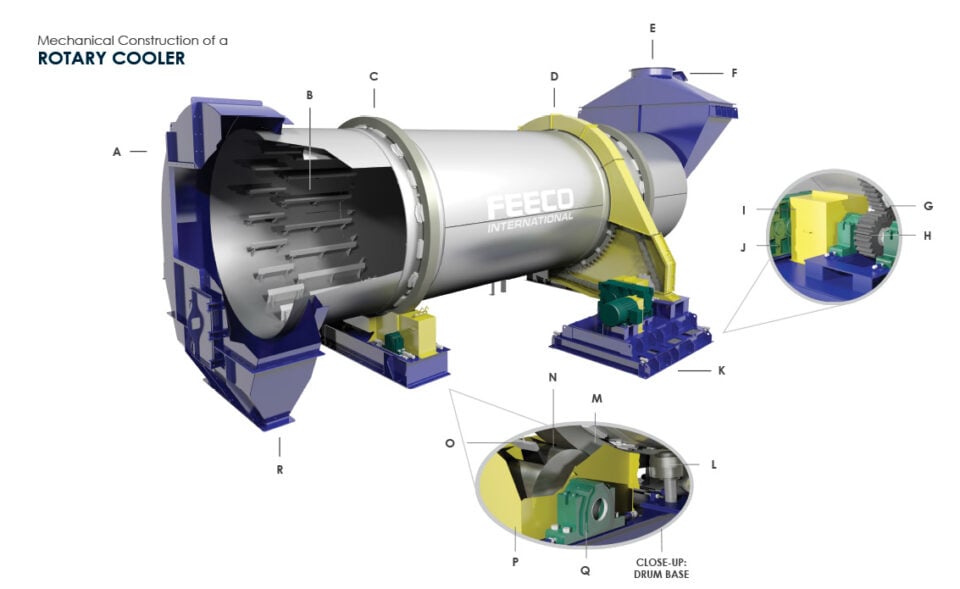
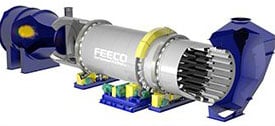
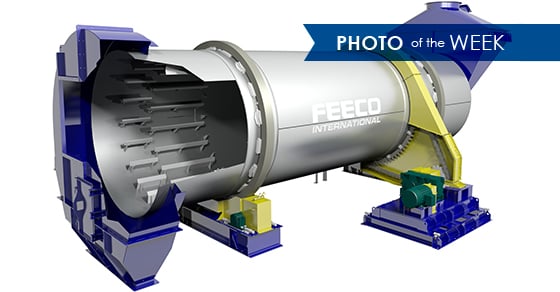
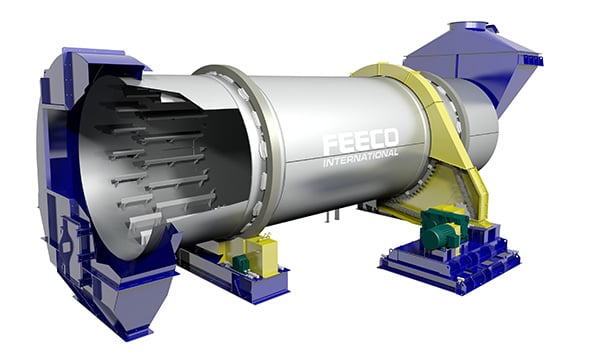
The image below shows the standard components of a rotary cooler. Click image to view larger.
Mechanical Construction of a Rotary Cooler (3D Rotary Cooler by FEECO International)
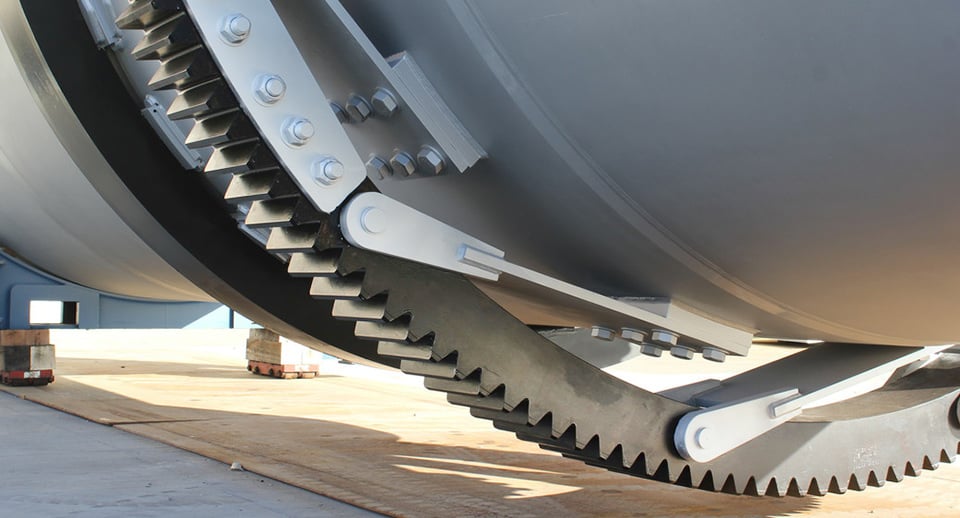
A – Material Discharge Breeching
B – Flights
C – Riding Ring
D – Ring Gear Guarding
E – Discharge Air
F – Raw Material Feed Chute
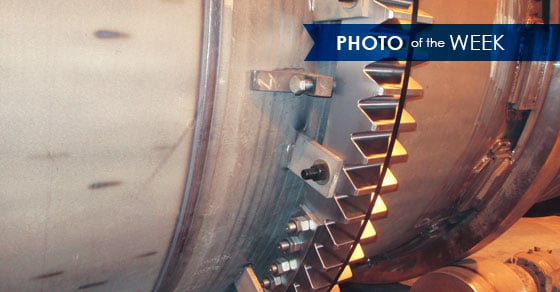
G – Girth Gear
H – Pinion Gear
I – Coupling Guarding
J – Gear Reducer
K – Drive Assembly
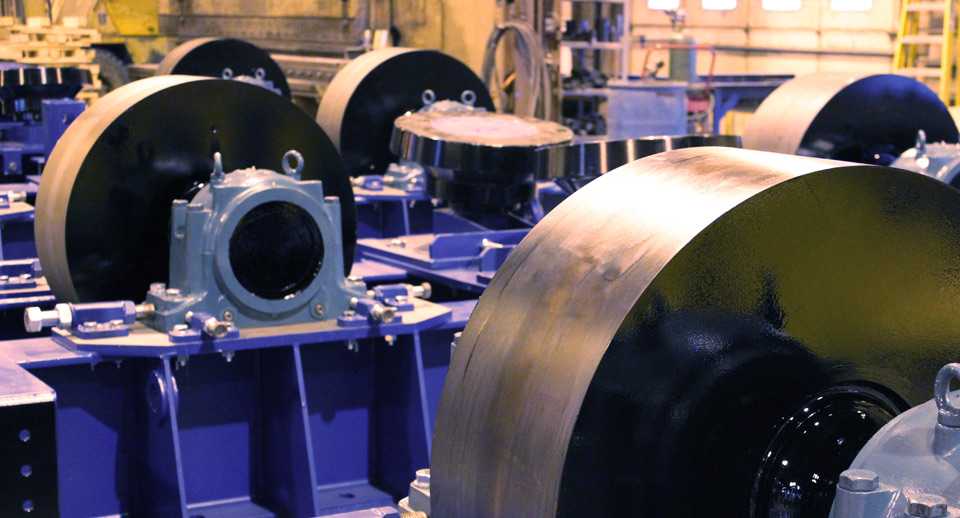
L – Thrust Roller Assembly
M – Riding Ring
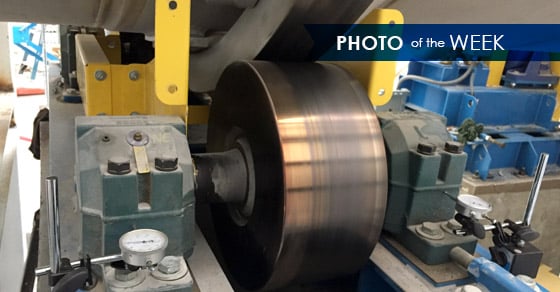
N – Trunnion Wheel
O – Graphite Block Lubrication Assembly
P – Trunnion Guarding
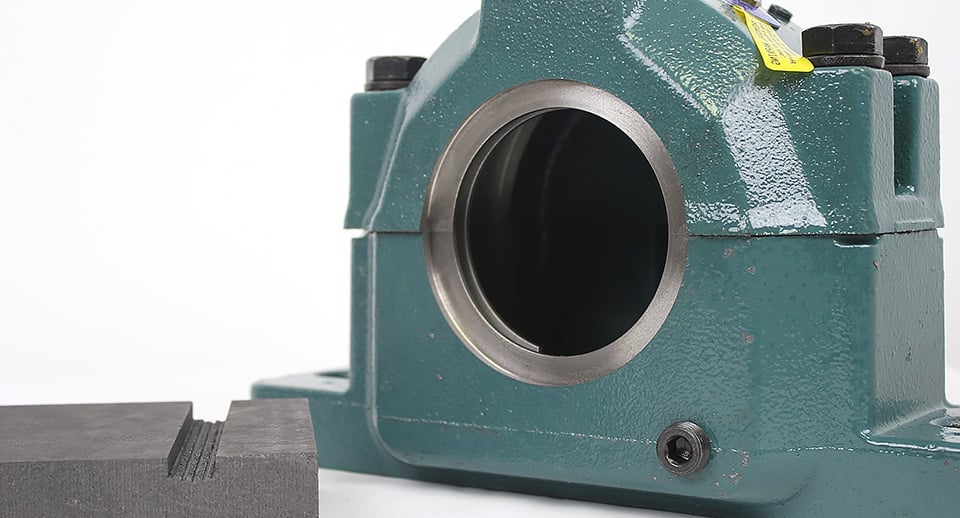
Q – Pillow Block Bearing
R – Product Discharge
APPLICATIONS & MATERIALS
Rotary coolers can lend themselves to nearly any industrial cooling need, but typical applications include:
- Aggregates
- Agricultural By-Products
- Alumina
- Animal Feeds
- Ash
- Biomass
- Biosolids
- Catalysts
- Clays & Ceramics
- Fertilizers
- Gypsum
- Inorganic Chemicals
- Limestone
- Manure
- Metal Chips & Shavings
- Mining Ores & Concentrates
- Municipal Waste & Sludge
- Organic Chemicals
- Paper Sludge
- Pigments
- Phosphate Ore
- Plastic Pellets & Grains
- Potash
- Proppants
- Reclaimed Dust
- Roofing Granules
- Rubber Pellets
- Salts & Sugars
- Sand
- Steel Mill Waste Sludges
- Titanium Dioxide
- Urea Prills & Crystals
INDIRECT ROTARY COOLERS
FEECO offers indirect rotary coolers for unique processing needs.
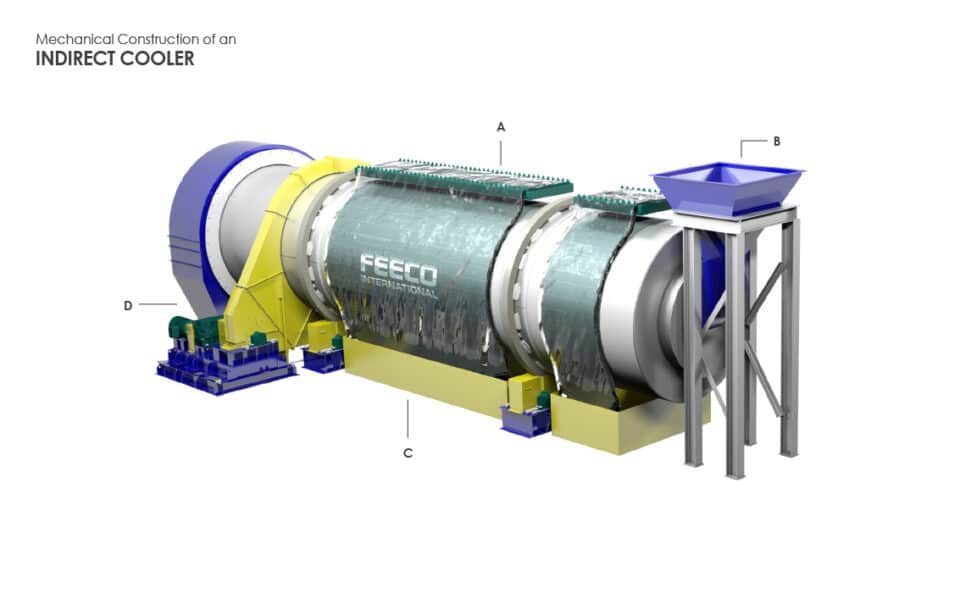
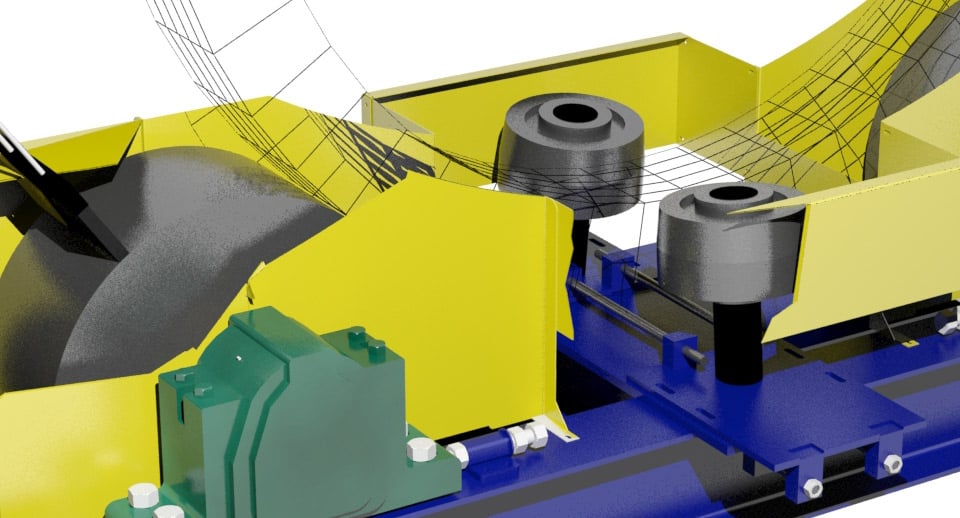
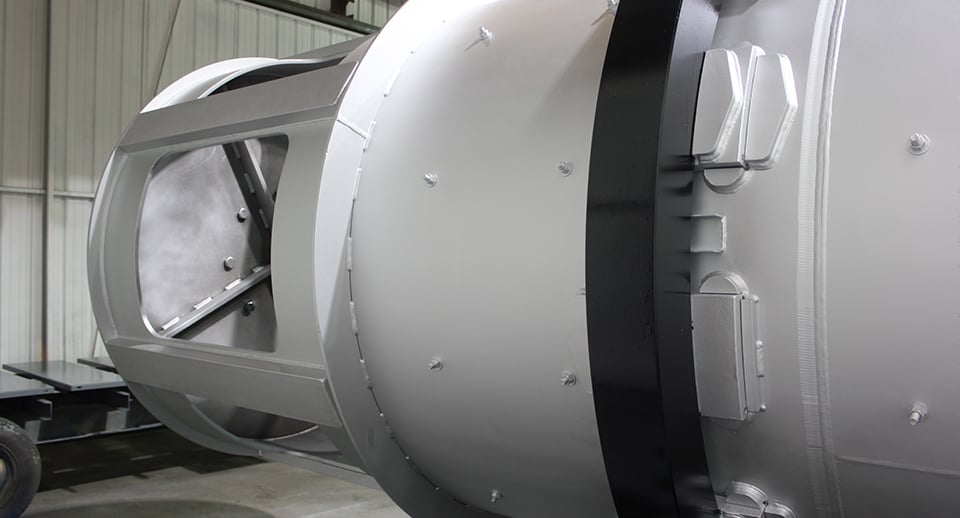
Mechanical Construction of an Indirect Cooler (3D Indirect Cooler by FEECO International)
A – Water Trough
B – Cooler Feed
C – Water Collection System
D – Product Discharge
Indirect rotary coolers rely on heat transfer through the drum shell to cool material, utilizing cool water bathed over the drum as it rotates in order to cool the drum shell and subsequently the material within. This method, commonly called “indirect water deluge,” is ideal in situations where lightweight materials such as pigments or other powders could become entrained in the air stream of a direct cooler, resulting in product loss.
Another reason for utilizing an indirect rotary cooler is that it allows for keeping a controlled environment within the cooler, for example, in situations where material will oxidize or burn should it come into contact with air.
Indirect rotary coolers can be designed as part of a recycle circuit, where warm water coming off the drum is run through a heat exchanger to cool it and send it back to the beginning of the process. They can also be integrated into existing systems.
FEATURES
- Stainless steel shell to prevent corrosion
- Custom design to suit exact processing needs
- Increased efficiency with the use of a water deluge system
- Various Drive Assemblies Available
APPLICATIONS
- Pigments
- Ultra fine materials
RESOURCES
ROTARY COOLER ARTICLES
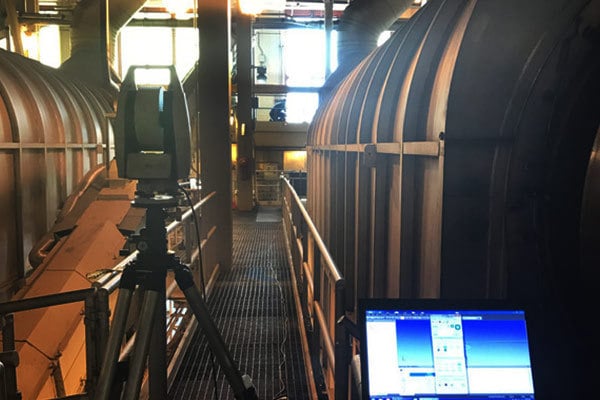
The Importance of Rotary Drum Alignment
Rotary drum alignment is a critical factor in maintaining the long-term performance and reliability of industrial rotary equipment—whether it’s a dryer, …
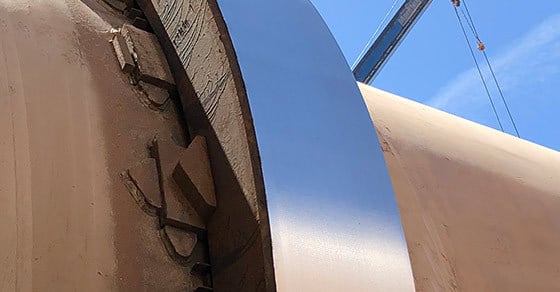
Floating Tire Assembly Improves Rotary Drum Operation and Longevity
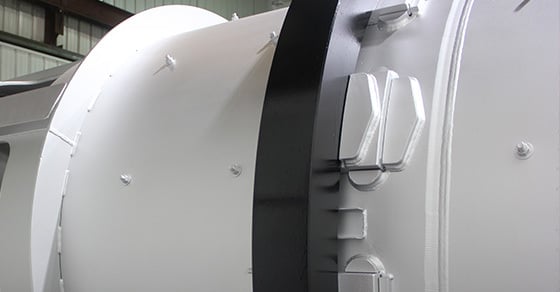
The tire mounting assembly on a rotary drum, whether a dryer, cooler, kiln, or otherwise, goes far beyond a mechanical interface; …
BROCHURES
Rotary Dryers & Coolers Brochure

Annual Inspections Brochure
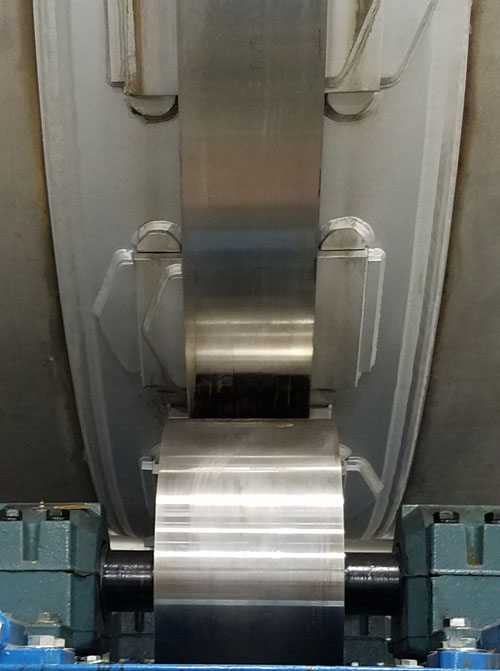



Rotary Cooler Frequently Asked Questions (FAQs)
A rotary cooler works by passing ambient or chilled air through a horizontal rotating drum. Material is fed into the opposite end of the drum, so the material and air flow in opposing directions (counter-current flow).
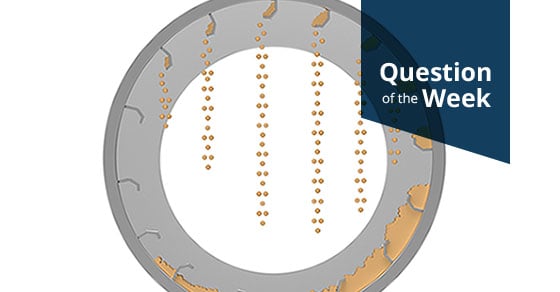
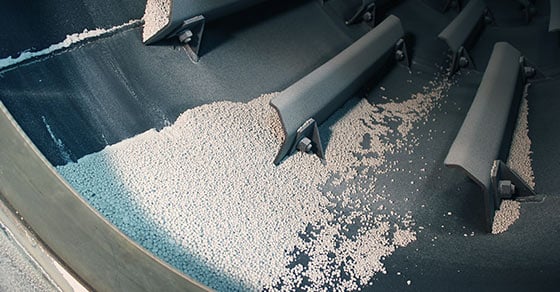
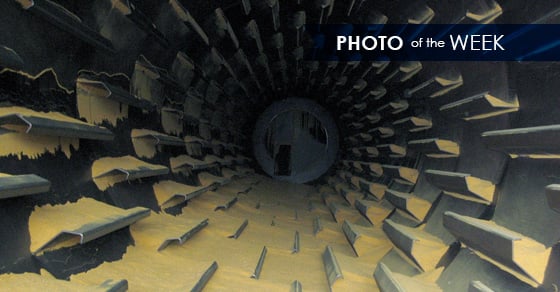
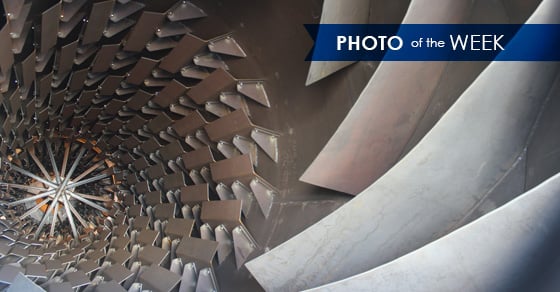
The rotary cooler is set at a slight downward angle to allow gravity to help move material through the unit. As the drum rotates, material lifters, or flights, pick up the material and drop it through the air stream, creating what is known as a “curtain” of material in the cross section of the drum. This maximizes heat transfer between the material and air. Because of this cascading motion, these coolers are sometimes referred to as cascade coolers.
As continuous industrial coolers, material is continuously fed and discharged.
The difference between a direct and indirect rotary cooler lies in the cooling medium. While direct coolers use air in direct contact with the material, indirect coolers reduce the material temperature through contact with the drum shell, which is externally cooled using a chilled water bath (for this reason, indirect coolers may also be referred to as indirect water deluge or water-jacketed coolers).
Most coolers are of the direct configuration, as this is the most efficient choice, but in some cases, such as when cooling fine materials that would otherwise risk entrainment in an air stream, indirect coolers provide a valuable alternative.
The rotary cooler design process is similar to the rotary dryer design process, where engineers balance several variables to properly size and design a rotary cooler. This includes material characteristics such as bulk density, inlet and outlet temperatures, and more. It also includes factoring in production criteria such as desired throughput, retention time, and cooling medium, to name a few.
In some cases, flight design and pattern, both of which are highly customizable, may require testing in a flight simulator to establish the most suitable arrangement based on the material’s unique characteristics.
Rotary coolers can process material at a throughput anywhere from one to 200 tons per hour.
Engineers require a number of data points to design a rotary cooler. For basic cooler design, they typically require:
- Material fragility/Potential for attrition
- Material (physical and chemical composition)
- Bulk density of material
- Inlet and outlet temperatures
- Inlet and outlet moisture content
- Desired cooling air temperature
- Specific heat of material
- Particle size distribution
- Desired throughput
Rotary coolers can be constructed from the following metals, depending on the requirements of the material and process:
- Carbon steel
- Stainless steel
- Specialty alloys
- Explosion-bonded steel
- Abrasion-resistant (AR) steel
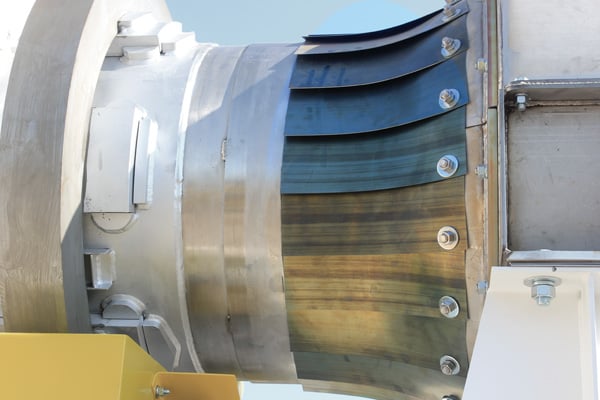
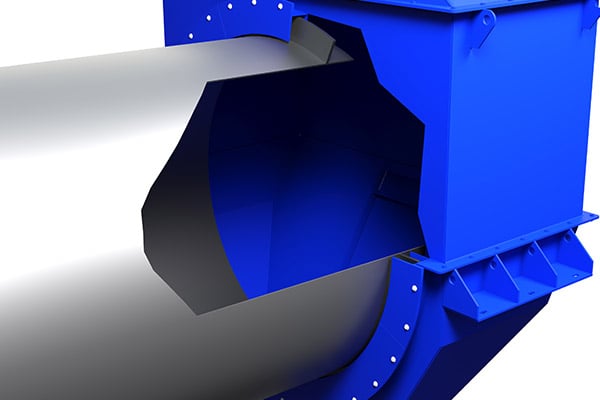
Rotary coolers require feeding and offtake conveyors, as well as an exhaust air and particulate handling system. Most often, exhaust handlingconsists of a baghouse or scrubber, in combination with an ID fan. If excessive carryover is expected, the addition of a cyclone may benefit the process as well.
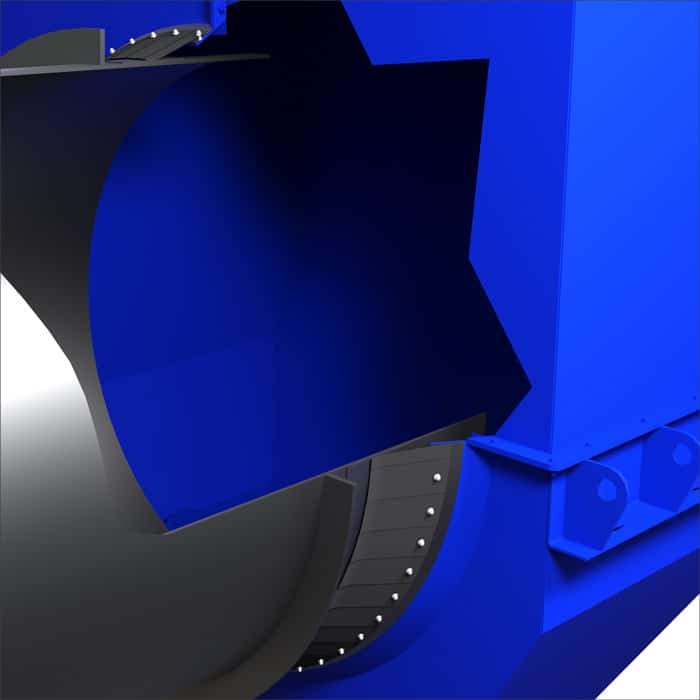
In cases where the incoming material is especially hot, water may be directly added at the inlet and refractory lining may be necessary to protect the drum shell until the material has a chance to cool slightly.
A waste heat recovery system may also be beneficial to recover hot air generated during the cooling process for reuse in the combustion process of the preceding dryer or kiln. This can help to reduce fuel and energy costs in the drying or thermal treatment stage of the process.
Rotary coolers can operate at temperatures anywhere between 150°F to over 1000°F, depending on the inlet material temperature and the desired outlet temperature.
The choice between a rotary cooler and fluid bed cooler comes down to several factors, including available spatial footprint, feedstock uniformity, and oftentimes, industry preference. Historically fluid bed coolers have been preferred in applications such as fine chemicals, pharmaceuticals, and food, while rotary coolers have been preferred for more industrial applications, such as in processing minerals and fertilizers. For more information, see our article: Choosing an Industrial Cooler: Rotary or Fluid Bed.
Yes, rotary coolers can be fitted with a simple automation system to streamline start-up and shutdown, or a more complex system that can track and trend historical data, and even alert operators when KPIs fall out of spec.
Yes. Rotary coolers offer a number of opportunities to customize the system according to process and material goals. This includes alternative materials of construction, internals for optimizing efficiency, options in drive assembly type.
Rotary cooler performance can be improved through a process audit, which often reveals hidden inefficiencies and opportunities for improvement.
Optimized rotary cooler performance can be maintained by ensuring a consistent feedstock, keeping up on cooler maintenance, and operating the unit within original design specifications.
Rotary coolers are available in diameters ranging from 3’ to 15’.
Rotary coolers can be used for cooling any type of material in the form of a bulk solid. They are frequently used in cooling materials coming off of a dryer, such as fertilizers and soil amendments, animal feeds, and chemical products, as well as those that have been processed in a rotary kiln, such as catalysts, phosphate ores, and roofing granules.
Rotary coolers are always configured for counter-current air flow because this design takes advantage of the thermodynamics and improved heat transfer of material and air moving in opposing directions, making the cooling process more efficient.
There are several ways to chill air for use in a rotary cooler, including ammonia chillers, refrigeration, and swamp coolers, among others.