

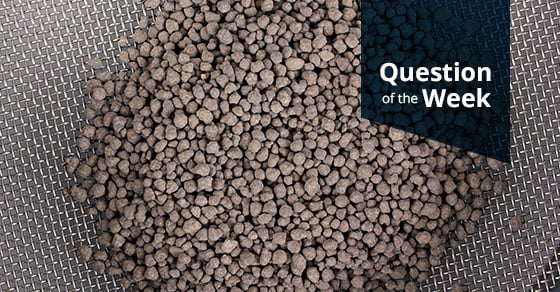
Gypsum is commonly processed into a soil amendment for its calcium value and ability to naturally aerate compacted soils. Despite its widespread use, some characteristics can make processing gypsum a challenge.
First, gypsum is abrasive, and as a result, robust equipment is needed during processing. Implementation of a rotary dryer is often an effective solution to combat such abrasive characteristics; dryers can ‘polish’ gypsum ore, helping to reduce abrasion, while also reducing the material’s moisture content.
Gypsum is also dusty and prone to clumping, issues that can be remediated through pelletization. Pelletizing can transform raw material fines into pellets, a process which reduces dust and clumping. In this process, a pin mixer first pre-conditions the gypsum, and then a disc pelletizer forms the pellets to the desired size. Once pellets reach the desired size, they exit the pelletizer, and a rotary dryer polishes and dries the pellets into their final, hardened form.
For more in-depth information, see our blog post Challenges in Gypsum Processing.
