


Updates in Mining
S&P Global Warns of Copper Deficit
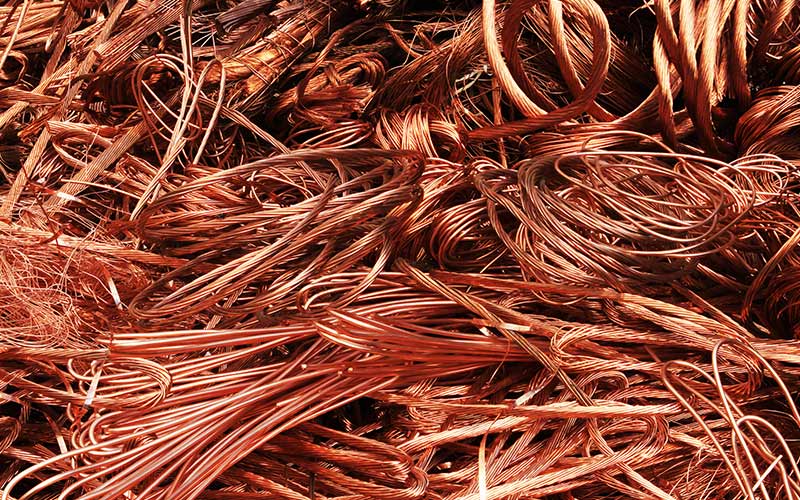
A new report from S&P Global finds that global demand for copper will increase 50% by 2040, driven by several factors, including the energy transition, economic demand, artificial intelligence (AI), and defense modernization. Without substantial investment, however, the world will not be able to meet that growing demand, instead seeing a 10 million metric ton supply gap that recycling alone will not be able to fill.

A Critical Minerals Reserve
Lawmakers introduced a bipartisan bill that would see the creation of a Strategic Resilience Reserve for critical minerals in a bid to fight Chinese price manipulation, according to Reuters. A board would be responsible for buying and storing critical minerals throughout the nation.

U.S. Government Doubles Down on Rare Earths
The U.S. government has committed $2 billion to bolster domestic rare earth production, including taking a direct equity stake in key projects as part of a strategic push to secure critical mineral supply chains rather than relying solely on subsidies. The move is being treated by markets as a shift in policy, reflecting rare earths’ importance for defense, EVs, and clean technologies amid global supply concerns. Read more from AL Circle >>.
Updates in Fertilizer

Changes to CBAM Spell Confusion
The European fertilizer market has stalled as uncertainty mounts over how the European Commission will implement or potentially amend its Carbon Border Adjustment Mechanism (CBAM), particularly following signals it could use a proposed “emergency brake” to suspend or change the mechanism’s application to fertilizers. This confusion has frozen trade and pricing in key fertilizers like urea and ammonium products, with industry groups warning that unclear CBAM policy undermines competitiveness, investment, and affordability for farmers until clarity is provided. Read more from FertilizerDaily >>.

New Beaumont Plant Boosts U.S. Ammonia Supply
Also reported by FertilizerDaily, the Woodside Energy Beaumont New Ammonia plant in Texas has produced its first ammonia during commissioning, marking a major step toward full commercial operations in early 2026 and positioning the facility to become one of the largest new sources of ammonia supply globally. Once fully operational with a capacity of about 1.1 million metric tons per year, the project could roughly double U.S. ammonia exports, ease supply constraints in nitrogen fertilizer markets, and later introduce lower-carbon (“blue”) ammonia using carbon-capture technology.
Updates in Chemical
ACC: TSCA Delays Threaten U.S. Chemical Innovation
The American Chemistry Council (ACC) testified before a U.S. House subcommittee urging Congress to modernize and reform implementation of the Toxic Substances Control Act (TSCA), citing persistent delays, lack of transparency, and overly conservative assumptions in Environmental Protection Agency (EPA) chemical reviews. ACC warned that missed statutory deadlines and inconsistent science are discouraging investment and pushing companies to bring new products to market outside the U.S., undermining domestic manufacturing and competitiveness. The organization called for congressional action to restore a risk-based, science-driven, and predictable TSCA framework that protects health and the environment while supporting innovation and supply-chain resilience.
NETL Turns Coal Waste into Graphite
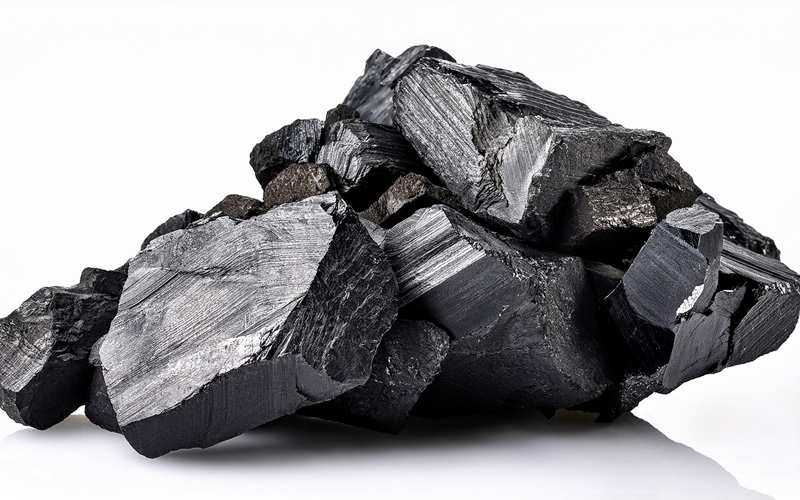
Researchers at the National Energy Technology Laboratory (NETL) have developed a low-temperature catalytic process that converts coal waste and other carbon-rich byproducts into high-quality graphite, dramatically lowering energy requirements and processing times compared with traditional methods. The iron-based catalyst enables production at temperatures below ~1,500 °C in just hours, and the resulting graphite, suitable for uses like lithium-ion battery anodes, performs comparably to commercial graphite while improving domestic supply chain resilience for this critical mineral. Read more from Chemical Online >>.
Like what you’re reading? Subscribe to our blog for industry updates and expert advice on bulk solids processing and handling.
