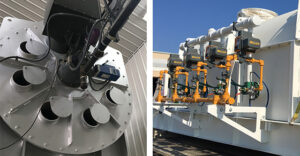
Floating Tire Assembly Improves Rotary Drum Operation and Longevity

This article was co-authored by:

Shane LeCapitaine

Shane Le Capitaine
Thermal Processing Expert

Carrie Carlson
Technical Writer

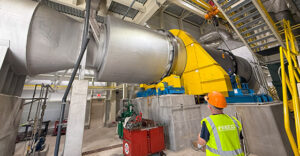
The tire mounting assembly on a rotary drum, whether a dryer, cooler, kiln, or otherwise, goes far beyond a mechanical interface; it ensures proper drum shell support, minimizes wear, and safeguards the equipmentโ€™s long-term service life.ย ย  Over the past several decades, mounting technology has evolved, …

Continue Reading โ†’

From Waste to Resource: The Role of the Pyrolysis Kiln in Black Mass Recycling

This article was co-authored by:

Avatar photo

Alex Ebben
Process and Sales Engineer

Carrie Carlson
Technical Writer

Black Mass

The pyrolysis kiln looks to be an effective approach in recycling black mass – the powdery mixture of key battery minerals remaining after mechanical reduction of spent lithium-ion batteries (LIBs) – as the increasing adoption of LIBs in everything from cellphones to electric vehicles has …

Continue Reading โ†’

Making the Switch from Reactive to Preventive Maintenance

This article was co-authored by:

Avatar photo

Craig Peppin
Customer Service Manager

Carrie Carlson
Technical Writer

Rotary Drum Preventative Maintenance

The benefits of a preventive maintenance program are well documented – reduced downtime, lower maintenance costs, improved safety, and longer equipment service life, among others. And yet, many industrial facilities continue to rely on reactive maintenance strategies for their capital equipment, exposing them to unnecessary …

Continue Reading โ†’

Rotary Kiln Design: Dams

This article was co-authored by:

Carrie Carlson
Technical Writer

Avatar photo

Alex Ebben
Process and Sales Engineer

Rotary Kiln Design (FEECO Lab Batch Rotary Kiln)

In rotary kiln engineering, dams are often an overlooked yet critical component in controlling material retention and thermal efficiency. These strategically placed internal structures help engineers fine-tune process performance, making them an essential part of kiln designโ€”particularly when processing solids that require extended retention times …

Continue Reading โ†’

Fuel-Fired vs. Electric Rotary Kilns: Weighing the Pros and Cons

This article was co-authored by:

Avatar photo

Alex Ebben
Process and Sales Engineer

Carrie Carlson
Technical Writer

Fuel-Fired Vs Electric Rotary-Kilns

As industries pursue cleaner operations and greater efficiency, many producers are asking whether their rotary kilns (and in some cases, dryers) should be powered by electricity instead of traditional fuels such as natural gas, oil, or diesel.  While electrification offers compelling advantages, it also presents …

Continue Reading โ†’

Tire Reshimming: A Foundational Rotary Drum Maintenance Practice

This article was co-authored by:

Avatar photo

Craig Peppin
Customer Service Manager

Carrie Carlson
Technical Writer

Rotary Drum Tire Reshimming

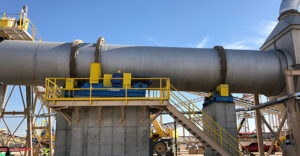
Rotary drums are central to countless industrial processes, and whether drying, heating, cooling, or granulating, their performance depends on precise alignment and structural integrity. One often-overlooked, yet critical, rotary drum maintenance task for ensuring both is tire reshimming. A small adjustment with a big impact, …

Continue Reading โ†’

Rotary Kiln Design: Bed Disturbers

This article was co-authored by:

Shane LeCapitaine

Shane Le Capitaine
Thermal Processing Expert

Carrie Carlson
Technical Writer

Rotary Kiln Design (FEECO Lab Batch Rotary Kiln)

Rotary kilns are used in a variety of thermal processing applications, and depending on the material being processed and the process objectives, internal components are often employed to improve efficiency. One such component is the bed disturber, widely employed in indirect kilns. While not always …

Continue Reading โ†’