Rotary Dryer Design 101: Defining Your Material Part 5 – Material Limitations

This article was co-authored by:

Shane LeCapitaine

Shane Le Capitaine
Thermal Processing Expert

Carrie Carlson
Technical Writer

Rotary Dryer (Drier) Design 101 - Material Limitations

Rotary dryers are used across nearly every industry that requires the drying of bulk solids, be it for producing a product for consumer use, serving as an intermediary step in a larger process, or producing an industrial product that will maintain its integrity throughout its …

Continue Reading →

Rotary Dryer Design 101: Defining Your Material Part 4 – Heat Transfer

This article was co-authored by:

Shane LeCapitaine

Shane Le Capitaine
Thermal Processing Expert

Carrie Carlson
Technical Writer

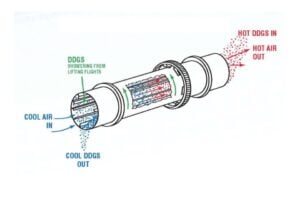
Counter Current Rotary Dryer (Drier) Design

Several material characteristics must be included in the design of a rotary dryer that operates efficiently and reliably. In addition to a material’s specific heat, its heat transfer properties must also be taken into account during the dryer sizing and design process. Material Specifications: Heat …

Continue Reading →

Rotary Dryer Design 101: Defining Your Material Part 3 – Specific Heat

This article was co-authored by:

Shane LeCapitaine

Shane Le Capitaine
Thermal Processing Expert

Carrie Carlson
Technical Writer

Rotary Dryer (Drier) Design 101: Specific Heat

Rotary dryers are the backbone of many industrial processes, ensuring bulk solids are properly and efficiently dried to produce a product ready for market or subsequent processing. The design and sizing of a rotary dryer is engineered around the characteristics of the material to be …

Continue Reading →