

Updates in Mining

Canada Unlocks Investments in Critical Minerals
The Canadian Government, alongside G7 and industry partners, has announced the first round of strategic projects under the new Critical Minerals Production Alliance to accelerate secure, high-standard critical mineral supply chains. The initiative includes 26 investments and measures expected to unlock $6.4 billion for projects involving graphite, rare earth elements, and scandium, as well as new offtake agreements and international co-investment partnerships.

U.S. DOE Funding Domestic Critical Minerals
Across the border, the United States Department of Energy (DOE) has announced a total of $355 million for two notices of funding opportunities that will expand domestic critical minerals production. The first funding opportunity will target facilities capable of recovering critical minerals from existing industrial wastes and coal byproducts, while the second is intended to establish “proving grounds” for testing and developing next-generation mining methods.
Updates in Fertilizer

TFI Applauds Exemption of Fertilizers From Tariffs
The Fertilizer Institute (TFI) is praising the Trump Administration for exempting all fertilizers from U.S. tariffs, a move that will help to alleviate rising cost pressures on farmers. In a statement, TFI President and CEO Corey Rosenbusch noted that the exemption signals recognition of the critical role fertilizers play in the nation’s food security and affordability.

Phosphate and Potash Make Final List of Critical Minerals
The U.S. Department of the Interior, through the U.S. Geological Survey, has released its final list of critical minerals, and the fertilizer industry is celebrating the inclusion of both phosphate and potash. In a comment from The Fertilizer Institute, President and CEO Corey Rosenbusch said, “The majority of the world’s phosphate and potash resources are concentrated in only a few countries, leaving them open to supply chain vulnerabilities and geopolitical instability. Food security is national security and it’s time to change how we think about these vital resources.”

Increased Regulation on Michigan CAFOs
Restrictions on manure management just got tighter for concentrated animal feeding operations (CAFOs) in Michigan; the Michigan Department of Environment, Great Lakes and Energy (EGLE) has reinstated a winter ban on manure spreading. These operations will also be banned from giving away their waste during the winter. In watersheds that do not meet the state’s water quality standards, site-specific regulations will also be permitted. The restrictions are aimed at protecting the state’s waterways. Read more from Michigan Advance >>
Updates in Chemical

Turning Captured Carbon into Plastics
Global polymer leader Braskem and power-to-liquid technology company Norsk e-Fuel AS have formed a strategic partnership to explore using e-Naphtha, a feedstock produced from captured carbon via Power-to-Liquid technology, in the plastics value chain. The collaboration aims to advance low-carbon, circular plastics by converting captured CO₂ into durable materials such as polypropylene. Together, the companies plan to assess market opportunities and develop pathways that keep carbon circulating through products rather than being emitted.

Testing Breakthrough for PFAS
Purdue University researchers have developed a rapid testing method using high-throughput electrospray ionization mass spectrometry (HT DESI-MS) to detect, analyze, and even chemically modify PFAS compounds. The technique enabled the creation of 915 PFAS-like molecules in just hours and allows direct analysis of complex samples that traditional mass spectrometry can’t handle. Their work, published in Environmental Science & Technology Letters, could accelerate the search for safer alternatives and new ways to break down PFAS. Read more from Chemical Processing >>
Reducing PFAS Reporting Challenges
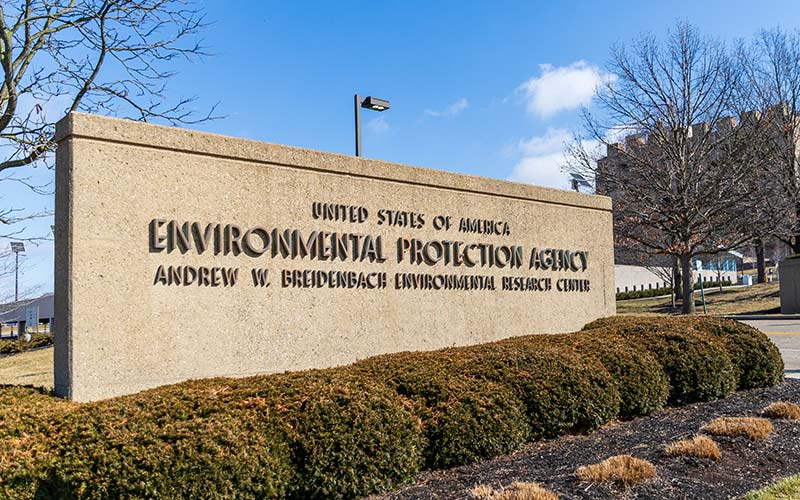
Also in PFAS, the United States Environmental Protection Agency (EPA) has proposed revisions to its PFAS reporting requirements under TSCA to make compliance more practical for businesses while still collecting essential information on PFAS use and safety. The changes aim to reduce regulatory burden—particularly the nearly $1 billion in costs associated with the 2023 one-time reporting rule—by exempting low-risk or hard-to-track activities and clarifying reporting expectations. Once published in the Federal Register, the proposal will be open for a 45-day public comment period.
Like what you’re reading? Subscribe to our blog for industry updates and expert advice on bulk solids processing and handling.
