Archive for the ‘Agglomeration’ Category

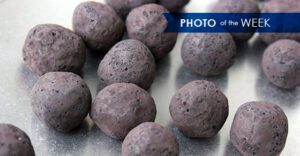
Photo of the Week: Attrition Testing

Attrition Test

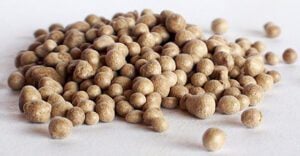
This week’s Photo of the Week shows an attrition tester in the FEECO lab facility. Attrition occurs when product rubs against itself, causing the surface particles to break off against each other. This is typically seen with extruded pellets, where hard edges are present, and often results in less on-size product, and creates undesirable dust. Read More…

Chicken Litter: From Nuisance to New Product

chicken-broilers

A strong agriculture sector is crucial to the success of any nation’s economy and has been a pivotal part of United States history, and how we got to where we are today.  Livestock production is an important subsector because, in addition to producing food for consumption, livestock also produce a lot of nutrients to improve Read More…

The Lab Reveals what the Earth Conceals

Lab-Testing

You’ve got a material that you think is capable of being transformed into a usable product, but how do you know for sure? It all starts in our lab. Our lab has grown consistently using our agglomeration, mixing and thermal processing capabilities, to test new processes. When the lab test of your material is done you Read More…

Photo of the Week: Agglomerated Algae

Agglomerated Algae

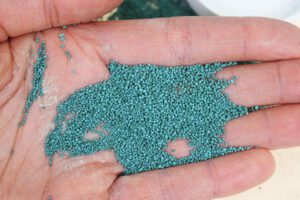
This week’s photo is an example of how agglomeration can be used applied to a variety of materials that are often thought of as outside the realm of what is typically agglomerated. This photo, taken at the FEECO Lab Testing Facility, shows algae that has been agglomerated in a pin mixer. You wouldn’t think of Read More…

Photo of the Week: Compaction Granules

Compaction Granulation Before and After

This week’s photo comes from the FEECO Lab Testing & Tolling Facility. This photo shows a material both before and after it has been run through a compactor. Compaction granulation is a form of the agglomeration process that is referred to as a “dry process,” because instead of utilizing a binder to agglomerate materials, pressure Read More…

Creating Lasting Partnerships through Referrals and Reciprocation

disc-pelletizer

Having been in business since 1951, we’ve met some great people and made a lot of lasting relationships along the way. Many of our customers have been with us since their inception, and we’ve helped them to develop their processes and technologies as their business grew. As a company that values partnerships, one of the greatest compliments we often Read More…

Photo of the Week: Pan Pelletizer Sizes

The photo of the week this week comes to us from the FEECO archives. This photo, dating back to the early 1950′s, shows a FEECO engineer examining various pan pelletizers. Available in a wide range of sizes, pan pelletizers, also commonly called disc pelletizers, are used in the agglomeration process in order to turn dusty, Read More…

Trade Missions Will Bring FEECO to Australia and Southeast Asia

Australian flag

Next week, FEECO representatives Barry Wilson and Brian Madigan, will partake in a trade mission to Australia. The mission is offered through a partnership between the State of Wisconsin and the Council of Great Lakes Governors (CGLG).  Following the Australian mission, Barry and Brian will go to Southeast Asia as part of an additional mission Read More…

Photo of the Week: Testing Pellet Characteristics

Feasibility Testing

This week’s photo comes from the FEECO lab facility. This photo shows a sample of pellets that are in the process of feasibility testing. Once a potential product is created, we have many tests we perform to ensure a product meets the desired specifications, such as bulk density, compression strength, moisture content, abrasion & hardness, Read More…

Helping a Glass Company during the Oil Crisis of the 70’s

oil crisis of the 70's

Jim Madigan is the founder and past President of FEECO International.  Jim has great stories and knowledge from his time in the fertilizer industry and we like to capture those stories to share with the world. Q. You started FEECO in 1951 and have provided solutions to a lot of companies and industries. Are there Read More…